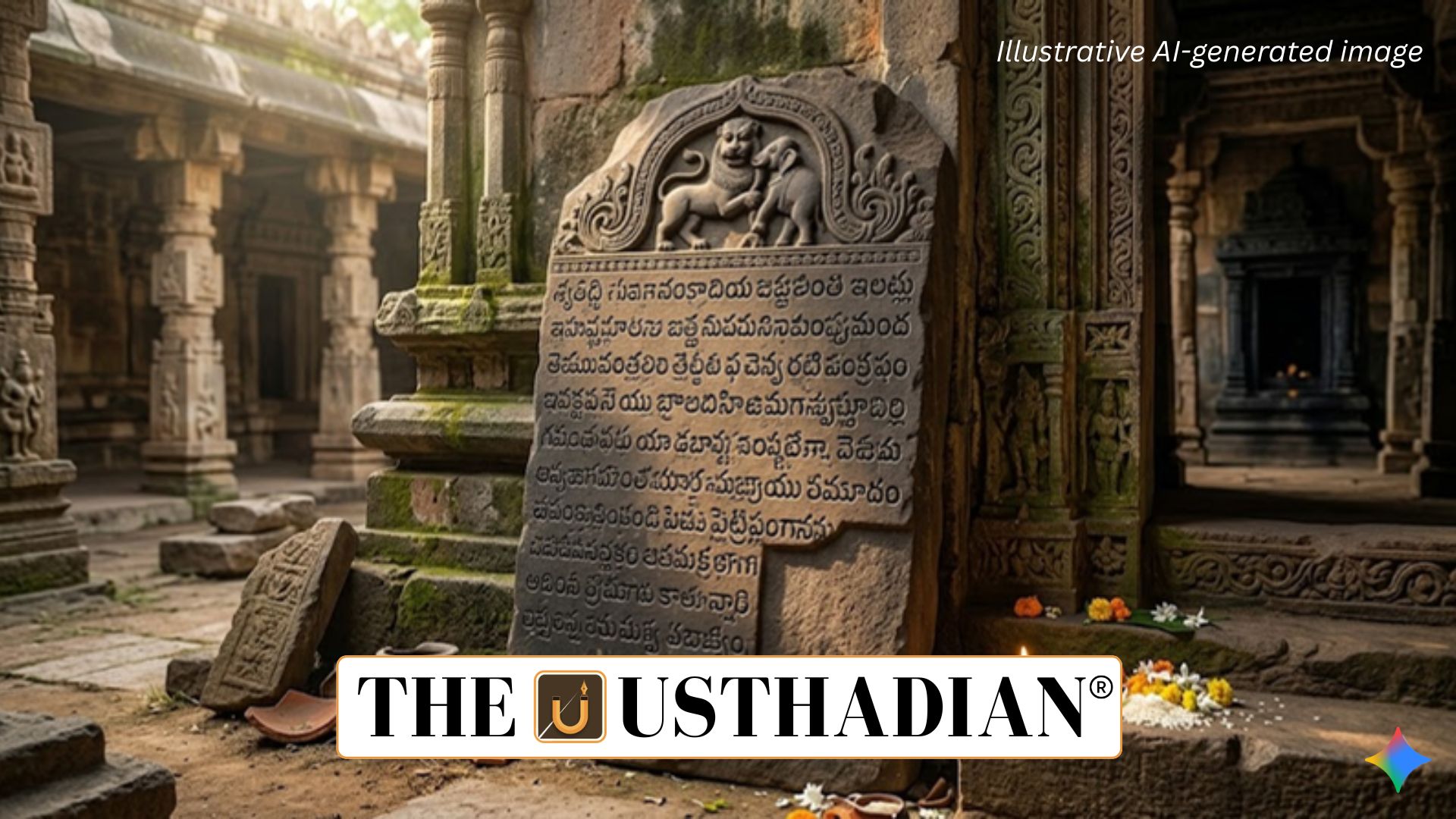
Discovery of a medieval inscription
Medieval Gajapathi Inscription Discovered in Guntur Temple: A medieval Telugu inscription associated with the Gajapathi dynasty of Odisha has recently been identified in the Lakshmi Narasimha Swamy Temple located in Ramachandrapura Agraharam, Guntur. The inscription is engraved on a stone pillar within the temple mandapa, revealing historical information about the administrative and religious activities of the Gajapathi rulers.
Epigraphists studying the record have highlighted its importance in understanding the political influence of the Gajapathi kingdom in coastal Andhra Pradesh during the late medieval period. Such inscriptions provide direct evidence about royal authority, temple patronage, and local administration.
Static GK fact: Epigraphy refers to the study of inscriptions engraved on stone, metal, or other durable materials and is a major source for reconstructing ancient and medieval Indian history.
Link to Gajapathi ruler Purushottama Deva
The inscription specifically mentions Kumaraguru Mahapatra, an official who served as a steward officer under the Gajapathi king Purushottama Deva. He ruled during the 15th century CE and was one of the prominent rulers of the Gajapathi Empire, which controlled extensive territories across Odisha and coastal Andhra.
The record demonstrates that the administrative structure of the Gajapathi kingdom extended beyond Odisha into parts of present-day Andhra Pradesh. Officials such as Kumaraguru Mahapatra were responsible for managing temple endowments and religious services.
Static GK Tip: The Gajapathi dynasty was known for maintaining a strong naval presence along the eastern coast of India, enabling control over important coastal trade routes.
Kondaveedu connection and temple heritage
Local temple traditions indicate that the idol of Lord Narasimha presently worshipped in the Guntur temple was transported from Kondaveedu Fort, an important medieval stronghold in Andhra Pradesh. Historical accounts suggest that this relocation took place during periods of regional invasions and political instability.
Temple priests also believe that the stone pillars of the mandapa were brought from Kondaveedu after a divine instruction received in a dream. Interestingly, the Narasimha temple at Kondaveedu contains another Odia inscription of the Gajapathi rulers, which records donations made for temple rituals.
Static GK fact: Kondaveedu Fort, located near Guntur in Andhra Pradesh, was originally built by the Reddi dynasty in the 14th century and later came under the control of the Vijayanagara and Gajapathi kingdoms.
Temple service and ritual instructions
The inscription also provides details regarding temple worship practices. It directs that milk offerings should be made during evening rituals to the deity. Additionally, the inscription instructs that cows used for ritual purposes must remain under the care of designated communities such as Tammula and Ambicvaru, possibly pastoral groups connected with cattle management.
These instructions highlight the structured temple economy of medieval South India, where livestock, land grants, and community responsibilities formed part of the religious administration.
Evidence of cultural interaction
Historians believe that the inscriptions found at Guntur and Kondaveedu together demonstrate the cultural integration between Odisha and Andhra during the medieval era. The Gajapathi rulers promoted the concept of Hari-Hara worship, which combines reverence for Shiva (Hari) and Vishnu (Hara) traditions.
Such epigraphic evidence shows that temples served not only as religious centers but also as administrative and cultural hubs connecting different regions of eastern India. Discoveries like this help historians reconstruct the shared cultural heritage of the eastern Deccan and Kalinga regions.
Static GK Tip: Hari-Hara is a composite deity form representing the unity of Shaivism and Vaishnavism, reflecting religious harmony in medieval Indian temple traditions.
Static Usthadian Current Affairs Table
Medieval Gajapathi Inscription Discovered in Guntur Temple:
| Topic | Detail |
| Inscription Discovery | Medieval Telugu inscription discovered at Lakshmi Narasimha Swamy Temple in Guntur |
| Associated Dynasty | Gajapathi dynasty of Odisha |
| Important Ruler Mentioned | Purushottama Deva, 15th century Gajapathi king |
| Key Official in Inscription | Kumaraguru Mahapatra |
| Temple Connection | Idol and mandapa pillars linked to Kondaveedu Fort |
| Religious Practice | Instructions for evening milk offering rituals |
| Temple Economy | Cattle management assigned to pastoral communities |
| Cultural Significance | Shows Odisha–Andhra cultural and administrative interaction |
| Religious Tradition | Promotion of Hari-Hara worship combining Shaiva and Vaishnava traditions |