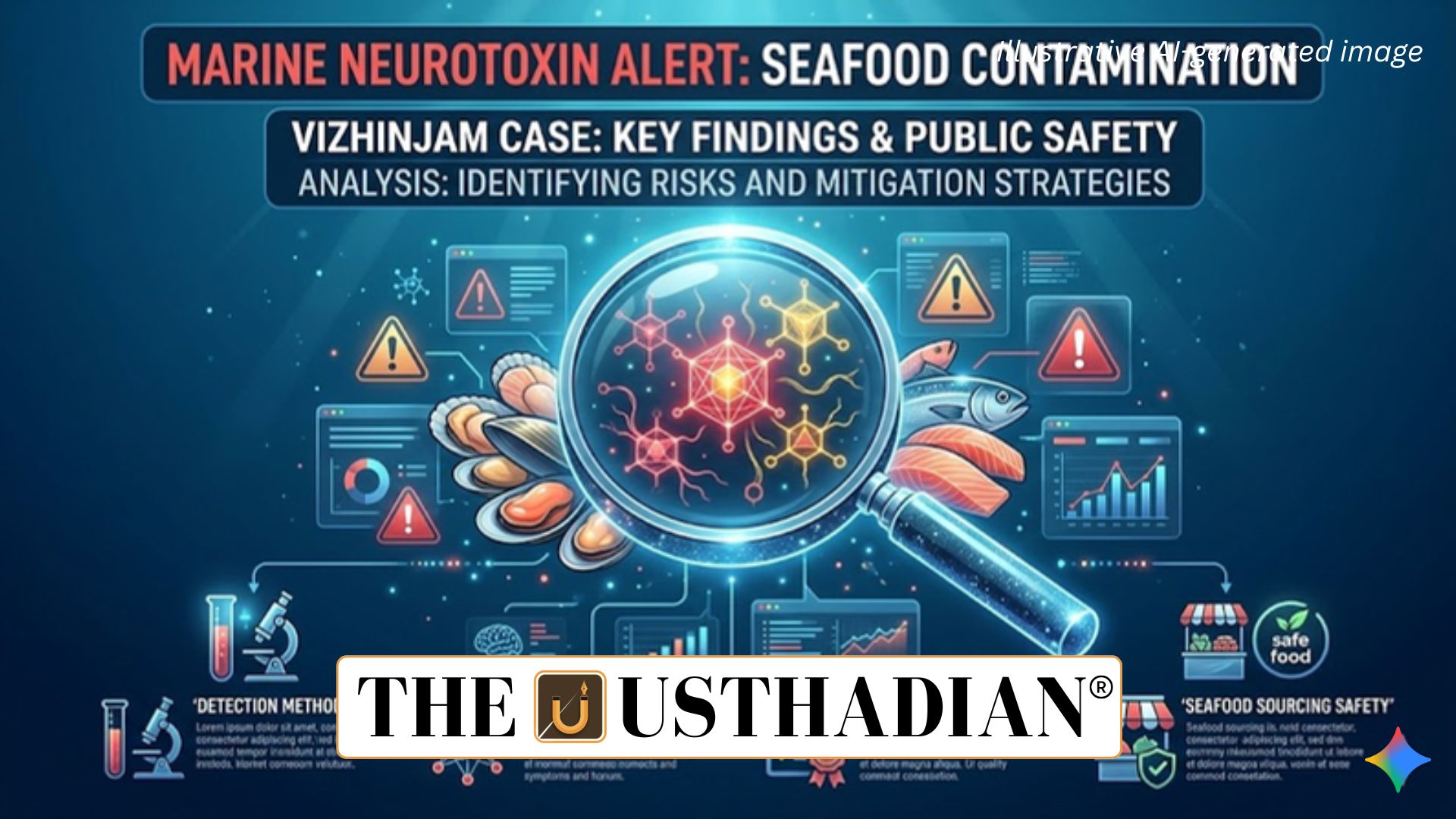
Incident in Vizhinjam
Marine Neurotoxin Alert in Vizhinjam Seafood Case: A suspected case of marine neurotoxin poisoning has been reported from Vizhinjam in Thiruvananthapuram district, Kerala, after multiple individuals fell critically ill on February 16, 2026. Three members of a six-member family developed severe symptoms, and two died within hours of consuming seafood at a local restaurant.
Subsequently, six more cases of acute illness were reported. All cases were linked to the same establishment and date, indicating a clustered exposure.
Static GK fact: Vizhinjam is a coastal town near Thiruvananthapuram, which is the capital of Kerala.
Tetrodotoxin Under Suspicion
Preliminary investigations ruled out conventional food poisoning caused by bacterial contamination or spoilage. Attention shifted to Tetrodotoxin (TTX), one of the most potent naturally occurring marine toxins.
TTX is known to block voltage-gated sodium channels in nerve cells. This action prevents nerve impulse transmission, leading to muscle paralysis and potentially fatal respiratory failure.
Importantly, TTX is heat-stable and cannot be destroyed by cooking. There is currently no specific antidote available.
Static GK Tip: Tetrodotoxin is commonly associated with pufferfish, also called fugu in Japan, where its preparation requires licensed chefs.
Fish Roe Identified as Likely Source
Authorities identified fish roe as the suspected vehicle of exposure. All affected individuals had consumed this seafood item.
Marine toxins can accumulate in certain fish organs, including roe, especially if sourced from contaminated marine ecosystems. The rapid onset of neurological symptoms strengthened the suspicion of toxin exposure rather than microbial infection.
Differential Diagnosis and Ciguatoxin
Initially, officials considered ciguatoxin, which had been detected in red snapper samples from the Tamil Nadu coast. However, the clinical presentation in the present case did not align with typical ciguatera poisoning, which usually involves gastrointestinal symptoms followed by neurological disturbances.
In contrast, the Vizhinjam patients exhibited rapid neurological deterioration and paralysis. The short interval between ingestion and collapse closely matches documented patterns of TTX poisoning.
Static GK fact: Ciguatoxin is produced by marine dinoflagellates such as Gambierdiscus species and bioaccumulates in reef fish.
Forensic and Public Health Response
Chemical analysis of biological samples from the deceased is underway. Only laboratory confirmation can definitively establish the presence of Tetrodotoxin.
Food safety authorities are tracing the seafood supply chain to determine whether contamination occurred during harvesting. Surveillance measures have been intensified to prevent further exposure.
Marine biotoxins are naturally occurring and may become more prevalent due to rising sea temperatures and ecological imbalance. The Vizhinjam incident highlights the need for strict seafood monitoring, rapid toxicological testing, and public awareness regarding marine toxin risks.
Static Usthadian Current Affairs Table
Marine Neurotoxin Alert in Vizhinjam Seafood Case:
| Topic | Detail |
| Incident Location | Vizhinjam, Thiruvananthapuram, Kerala |
| Date of Incident | February 16, 2026 |
| Suspected Toxin | Tetrodotoxin (TTX) |
| Nature of Toxin | Heat-stable marine neurotoxin |
| Mechanism of Action | Blocks voltage-gated sodium channels |
| Major Risk | Paralysis and respiratory failure |
| Alternative Considered | Ciguatoxin |
| Source of Ciguatoxin | Dinoflagellates in marine ecosystems |
| Public Health Concern | Seafood contamination and toxin bioaccumulation |