Geological background
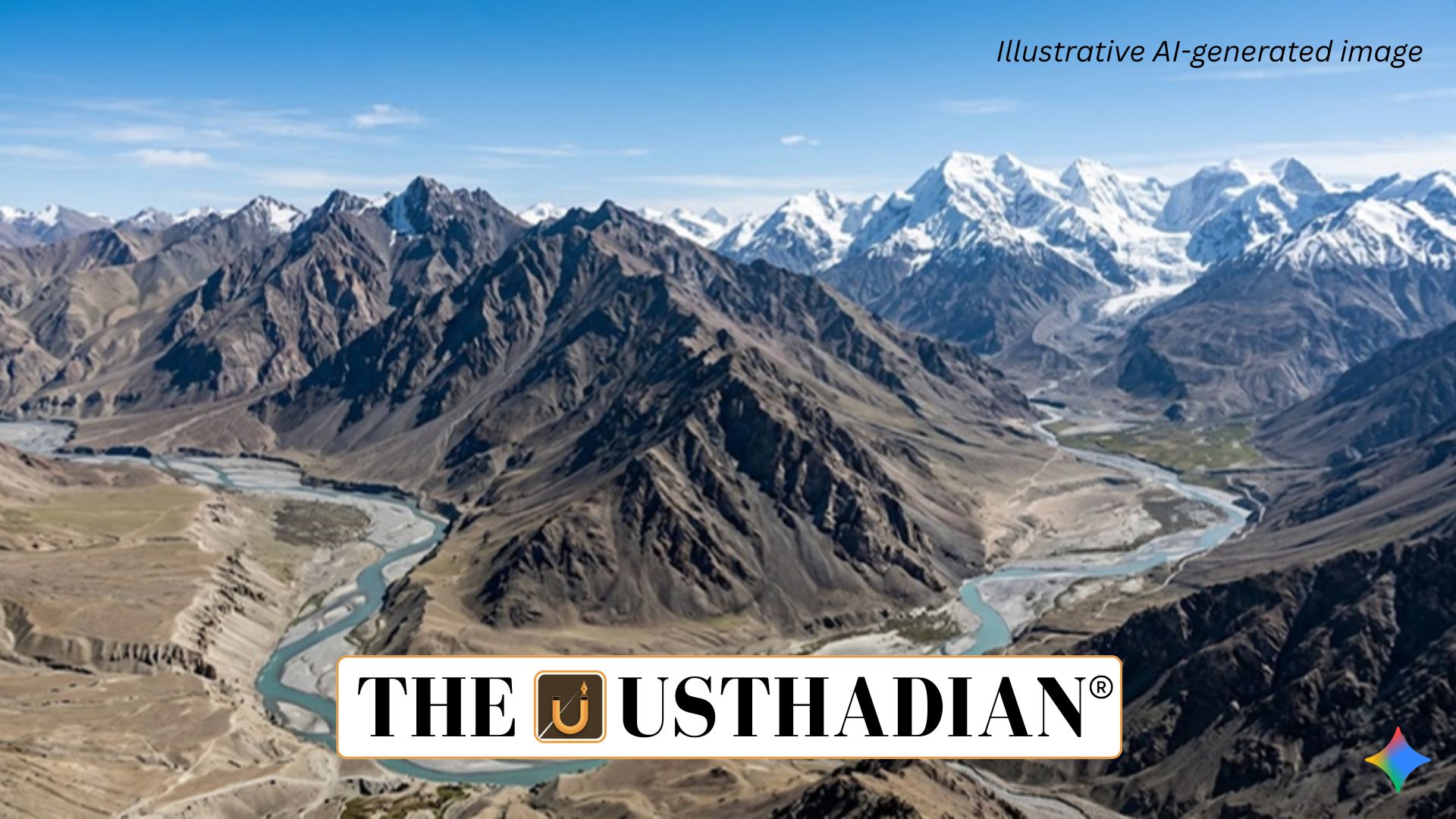
Ladakh Magmatic Arc and Himalayan Evolution: The Ladakh Magmatic Arc (LMA) in the north-western Himalaya represents a geological record spanning nearly 130 million years. It provides crucial insights into the interaction between the Indian Plate and the Eurasian Plate.
This arc formed before the rise of the Himalaya, when the Ladakh region was situated above the ancient Neo-Tethys Ocean. The rock formations preserve evidence of long-term tectonic processes.
Static GK fact: The Himalayas are the youngest fold mountains in the world, formed around 50 million years ago.
Formation under oceanic conditions
The LMA originated due to subduction, where the Neo-Tethyan oceanic plate was pushed beneath the Eurasian margin. This process led to intense volcanic and magmatic activity beneath the ocean.
The arc developed between the Jurassic and Eocene periods (201–34 million years ago). It represents a classic example of a subduction-related volcanic arc.
Continuous tectonic movements resulted in the formation of igneous rock belts. These rocks act as a record of ancient geological activity.
Scientific findings and rock analysis
Researchers from the Wadia Institute of Himalayan Geology studied the geochemical and isotopic composition of rocks. Their analysis focused on regions like the Dras–Nidar Island Arc Complex and the Ladakh Batholith.
The study confirmed that the arc formed due to northward subduction of the oceanic plate. Variations in rock chemistry indicated changes in magma sources over time.
These findings highlight shifts in tectonic conditions and crustal interactions during different phases.
Static GK Tip: Igneous rocks are formed from the cooling and solidification of magma or lava.
Phases of magmatic evolution
Scientists identified three major phases of magmatic activity in the LMA. The first phase (160–110 million years ago) was dominated by volcanic island arcs formed from mantle-derived magma.
The second phase (103–45 million years ago) saw the formation of large granitic bodies like the Ladakh Batholith. This indicates increased contribution from continental crust.
The final phase occurred after 45 million years ago, marking post-collisional changes. This phase reflects the collision between the Indian and Eurasian plates, altering magma composition.
Significance for Himalayan formation
The LMA represents a long-extinct volcanic system that transitioned from oceanic subduction to continental collision. It provides key evidence for the tectonic evolution of the Himalayas.
The increasing presence of sediments and crustal material in later stages reflects intensified plate convergence. This process ultimately contributed to the uplift of the Himalayas.
Understanding the LMA helps scientists reconstruct Earth’s tectonic history and predict future geological changes.
Static Usthadian Current Affairs Table
Ladakh Magmatic Arc and Himalayan Evolution:
| Topic | Detail |
| Formation Cause | Subduction of Neo-Tethys Oceanic plate |
| Geological Period | Jurassic to Eocene (201–34 million years ago) |
| Key Structures | Dras–Nidar Island Arc Complex, Ladakh Batholith |
| Study Institution | Wadia Institute of Himalayan Geology |
| Major Phases | Three phases of magmatic evolution |
| Tectonic Process | Oceanic subduction to continental collision |
| Associated Plates | Indian Plate and Eurasian Plate |
| Importance | Explains origin of Himalayas |