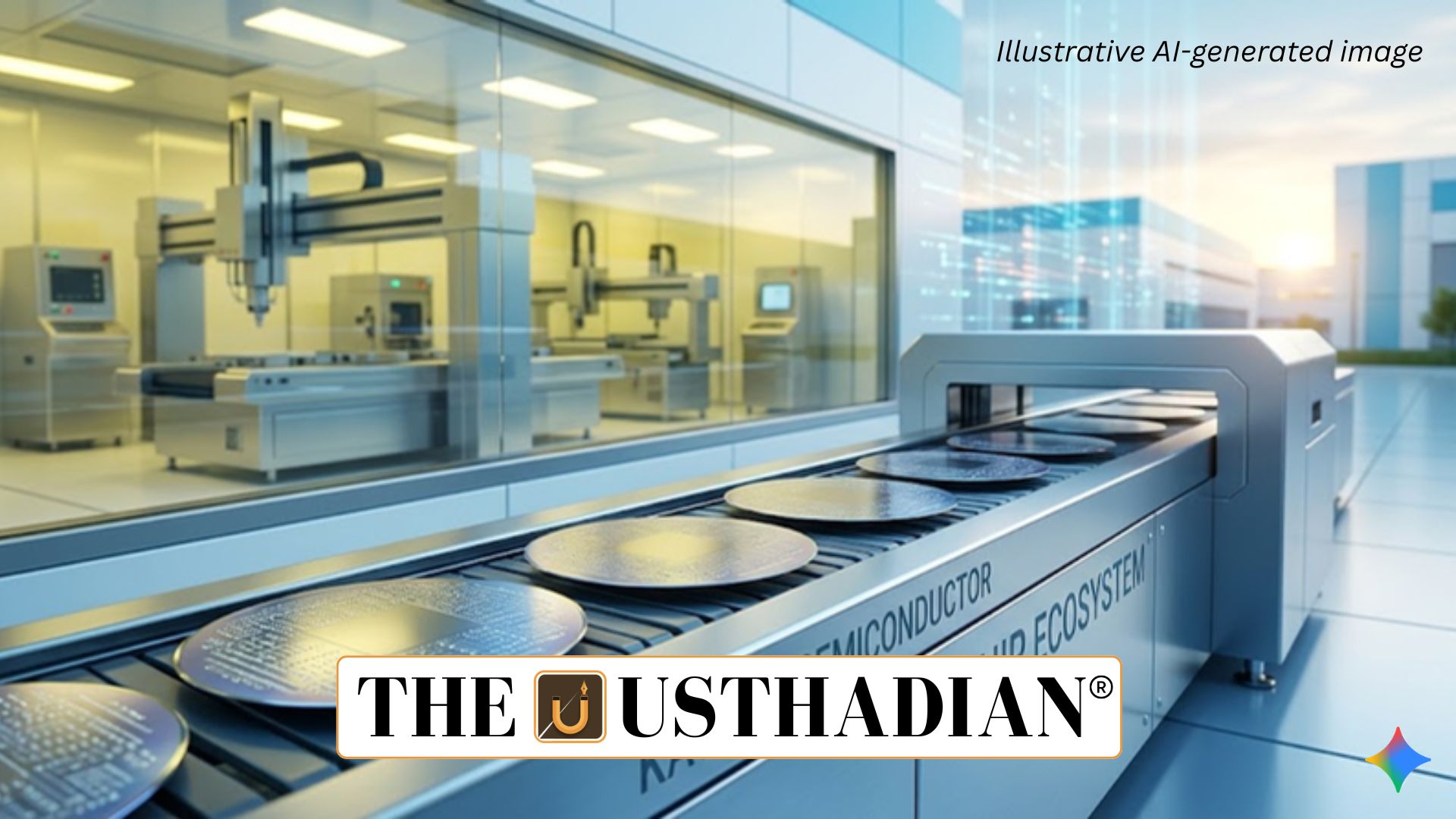
Launch of Kaynes semiconductor facility
Kaynes Semiconductor Plant Launch Strengthens India Chip Ecosystem: Prime Minister Narendra Modi inaugurated the Kaynes Semicon Plant on March 31, 2026 in Sanand, Gujarat. This marks a major step in India’s journey towards becoming a global semiconductor hub.
The plant has begun production of advanced semiconductor components used in key sectors like electronics and electric vehicles (EVs). It strengthens India’s domestic manufacturing capability and reduces import dependence.
Static GK fact: Sanand in Gujarat has emerged as a major industrial hub, also hosting automobile manufacturing units.
Role in India semiconductor ecosystem
The Kaynes facility is part of the broader India Semiconductor Mission (ISM) launched in 2021. The mission aims to build a complete semiconductor ecosystem, including design, fabrication, and testing.
This project reflects India’s push to become a reliable partner in the global semiconductor supply chain. Multiple semiconductor projects are currently being developed across different states.
Static GK Tip: India approved a semiconductor incentive package worth ₹76,000 crore under ISM.
Boost to Make in India initiative
The plant aligns with the vision of Make in India, Make for the World. A significant share of its production is expected to serve global markets.
The facility is linked with international supply chains, including partnerships with companies from the United States. This enhances India’s presence in global technology manufacturing networks.
Key outputs include Intelligent Power Modules (IPMs), which are essential for high-efficiency power systems and modern electronics.
Importance for EVs and emerging sectors
The semiconductor components produced at the plant are critical for electric mobility and industrial automation. IPMs help improve energy efficiency and performance in EVs.
They are also widely used in renewable energy systems, heavy machinery, and advanced electronics. This makes the plant important for India’s transition to sustainable technologies.
Static GK fact: Electric vehicles rely heavily on semiconductor chips for battery management and motor control systems.
Investment and future expansion
India is witnessing large-scale investments in the semiconductor sector, with projects worth over ₹1.6 lakh crore underway. This indicates strong government commitment to technological growth.
The upcoming Semiconductor Mission 2.0 will focus on strengthening the entire supply chain, including raw materials and equipment manufacturing.
Skill development and innovation push
The government is investing heavily in workforce development to support the semiconductor industry. Plans include training around 85,000 professionals in this domain.
Initiatives like the Chips to Startup Programme aim to promote innovation and support startups in chip design. Over 400 universities are participating in building talent and research capabilities.
Static GK Tip: Skilled manpower is a key requirement in semiconductor fabrication due to its high technological complexity.
Way forward
India must ensure consistent policy support, infrastructure readiness, and global partnerships to sustain growth. Strengthening research and development will be crucial.
With initiatives like the Kaynes plant, India is steadily moving towards becoming a global semiconductor manufacturing and innovation hub.
Static Usthadian Current Affairs Table
Kaynes Semiconductor Plant Launch Strengthens India Chip Ecosystem:
| Topic | Detail |
| Event | Inauguration of Kaynes Semicon Plant |
| Date | March 31, 2026 |
| Location | Sanand, Gujarat |
| Key Leader | Prime Minister Narendra Modi |
| Key Output | Intelligent Power Modules |
| Mission Linked | India Semiconductor Mission |
| Investment Scale | ₹1.6 lakh crore projects underway |
| Skill Target | 85,000 semiconductor professionals |
| Key Initiative | Chips to Startup Programme |