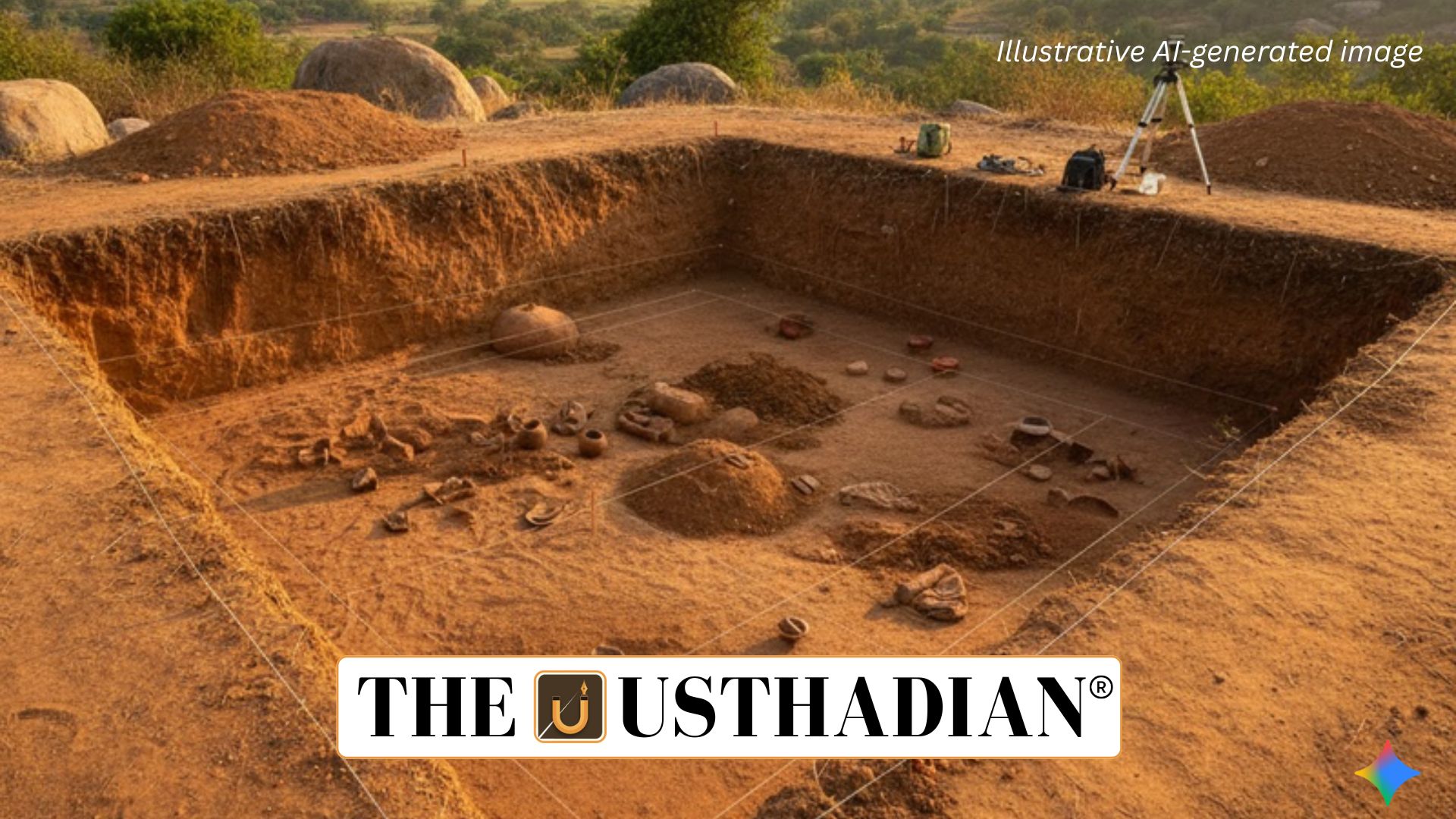
ASI begins first excavation in Kodaikanal
Kamanur Iron Age Burial Excavation in Palani Hills: The Archaeological Survey of India (ASI) has initiated an excavation at an Iron Age burial site in Kamanur, located near Kodaikanal in Tamil Nadu. This marks the first ASI-led excavation in Kodaikanal, giving new archaeological importance to the hill region.
The excavation is part of a three-year scientific exploration plan covering multiple heritage locations in the Palani Hills. The objective is to document burial practices and cultural patterns of early historic communities in South India.
Static GK fact: The Archaeological Survey of India was founded in 1861 by Alexander Cunningham and functions under the Ministry of Culture.
Types of burial structures identified
Archaeologists have identified several burial forms including cists, dolmens, urn burials, and pit burials. These are typical features of the South Indian Iron Age culture.
A cist is a stone-lined burial chamber, usually covered with large slabs. A dolmen consists of upright stones supporting a flat capstone, often visible above the ground.
Urn burials involve placing cremated or skeletal remains inside large pottery urns, while pit burials are simple excavated pits used for interment. The diversity of burial types indicates complex ritual practices and social differentiation.
Static GK Tip: The Iron Age in South India is generally dated between 1200 BCE and 300 BCE, characterized by the use of iron tools and megalithic monuments.
Archaeological importance of Palani Hills
The Palani Hills, part of the Western Ghats, are ecologically sensitive and historically significant. The region has yielded evidence of megalithic culture, which is associated with large stone burial monuments.
Earlier excavations were conducted at Thandikudi in 2004 and 2006, revealing black-and-red ware pottery and iron artifacts. However, those were not ASI-led projects. The current excavation strengthens institutional archaeological research in the region.
The findings may help scholars understand trade networks, settlement patterns, and metallurgical practices in ancient Tamil societies.
Static GK fact: The Western Ghats is a UNESCO World Heritage Site and is one of the eight “hottest hotspots” of biological diversity in the world.
Cultural and historical significance
The excavation reflects the continuity of ancient habitation in Tamil Nadu’s hill regions. The burial sites suggest organized communities with established funerary customs and possibly social hierarchies.
Tamil Nadu is already known for major Iron Age sites like Adichanallur and Kodumanal, which have revealed advanced craftsmanship and maritime trade links. The Kamanur site may add further depth to the understanding of early Tamil civilization.
This initiative highlights the growing focus on regional archaeology and heritage preservation in India.
Static Usthadian Current Affairs Table
Kamanur Iron Age Burial Excavation in Palani Hills:
| Topic | Detail |
| Excavating Agency | Archaeological Survey of India |
| Location | Kamanur near Kodaikanal, Tamil Nadu |
| Region | Palani Hills, Western Ghats |
| Period | Iron Age (1200 BCE – 300 BCE approx.) |
| Burial Types | Cists, dolmens, urn burials, pit burials |
| Project Duration | Three-year excavation plan |
| Previous Nearby Excavations | Thandikudi (2004, 2006) |
| Significance | Study of megalithic culture and early Tamil society |