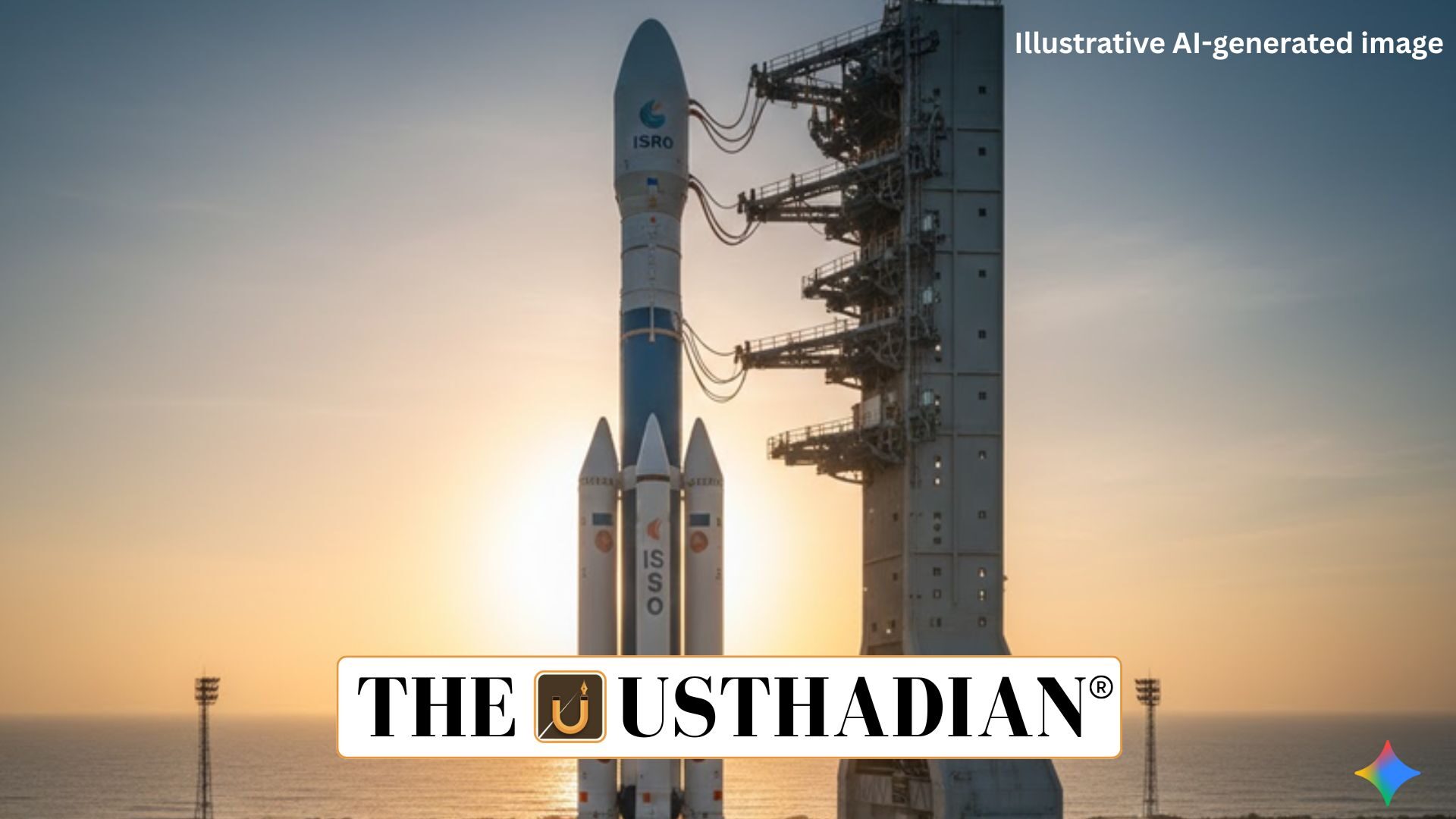
India’s Human Spaceflight Milestone
ISRO Confirms Gaganyaan Mission Timeline for Launch: India’s first human spaceflight programme, Gaganyaan, has entered a decisive phase with a confirmed launch timeline. ISRO Chairman V Narayanan has stated that the human mission is planned for 2027, following a sequence of uncrewed validation flights. This announcement places astronaut safety and mission reliability at the core of India’s space ambitions.
The confirmation signals India’s readiness to move from experimental testing to operational human spaceflight capability. It also marks a transition from technology development to mission execution.
What is the Gaganyaan Mission
Gaganyaan is India’s flagship human spaceflight programme led by the Indian Space Research Organisation. The objective is to send Indian astronauts, known as Gaganyatris, into Low Earth Orbit for a short-duration mission and return them safely.
The mission will place India among a select group of nations with independent human spaceflight capability. Static GK fact: Only the United States, Russia, and China have achieved this feat so far.
Planned Uncrewed Missions Before 2027
Before astronauts fly, three uncrewed missions will be conducted to validate mission-critical systems. The first mission, G1, is scheduled for March 2026 and is nearly 90 per cent complete. Over 8,000 ground and structural tests have already been carried out.
These tests focus on structural integrity, avionics, propulsion systems, and mission software. Each system must meet absolute safety standards before human launch approval is granted.
Role of Vyommitra in Mission Validation
The G1 mission will carry Vyommitra, ISRO’s humanoid robot designed for human mission simulation. Vyommitra will assess life-support systems, crew module environment, re-entry behaviour, and recovery operations.
These simulations are crucial to evaluate how the spacecraft performs under real mission conditions. Static GK Tip: Humanoid robots are commonly used globally to test human spaceflight environments without risking lives.
Emphasis on Astronaut Safety
ISRO has clearly stated that astronaut safety is the non-negotiable priority of the Gaganyaan programme. Four Gaganyatris—Shubhanshu Shukla, Prasanth Balakrishnan Nair, Ajit Krishnan, and Angad Pratap—have been identified and are undergoing intensive training.
Parallel testing continues on crew escape systems, environmental controls, and software simulations. Environmental qualification tests will ensure reliability under extreme launch and space conditions.
Launch Vehicle and Mission Profile
The astronauts will be launched using the human-rated LVM3 rocket, capable of placing the crew module into a 400 km Low Earth Orbit. The planned human mission duration is about three days.
After orbital operations, the crew module will re-enter Earth’s atmosphere and land safely using parachutes and recovery systems in Indian waters. Static GK fact: LVM3 was earlier known as GSLV Mk III.
Static Usthadian Current Affairs Table
ISRO Confirms Gaganyaan Mission Timeline for Launch:
| Topic | Detail |
| Mission Name | Gaganyaan |
| Confirmed Human Launch Year | 2027 |
| First Uncrewed Mission | G1 (March 2026) |
| Humanoid Robot | Vyommitra |
| Launch Vehicle | LVM3 (human-rated) |
| Planned Orbit | Low Earth Orbit (400 km) |
| Mission Duration | About three days |
| Astronaut Designation | Gaganyatri |