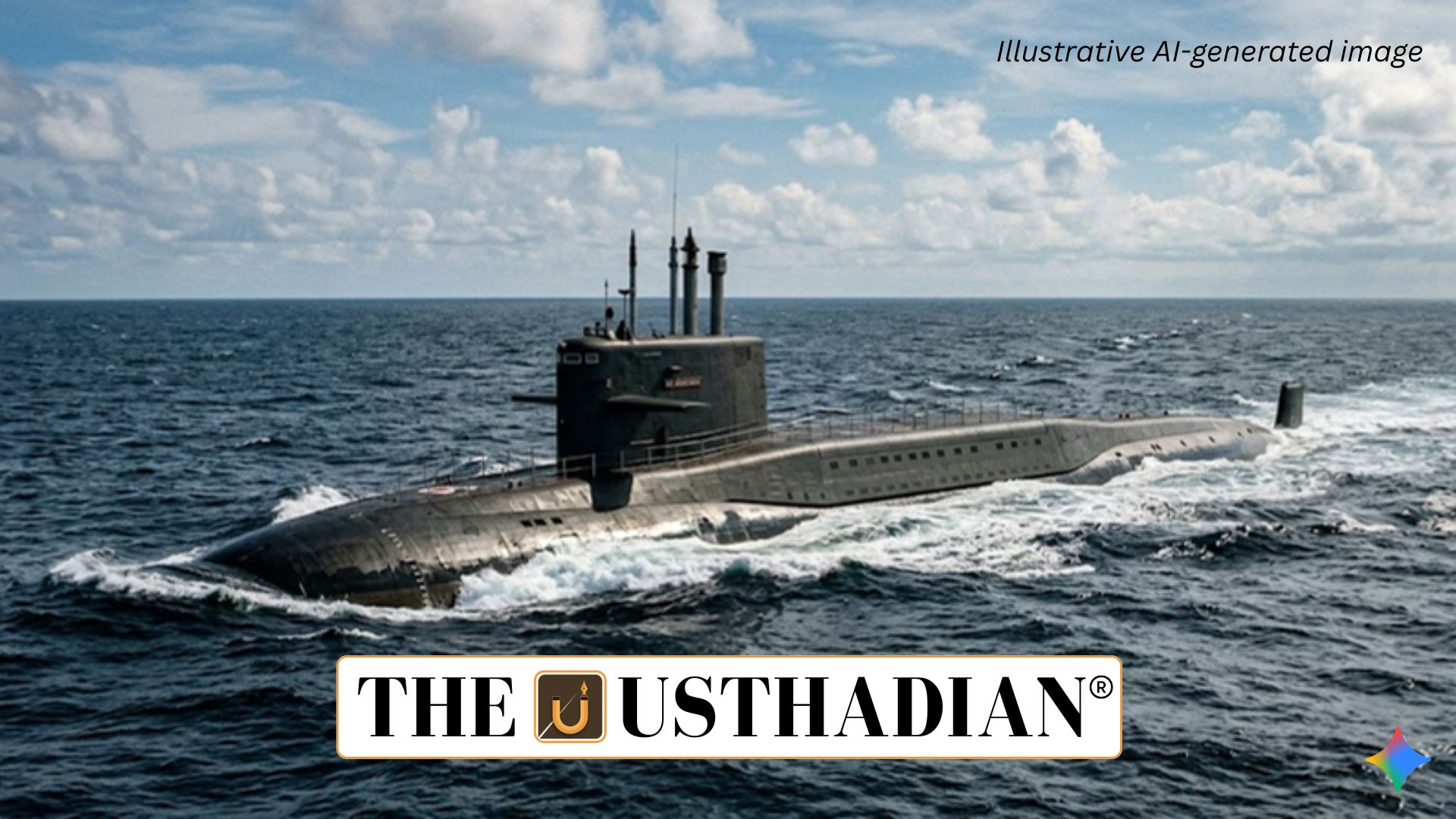
Silent commissioning marks major milestone
INS Aridhaman Strengthens India Naval Nuclear Power: India has strengthened its maritime defence with the induction of INS Aridhaman (S4) into the naval fleet. The submarine was quietly commissioned on April 3, 2026, at Visakhapatnam in the presence of Rajnath Singh.
The low-profile ceremony reflects the strategic sensitivity of nuclear submarine operations. This induction marks a significant advancement in India’s underwater deterrence capability.
Static GK fact: Visakhapatnam hosts the Eastern Naval Command, one of the three commands of the Indian Navy.
Advanced features and capabilities
INS Aridhaman is the third submarine under the Arihant-class developed through the Advanced Technology Vessel (ATV) programme. It is larger and more advanced than earlier submarines like INS Arihant and INS Arighaat.
Weighing around 7,000 tonnes, it has enhanced stealth, endurance, and firepower. The submarine can remain submerged for extended durations, making it difficult to detect.
Static GK Tip: Nuclear-powered submarines use nuclear reactors, allowing them to operate underwater for months without surfacing.
Missile strength enhances deterrence
INS Aridhaman is equipped with nuclear-capable ballistic missiles such as K-15 Sagarika and K-4 missiles with a range of approximately 3,500 km. Future integration of K-5 missiles is also planned.
Its ability to carry more missiles compared to earlier submarines significantly boosts India’s second-strike capability. This ensures credible deterrence against potential adversaries.
Static GK fact: The K-series missiles are submarine-launched ballistic missiles (SLBMs) developed by DRDO.
Boost to nuclear triad capability
The induction of INS Aridhaman strengthens India’s nuclear triad, which allows launching nuclear weapons from land, air, and sea. This capability ensures survivability even after a first strike.
India now joins a select group of nations including the United States, Russia, China, and France possessing a fully functional triad.
Static GK Tip: Sea-based nuclear assets are considered the most secure component of the triad due to their stealth.
Future naval expansion plans
India continues to expand its submarine fleet with more advanced projects underway. Additional SSBNs are under development, along with plans for nuclear-powered attack submarines (SSNs).
The Navy aims to commission several submarines between 2036 and 2039, enhancing long-term strategic capabilities. This aligns with India’s goal of achieving defence self-reliance under Atmanirbhar Bharat.
Static GK fact: India’s Navy currently operates over 130 ships and submarines, making it one of the largest naval forces globally.
Static Usthadian Current Affairs Table
INS Aridhaman Strengthens India Naval Nuclear Power:
| Topic | Detail |
| Submarine Name | INS Aridhaman |
| Class | Arihant-class SSBN |
| Commission Date | April 3, 2026 |
| Location | Visakhapatnam |
| Weight | Around 7,000 tonnes |
| Key Missiles | K-15, K-4 |
| Programme | Advanced Technology Vessel |
| Strategic Role | Nuclear triad strengthening |