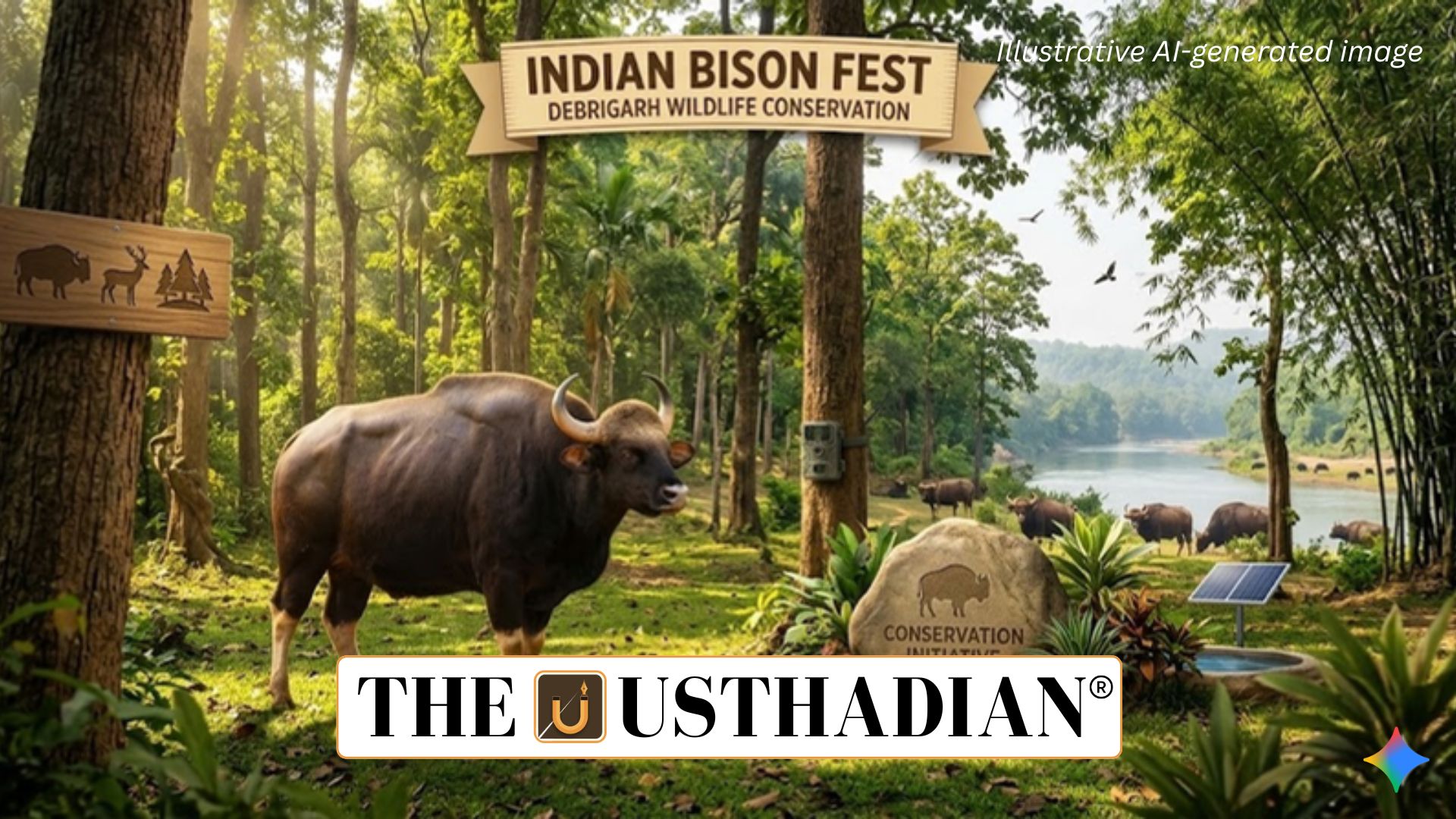
Debrigarh Hosts Indian Bison Fest
Indian Bison Fest Highlights Debrigarh Wildlife Conservation: Debrigarh Wildlife Sanctuary in Sambalpur district of Odisha will host the second edition of the Indian Bison Fest on March 8, 2026. The event will be organised by the Hirakud Wildlife Division at Zeropoint inside the sanctuary. It aims to highlight conservation efforts for the Indian bison or gaur.
The festival will bring together students, wildlife researchers, conservation volunteers, and nature enthusiasts. It is designed to increase public awareness about wildlife protection and sustainable tourism. The event also strengthens the sanctuary’s identity as an emerging eco-tourism destination in eastern India.
Static GK fact: Debrigarh Wildlife Sanctuary lies near the Hirakud Dam reservoir, one of the longest earthen dams in the world built across the Mahanadi River.
Rising Gaur Population in Debrigarh
Recent wildlife census data indicates a significant rise in the gaur population inside the sanctuary. The January 2026 census recorded 848 gaurs, reflecting an increase of 190 individuals compared to the previous year. This growth demonstrates strong conservation success.
Out of the total population, around 235 are juveniles below two years of age, forming nearly 30 percent of the population. A high juvenile ratio indicates healthy breeding patterns and stable herd dynamics. Such trends confirm that the Debrigarh–Hirakud landscape is becoming an important habitat for gaur conservation.
Static GK Tip: The gaur (Bos gaurus) is considered the largest living wild bovine species in the world and is commonly known as the Indian bison.
Wildlife Activities During the Festival
The Indian Bison Fest will feature multiple eco-tourism and educational activities. The programme will begin with expert talks on gaur behaviour, habitat management, and wildlife conservation strategies. A wildlife documentary screening will also be organised to educate participants.
Visitors will experience guided gaur safaris inside Debrigarh Wildlife Sanctuary to observe wildlife in its natural habitat. The second edition introduces night camping inside the sanctuary, allowing participants to experience forest ecosystems after sunset.
The evening will include a stargazing session, where visitors can observe constellations such as Saptarishi Mandal and Orion. The next day will feature trekking trails and a cruise ride across the Hirakud reservoir.
One of the attractions is a visit to Bat Island, which hosts over 1,000 fruit bats, making it an important micro-habitat within the sanctuary ecosystem.
Conservation Strategies in the Sanctuary
Authorities have implemented multiple conservation initiatives in Debrigarh Wildlife Sanctuary. These include grassland restoration programmes, wetland management projects, and habitat improvement measures.
Continuous wildlife monitoring and population census surveys are conducted to track gaur numbers and herd movements. The sanctuary management also focuses on maintaining ecological balance between herbivores and predators.
Such measures aim to establish Debrigarh as a long-term source population site for gaur conservation in eastern India. Strong population growth suggests that conservation policies are producing positive ecological outcomes.
Static GK fact: The IUCN Red List categorises the gaur as Vulnerable, mainly due to habitat loss, fragmentation, and hunting pressures across its distribution range in South and Southeast Asia.
Static Usthadian Current Affairs Table
Indian Bison Fest Highlights Debrigarh Wildlife Conservation:
| Topic | Detail |
| Event | Indian Bison Fest 2026 |
| Date | March 8, 2026 |
| Location | Debrigarh Wildlife Sanctuary, Sambalpur, Odisha |
| Organiser | Hirakud Wildlife Division |
| Key Species | Indian bison or gaur (Bos gaurus) |
| Gaur Population | 848 individuals recorded in January 2026 |
| Juvenile Population | Around 235 individuals below two years |
| Major Activities | Gaur safari, night camping, trekking, wildlife talks |
| Special Attraction | Stargazing and visit to Bat Island |
| Conservation Status | Gaur listed as Vulnerable on the IUCN Red List |