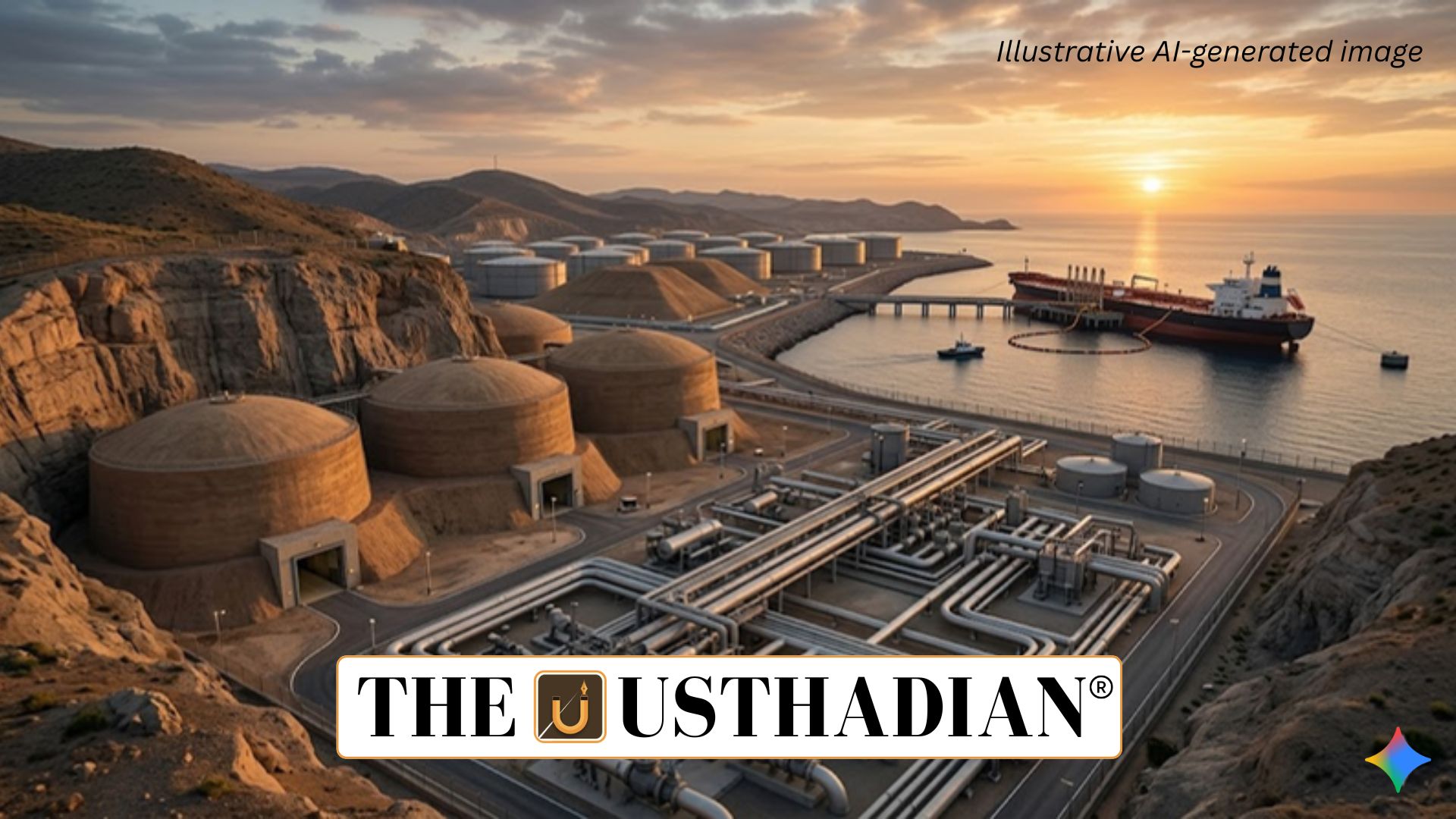
Present status of SPRs
India Strategic Petroleum Reserves Status: India’s Strategic Petroleum Reserves (SPRs) are currently about two-thirds full, as stated by the Union Minister in March 2026. The total storage capacity stands at 5.33 million metric tonnes (MMT).
At full capacity, these reserves can support around 9.5 days of crude oil consumption. This acts as a critical buffer during global supply disruptions.
Static GK fact: India is the third-largest oil importer in the world after the United States and China.
What are Strategic Petroleum Reserves
SPRs are emergency stockpiles of crude oil maintained by the government. They are used during crises such as wars, geopolitical tensions, or supply chain disruptions.
These reserves are separate from the commercial stocks held by oil companies. Their primary aim is to ensure uninterrupted energy supply for the nation.
The reserves are managed by Indian Strategic Petroleum Reserves Limited (ISPRL), established in 2004 under the Ministry of Petroleum and Natural Gas.
Static GK Tip: The concept of SPRs gained importance after the 1973 Oil Crisis, which disrupted global oil supply chains.
Storage technology and locations
India stores crude oil in underground rock caverns, built deep below the surface. These locations are chosen near coastal regions for easy access to imports.
Phase-I SPR facilities with 5.33 MMT capacity are operational at:
- Visakhapatnam (Andhra Pradesh)
- Mangaluru (Karnataka)
- Padur (Karnataka)
These underground caverns provide natural protection and lower evaporation losses, making them highly efficient.
Expansion under Phase-II
To strengthen energy security, India approved Phase-II expansion in 2021, adding 6.5 MMT capacity.
New facilities are planned at:
- Chandikhol (Odisha)
- Padur Phase-II
This expansion aims to gradually increase India’s reserve capacity closer to global standards.
Significance of SPRs
SPRs play a crucial role in ensuring energy security during emergencies like wars or shipping disruptions. They act as a safeguard against sudden supply shocks.
They also contribute to economic stability by preventing sharp increases in fuel prices during crises. This helps control inflation and protect consumers.
Additionally, SPRs enhance strategic autonomy, reducing India’s dependence on volatile global oil markets.
Static GK fact: The International Energy Agency (IEA) recommends maintaining reserves equivalent to 90 days of net oil imports.
Challenges in SPR management
India’s SPR capacity is still limited compared to global benchmarks. The current reserves cover only a short duration of consumption.
There is also a lack of a clear policy on when to release reserves, especially during price volatility. This affects their optimal utilization as a market stabilisation tool.
Further expansion requires high investment and long-term planning, making it a capital-intensive initiative.
Way forward
India must expand its SPR capacity and develop a transparent release policy. Strengthening coordination with global energy agencies can improve efficiency.
Increasing domestic storage along with diversified import sources will ensure long-term energy resilience.
Static Usthadian Current Affairs Table
India Strategic Petroleum Reserves Status:
| Topic | Detail |
| Total capacity | 5.33 MMT |
| Current status | About two-thirds full |
| Consumption coverage | Around 9.5 days |
| Implementing agency | ISPRL |
| Ministry | Ministry of Petroleum and Natural Gas |
| Phase-I locations | Visakhapatnam, Mangaluru, Padur |
| Phase-II expansion | Chandikhol and Padur Phase-II |
| Global benchmark | 90 days oil reserves (IEA) |