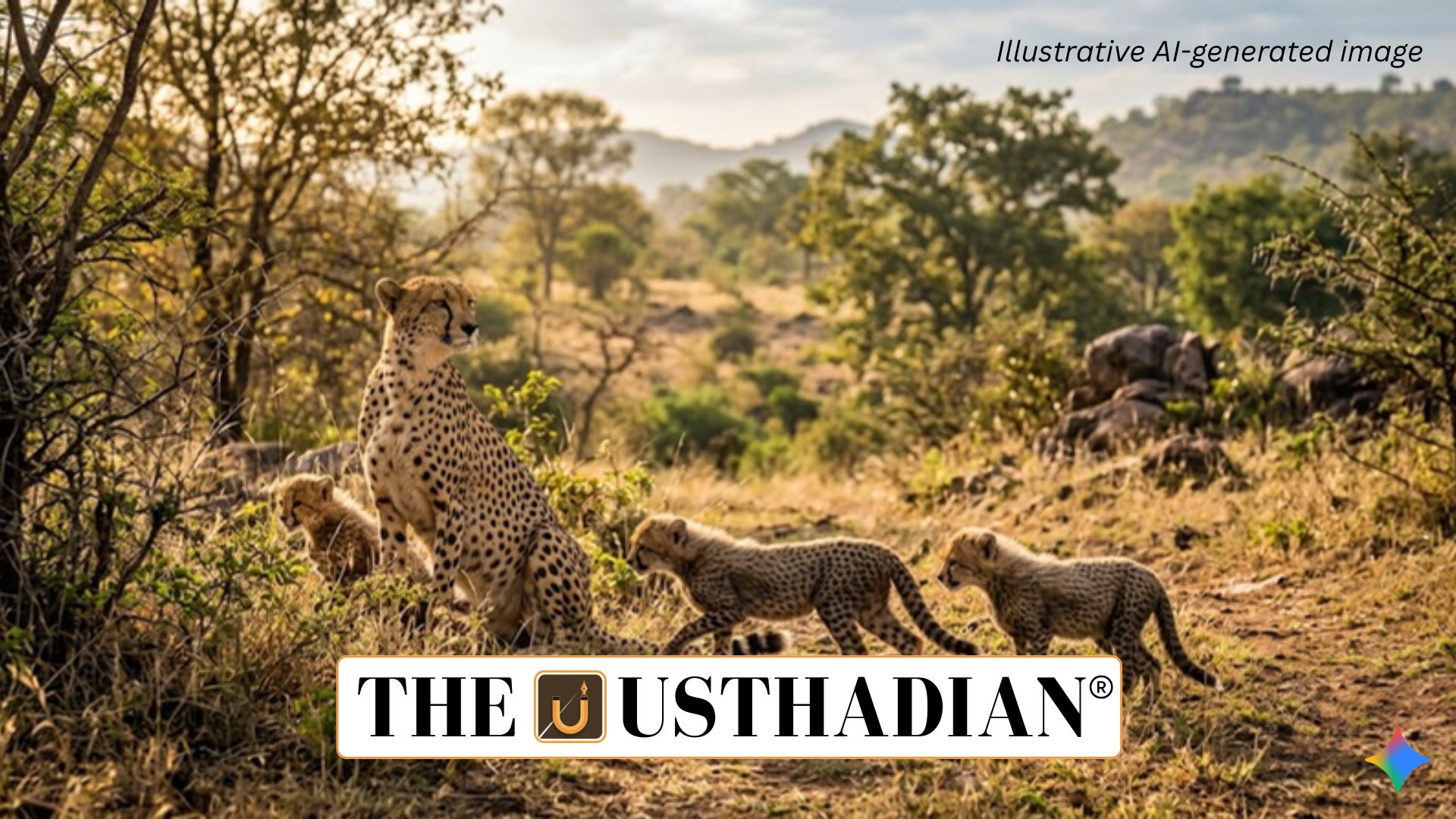
New milestone in cheetah restoration
India Sees Rising Cheetah Numbers With New Cubs at Kuno: India’s cheetah population has reached 53 after Namibian cheetah Jwala gave birth to five cubs at Kuno National Park in Madhya Pradesh. The announcement was made on 9 March 2026 by Union Environment Minister Bhupender Yadav, marking a major milestone in Project Cheetah, India’s ambitious wildlife restoration programme.
This birth represents the 10th successful cheetah litter in India since the species was reintroduced. The event reflects growing confidence among conservation experts that the Indian habitat is gradually becoming suitable for cheetah survival and breeding.
Indian born cheetah population rises
With the latest litter, the number of Indian-born cheetah cubs has increased to 33. Jwala has now become a third-time mother, showing consistent reproductive success within India’s protected environment.
Wildlife veterinarians and forest officials are closely monitoring the cubs during their early months. Survival during the initial stages is critical for building a stable population and achieving the ecological goals of Project Cheetah.
Static GK fact: Cheetahs became extinct in India in 1952, primarily due to habitat loss and hunting. The country later declared the species extinct under wildlife records before initiating restoration efforts decades later.
Growing international cooperation
India’s cheetah population growth has been supported by international wildlife cooperation. The first group of cheetahs under Project Cheetah was translocated from Namibia in September 2022, marking the first intercontinental relocation of a large carnivore.
More recently, on 28 February 2026, nine cheetahs from Botswana—including six females and three males—were brought to India. These animals are currently kept in quarantine enclosures at Kuno National Park for health monitoring and acclimatisation before release into the wild.
Another female cheetah named Gamini, originally from South Africa, also recently delivered four cubs, contributing further to India’s growing cheetah population.
Importance of Kuno National Park
Kuno National Park in Madhya Pradesh has emerged as the central hub for India’s cheetah revival programme. The park offers open grassland and dry forest ecosystems, which closely resemble the natural hunting habitats preferred by cheetahs.
The park currently supports multiple enclosures, monitoring systems, and wildlife management teams working to ensure the successful integration of the species.
Static GK Tip: Kuno National Park was originally prepared as a relocation site for Asiatic lions before being selected as the primary location for India’s cheetah reintroduction programme.
Strengthening wildlife conservation efforts
The growing number of cheetah births indicates encouraging progress for India’s grassland ecosystem restoration efforts. Continuous monitoring through radio collars, field observation, and veterinary supervision helps track the animals’ health and movement patterns.
Experts believe that sustained breeding success and careful habitat management could eventually lead to a self-sustaining cheetah population in India. The success of Project Cheetah is increasingly viewed as a landmark effort in global wildlife conservation and species reintroduction.
Static Usthadian Current Affairs Table
India Sees Rising Cheetah Numbers With New Cubs at Kuno:
| Topic | Detail |
| Event | Birth of five cheetah cubs to Jwala at Kuno National Park |
| Date of announcement | March 9, 2026 |
| Total cheetah population in India | 53 individuals |
| Indian-born cheetah cubs | 33 cubs |
| Successful cheetah litters in India | 10 litters |
| Key conservation programme | Project Cheetah |
| Initial cheetah relocation | Namibia in September 2022 |
| Latest international transfer | Nine cheetahs from Botswana in February 2026 |
| Main conservation site | Kuno National Park, Madhya Pradesh |
| Extinction year in India | 1952 |