Government Steps In to Stabilise Gas Supply
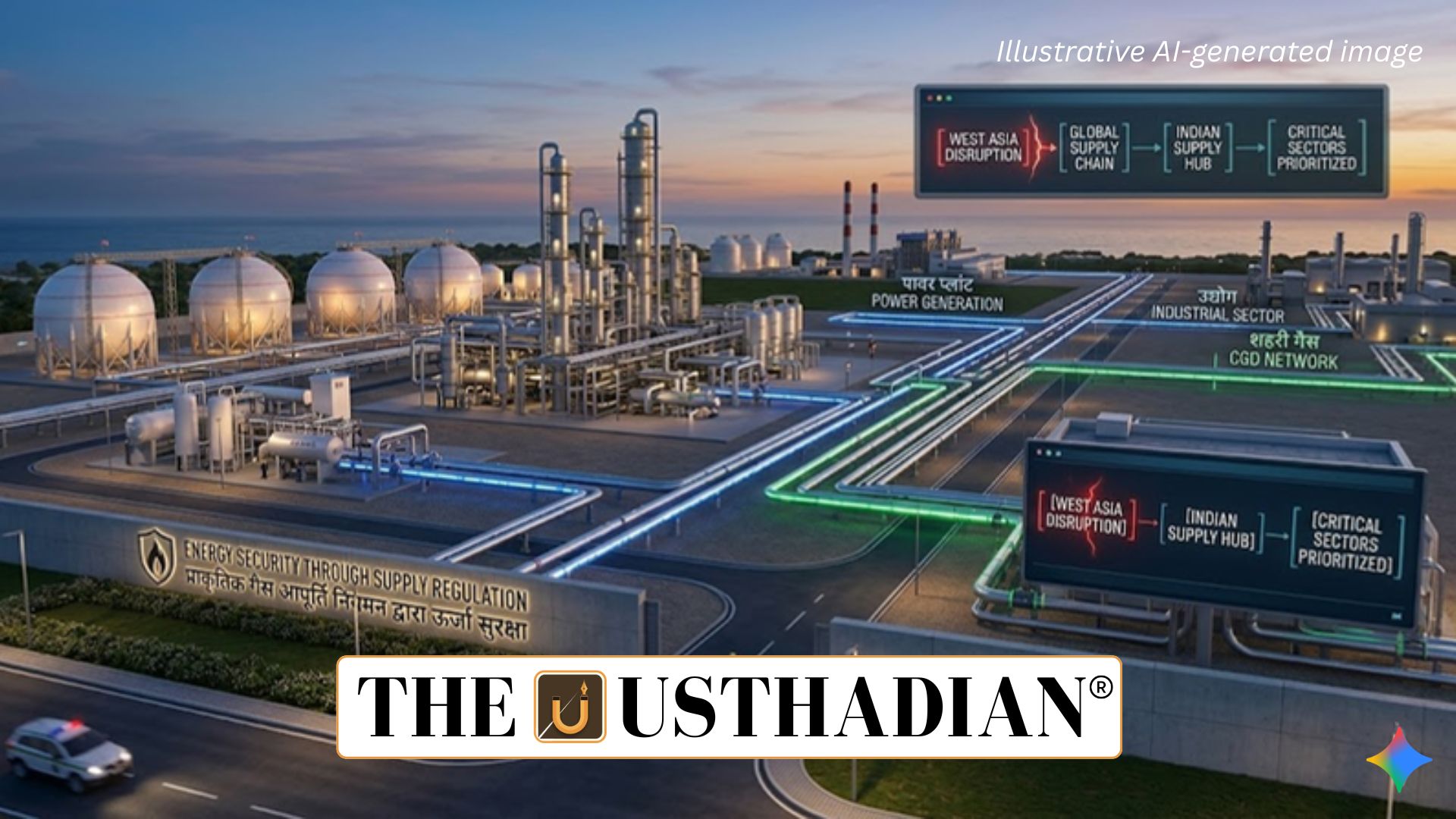
India Regulates Natural Gas Supply Amid West Asia Disruption: The Central Government has issued the Natural Gas (Supply Regulation) Order, 2026 by invoking powers under the Essential Commodities Act, 1955 (ECA). This step aims to manage the sudden disruption in liquefied natural gas (LNG) imports caused by the ongoing conflict in West Asia.
The crisis has affected LNG shipments passing through the Strait of Hormuz, a critical maritime route for global energy trade. As India relies heavily on imported LNG to meet industrial and domestic demand, the disruption created concerns over supply shortages.
The government intervention ensures equitable distribution of natural gas and prevents possible hoarding or market distortions during the supply crisis.
Static GK fact: The Strait of Hormuz, located between Iran and Oman, handles nearly one-fifth of the world’s petroleum trade, making it one of the most strategically important energy corridors globally.
Four Tier Priority Allocation System
A key feature of the order is the introduction of a four-tier priority allocation framework. Gas allocation will now be determined based on the average consumption of consumers during the previous six months.
Under this system, essential sectors receive priority supply, ensuring that critical services remain operational even during shortages. This structured allocation helps the government maintain stability in the energy market.
Industries with lower priority may experience reduced or curtailed gas supply, depending on availability.
Curtailment for Non Priority Industries
The order allows the government to partially or completely divert gas supplies away from non-priority sectors. Industries such as power plants and petrochemical units may face restrictions during periods of limited supply.
The diverted gas will be redirected to sectors considered vital for public welfare and national stability. This ensures that critical institutions continue functioning without disruption.
Static GK Tip: India imports nearly 45–50% of its natural gas consumption, making global energy supply chains extremely important for its energy security.
Gas Pooling Mechanism Introduced
Another major provision is the gas pooling mechanism. Gas diverted from non-priority sectors will be combined and redistributed to priority sectors.
The pooled supply will be sold at a newly determined pooled price, ensuring fair pricing and preventing sudden cost spikes in essential sectors.
This pricing mechanism also helps maintain market balance and transparency during periods of supply stress.
Legal Powers Under Essential Commodities Act
The Essential Commodities Act, 1955 empowers the government to regulate the production, supply, and distribution of essential goods.
Under Section 3 of the Act, the government can control the supply and distribution of petroleum and petroleum products, including natural gas, to ensure equitable access and prevent hoarding or black marketing.
The Act has historically been used to manage shortages of food grains, fuel, and other critical commodities during emergencies.
Additional Measures for LPG Supply
Apart from regulating natural gas, the government has introduced additional steps to ensure stable LPG availability.
A 25-day inter-booking period has been implemented to prevent hoarding and black marketing of LPG cylinders. Imported LPG is being prioritised for essential non-domestic sectors such as hospitals and educational institutions.
Further, a high-level committee has been constituted to review supply requirements of other sectors including hospitality and commercial establishments.
Static GK fact: India’s natural gas regulatory authority is the Petroleum and Natural Gas Regulatory Board (PNGRB), established under the PNGRB Act, 2006.
Static Usthadian Current Affairs Table
India Regulates Natural Gas Supply Amid West Asia Disruption:
| Topic | Detail |
| Regulation Order | Natural Gas (Supply Regulation) Order, 2026 |
| Legal Basis | Essential Commodities Act, 1955 |
| Trigger | Disruption of LNG shipments due to West Asia conflict |
| Strategic Location | Strait of Hormuz affecting global energy supply |
| Allocation System | Four tier priority framework based on past consumption |
| Supply Curtailment | Non priority industries such as power and petrochemical sectors |
| Pricing Policy | Gas pooling mechanism with pooled price |
| Additional Measure | 25 day LPG inter booking rule |
| Priority LPG Supply | Hospitals and educational institutions |
| Monitoring Body | High level committee reviewing non domestic sector supply |