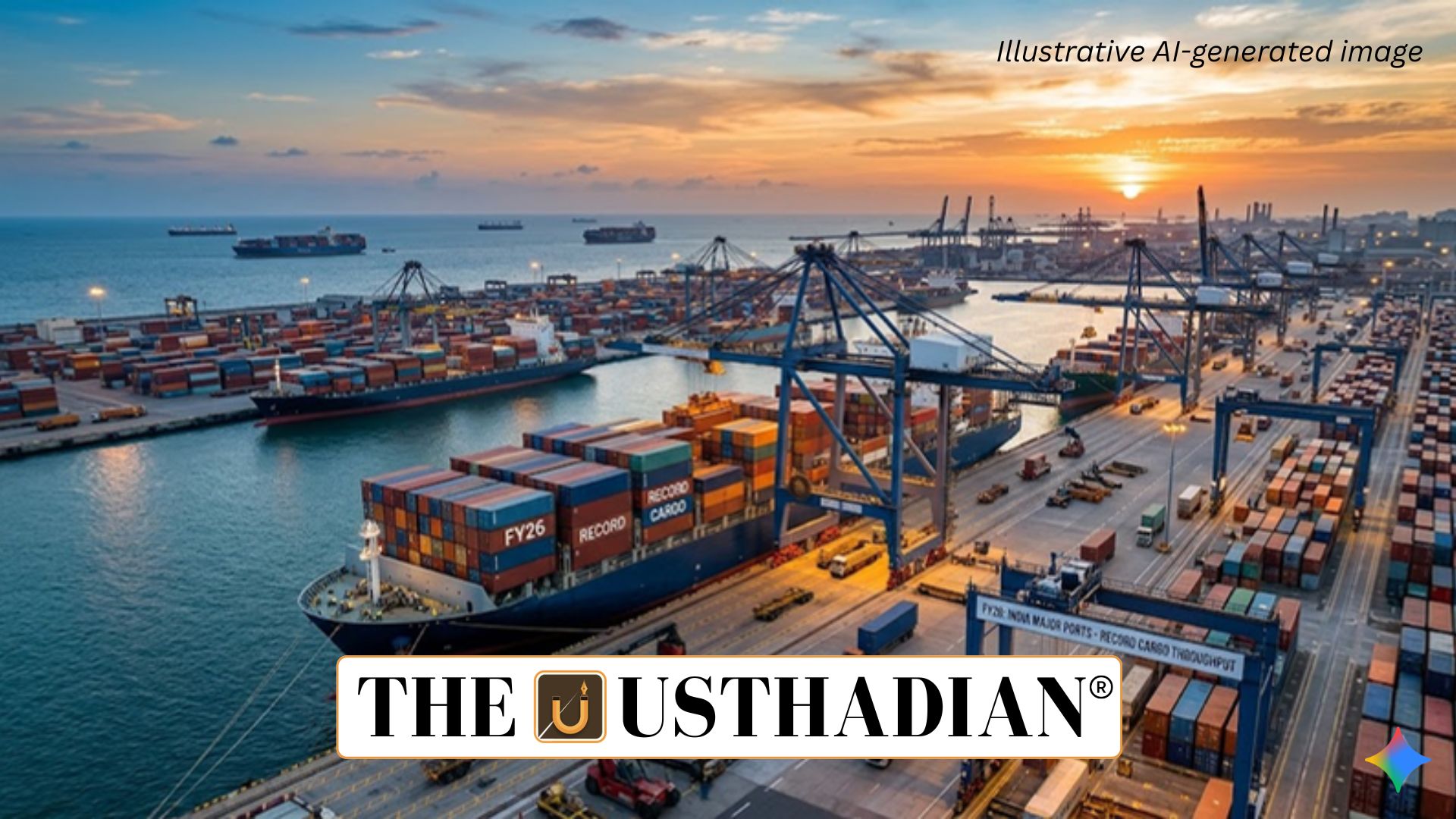
Record Performance in FY26
India Major Ports Achieve Record Cargo Throughput FY26: India’s maritime sector recorded a historic milestone with major ports handling 915.17 million tonnes (MT) of cargo in FY 2025–26. This surpassed the annual target of 904 MT, reflecting strong growth in trade capacity.
The cargo handling registered a 7.06% year-on-year growth, indicating improved efficiency and rising demand for maritime logistics. This achievement strengthens India’s position in global shipping networks.
Static GK fact: India has a coastline of about 7,500 km, making maritime trade crucial for its economy.
Leading Ports Contribution
Among major ports, Deendayal Port Authority emerged as the top performer with 160.11 MT cargo handled. It was closely followed by Paradip Port Authority with 156.45 MT.
The Jawaharlal Nehru Port Authority (JNPA) handled 102.01 MT, maintaining its role as India’s largest container port. Other ports like Visakhapatnam, Mumbai, Chennai, and New Mangalore also contributed significantly.
These ports collectively ensured balanced cargo distribution across western and eastern coasts.
Fastest Growing Ports
Some ports stood out for their rapid growth rates during FY26. Mormugao Port Authority recorded the highest growth of 15.91%.
The Kolkata Dock System followed with 14.28% growth, while JNPA registered 10.74% growth. These figures highlight the modernization and operational efficiency of Indian ports.
Static GK Tip: Ports on the western coast mainly handle petroleum and container cargo, while eastern ports focus on bulk cargo like coal and iron ore.
Factors Driving Growth
The record performance was driven by multiple strategic improvements. Infrastructure expansion allowed ports to handle larger vessels and higher cargo volumes efficiently.
Improved road, rail, and inland water connectivity strengthened hinterland linkages. This ensured faster movement of goods across regions.
The adoption of digital technologies streamlined port operations, reducing delays and increasing transparency. Additionally, reduced turnaround time of ships improved operational productivity.
Government Initiatives
The government has played a crucial role through policy support and investments. The Sagarmala Programme focuses on port-led development and modernization.
Efforts to enhance ease of doing business in logistics and attract private investment have strengthened the maritime sector.
The Ministry of Ports, Shipping and Waterways continues to push reforms aimed at improving efficiency and global competitiveness.
Strategic Importance
Ports are vital for handling bulk cargo, container traffic, and petroleum products, forming the backbone of India’s external trade. Nearly 95% of India’s trade by volume is carried through maritime routes.
The growth of port capacity directly supports sectors like manufacturing, energy, and exports. This aligns with India’s goal of becoming a $5 trillion economy.
Static GK fact: India has 12 major ports managed by the central government and over 200 non-major ports managed by states.
Way Forward
India must continue investing in green ports, smart logistics, and automation to remain competitive globally. Strengthening coastal shipping and inland waterways will further reduce logistics costs.
Sustained policy support and infrastructure upgrades will ensure long-term growth in maritime trade.
Static Usthadian Current Affairs Table
India Major Ports Achieve Record Cargo Throughput FY26:
| Topic | Detail |
| Total Cargo FY26 | 915.17 million tonnes |
| Growth Rate | 7.06 percent |
| Target | 904 million tonnes |
| Top Port | Deendayal Port Authority |
| Second Largest | Paradip Port Authority |
| Key Container Port | Jawaharlal Nehru Port Authority |
| Fastest Growing Port | Mormugao Port Authority |
| Key Programme | Sagarmala Programme |
| Governing Ministry | Ministry of Ports Shipping and Waterways |
| Total Major Ports | 12 |