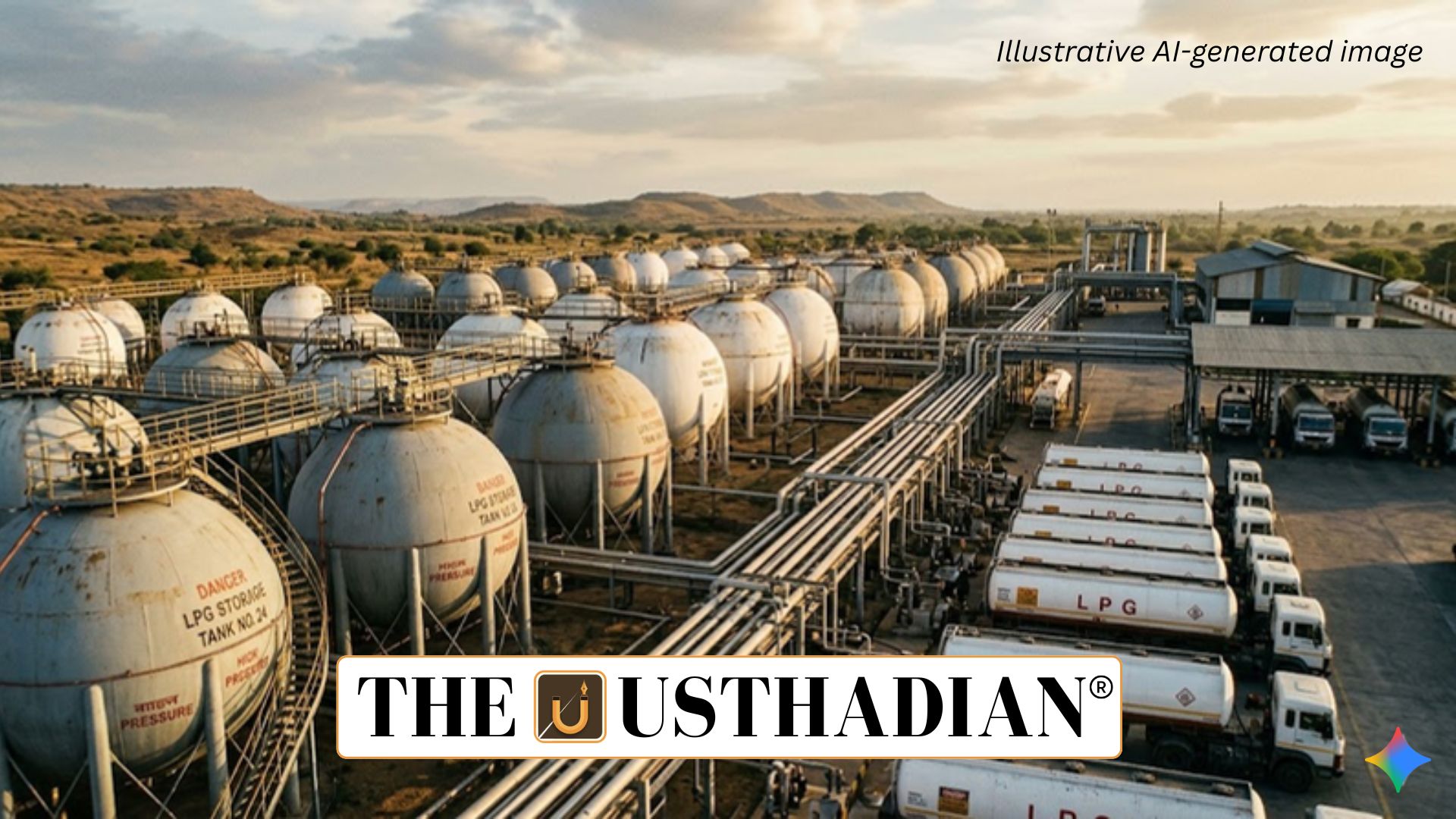
Government Action to Protect Energy Supply
India Invokes Essential Commodities Act to Secure LPG Supply: The Government of India invoked the Essential Commodities Act, 1955 (ECA) to safeguard the domestic availability of Liquefied Petroleum Gas (LPG) and natural gas. The decision came amid escalating geopolitical tensions in West Asia following the military confrontation involving Israel, the United States, and Iran beginning on 28 February 2026.
West Asia remains one of the world’s most crucial energy-producing regions. Any disruption in shipping routes or production facilities could significantly affect global oil and gas markets. To avoid domestic shortages and panic buying, the Ministry of Petroleum and Natural Gas introduced emergency regulatory measures under the Act.
Reasons Behind Invoking the Law
The government used powers granted under Sections 3 and 5 of the Essential Commodities Act. These provisions allow the central government to regulate the production, supply, and distribution of essential goods during crises.
The conflict in West Asia raised concerns about possible disruptions in global energy supply chains, especially in the transport of petroleum products through major maritime routes. India, which imports a significant portion of its crude oil and LPG requirements, must ensure uninterrupted availability for households and industries.
Static GK fact: India imports more than 80% of its crude oil requirement, making global geopolitical stability extremely important for domestic energy security.
Directives to Oil Refineries and OMCs
Following the invocation of the law, the government issued several operational instructions to stabilize the supply of cooking gas. These directives aim to increase LPG production and prevent diversion to non-essential sectors.
Oil refineries have been instructed to maximize LPG production by utilizing propane and butane streams. These hydrocarbons are normally used in multiple industrial processes, but the government has directed that they should not be diverted for petrochemical manufacturing during the current emergency.
Public sector Oil Marketing Companies (OMCs) such as Indian Oil Corporation, Bharat Petroleum, and Hindustan Petroleum have been asked to prioritize LPG distribution for domestic households and essential services.
To prevent panic buying and hoarding, a 25-day booking interval has been introduced for fresh LPG cylinder bookings.
Natural Gas Supply Regulation Order 2026
Along with invoking the Essential Commodities Act, the government issued the Natural Gas (Supply Regulation) Order 2026. This order prioritizes the allocation of natural gas to sectors considered essential for economic stability.
Under this regulation, priority allocation is given to Domestic PNG (Piped Natural Gas) users, CNG used in transportation, and fertiliser manufacturing plants. Ensuring continuous gas supply to fertiliser plants is particularly important because fertilisers are crucial for agricultural productivity and food security.
Static GK Tip: India is among the world’s largest fertiliser consumers, and natural gas is a key raw material in urea production.
Understanding the Essential Commodities Act
The Essential Commodities Act, 1955 was enacted to ensure that vital goods remain available to the public at reasonable prices. The law empowers the government to regulate production, control distribution, impose stock limits, and prevent hoarding or black marketing.
Commodities commonly included under the Act are food grains, pulses, edible oils, fertilisers, medicines, and petroleum products such as LPG and natural gas.
In 2020, the Act was amended to reduce regulatory restrictions on certain agricultural commodities to encourage private investment. However, the government retains the authority to reintroduce controls during extraordinary circumstances such as war, famine, or severe disasters.
Static Usthadian Current Affairs Table
India Invokes Essential Commodities Act to Secure LPG Supply:
| Topic | Detail |
| Law Invoked | Essential Commodities Act, 1955 |
| Reason | Energy security concerns due to West Asia conflict |
| Key Date | Israel–US attacks on Iran began on 28 February 2026 |
| Main Objective | Prevent LPG shortages and hoarding |
| Key Directives | Refineries must maximize LPG output using propane and butane |
| Distribution Priority | Domestic households and essential sectors |
| Booking Rule | 25-day interval introduced for LPG cylinder bookings |
| Additional Order | Natural Gas (Supply Regulation) Order 2026 |
| Priority Gas Allocation | PNG households, CNG transport, fertiliser plants |
| Strategic Importance | Ensures stable energy supply during geopolitical crises |