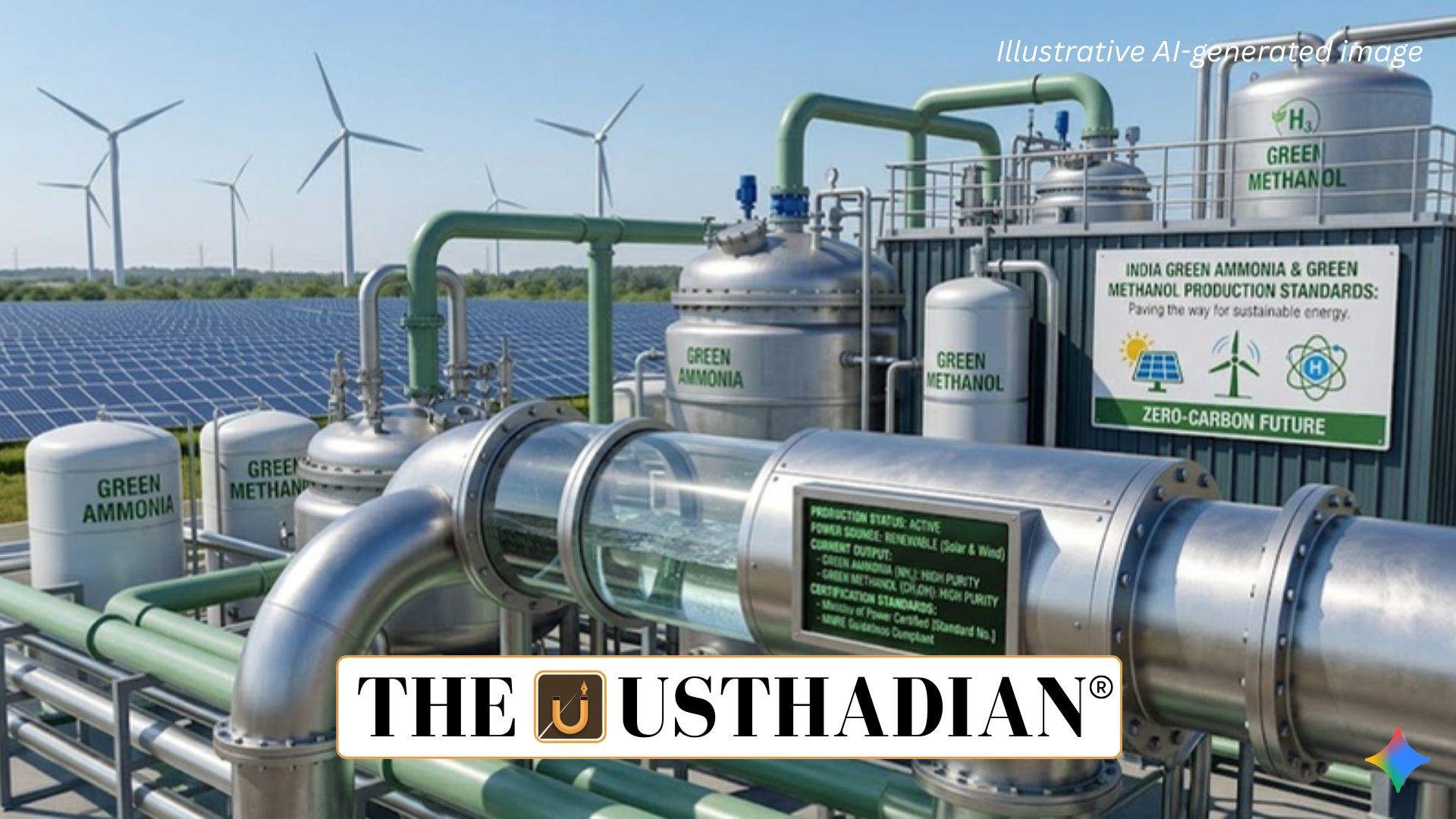
India strengthens green hydrogen ecosystem
India Introduces Green Ammonia and Green Methanol Standards: India has officially notified production standards for Green Ammonia and Green Methanol under the National Green Hydrogen Mission. These standards aim to ensure that these fuels are produced using renewable energy sources such as solar and wind power, making them environmentally sustainable.
The new framework establishes clear certification rules for industries producing green fuels. This step is expected to enhance transparency in the emerging green hydrogen market and prevent misleading environmental claims about low-carbon fuels.
Static GK fact: India is the world’s third-largest energy consumer after China and the United States.
Role of the National Green Hydrogen Mission
The National Green Hydrogen Mission, launched by the Government of India in 2023, is a flagship initiative designed to make India a global hub for the production, utilization, and export of green hydrogen. The mission aims to reduce dependence on fossil fuels while accelerating the adoption of renewable energy.
The programme focuses on building large-scale green hydrogen production capacity, developing infrastructure, and supporting technological innovation. It also encourages investments in hydrogen-based industries and international collaborations.
Static GK Tip: Hydrogen is the most abundant element in the universe and is considered a key clean energy carrier.
Understanding green ammonia and green methanol
Green Ammonia is produced by combining nitrogen from the air with green hydrogen generated through renewable energy-powered electrolysis. It can serve as an efficient hydrogen carrier and can also be directly used as a clean fuel in industries and shipping.
Green Methanol is produced by combining green hydrogen with captured carbon dioxide. This process results in a low-carbon liquid fuel widely considered suitable for shipping, chemicals, and power generation sectors.
Both fuels are expected to play a crucial role in reducing greenhouse gas emissions from hard-to-decarbonize sectors such as heavy industry and maritime transport.
Static GK fact: Ammonia (NH₃) is widely used in fertiliser production and is one of the most produced chemicals globally.
Importance of green fuel standards
The introduction of standardized guidelines ensures that green fuels meet strict environmental criteria. This is important for maintaining credibility in the global clean energy market.
By setting these standards, India aims to promote sustainable production practices and encourage industries to transition toward low-carbon fuels. Clear definitions and certification mechanisms will also help attract investments in clean technology and renewable energy infrastructure.
These standards can strengthen India’s competitiveness in the emerging global hydrogen economy, where countries are increasingly investing in hydrogen-based fuels.
Contribution to India’s energy transition
Green fuels such as ammonia and methanol have the potential to significantly reduce carbon emissions compared to conventional fossil fuels. Their adoption can help decarbonize sectors where electrification alone is difficult.
The standards also support India’s broader climate commitments, including achieving net-zero carbon emissions by 2070. Expansion of hydrogen-based industries is expected to create new jobs, promote innovation, and strengthen energy security.
In the long term, the National Green Hydrogen Mission could transform India into a major exporter of green fuels while accelerating the country’s transition toward a sustainable and low-carbon economy.
Static Usthadian Current Affairs Table
India Introduces Green Ammonia and Green Methanol Standards:
| Topic | Detail |
| Initiative | National Green Hydrogen Mission |
| Objective | Promote green hydrogen production and clean fuels |
| New Standards | Green Ammonia and Green Methanol production guidelines |
| Fuel Source | Renewable energy such as solar and wind |
| Launch Year of Mission | 2023 |
| Major Uses | Shipping, fertilisers, heavy industries, power generation |
| Key Benefit | Reduction of carbon emissions and promotion of clean energy |
| Long-term Goal | Support India’s transition toward sustainable energy and net-zero emissions by 2070 |