Growth forecast revised
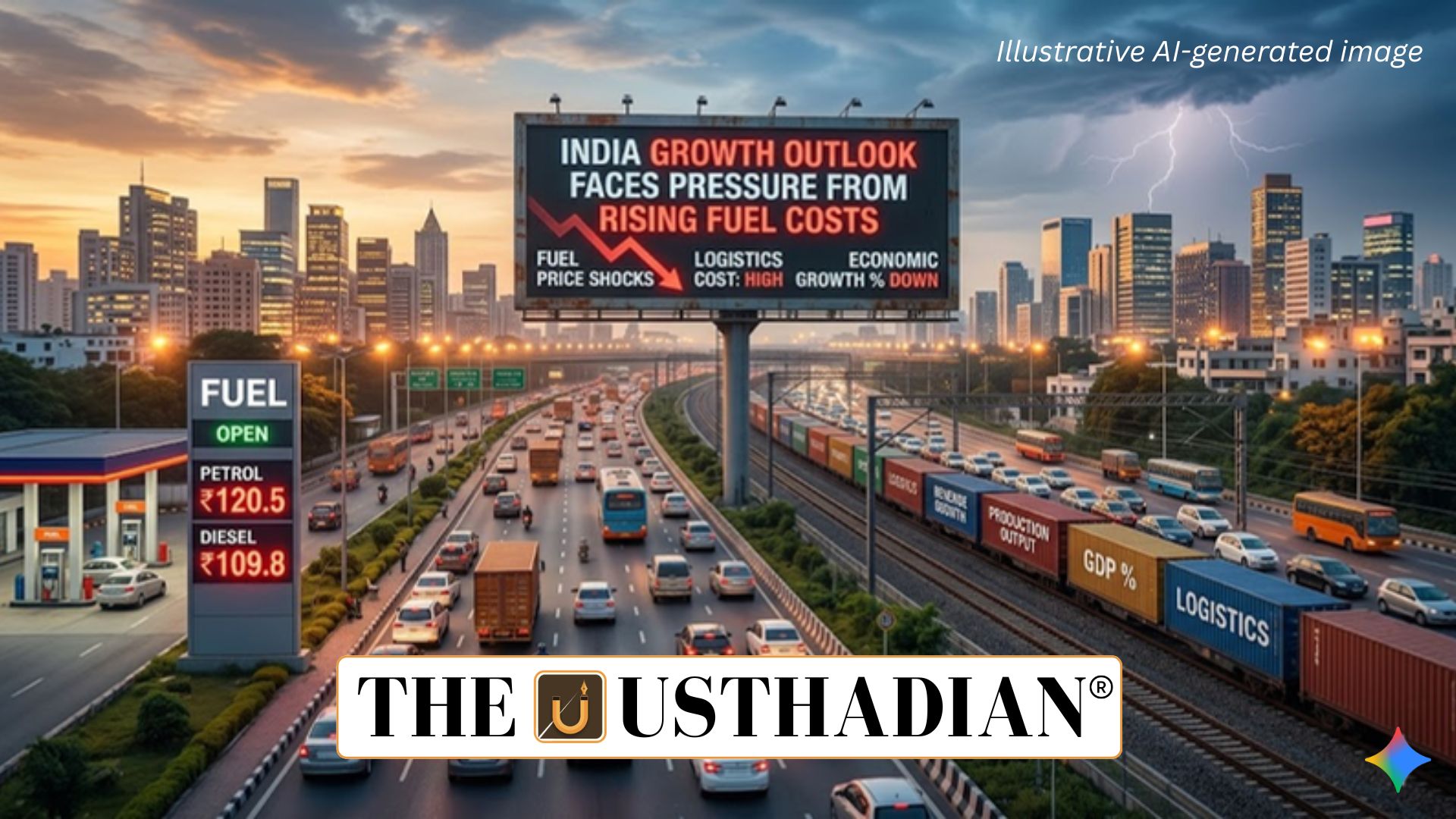
India Growth Outlook Faces Pressure From Rising Fuel Costs: Global rating agency Moody’s has reduced India’s FY27 GDP growth forecast to 6%, down from the earlier estimate of 6.8%. The downgrade reflects emerging risks from global geopolitical tensions.
The primary concern is the ongoing West Asia conflict, which is disrupting energy supplies. India’s heavy reliance on imported fuel makes its economy vulnerable to such shocks.
Static GK fact: India is the third-largest oil importer in the world after the US and China.
Impact of West Asia tensions
The conflict in West Asia has led to a sharp increase in global crude oil prices. This directly affects India, as nearly 55% of crude oil imports come from this region.
Additionally, over 90% of LPG supplies are sourced from West Asia. Any disruption leads to supply shortages and higher domestic fuel prices.
These factors increase production costs and reduce industrial output. As a result, overall economic growth slows down.
Static GK Tip: West Asia is also known as the Middle East, a major global energy hub.
Inflation concerns rising
One of the immediate consequences is rising inflation, which is projected to reach 4.8% in FY27, compared to 2.4% in FY26.
Higher fuel costs increase transportation expenses, which in turn raises prices of essential goods. This creates a ripple effect across sectors.
Increased fertilizer prices also contribute to rising food inflation, affecting both farmers and consumers.
Static GK fact: Inflation in India is measured using the Consumer Price Index (CPI).
Pressure on consumption and investment
Rising prices reduce household purchasing power, leading to weaker private consumption. This is a key driver of India’s GDP.
Industries may delay investments due to uncertainty and higher input costs. This further slows down economic activity.
Lower demand and reduced spending together contribute to a moderation in growth.
Policy response challenges
The Reserve Bank of India (RBI) faces a difficult situation. It must balance inflation control with the need to support economic growth.
Possible steps include maintaining or slightly increasing interest rates. The government may also increase subsidies on fuel and fertilizers to ease public burden.
At the same time, continued capital expenditure is essential to sustain growth momentum.
Static GK Tip: The RBI uses tools like the repo rate to control inflation and liquidity.
Fiscal pressure and revenue impact
Higher subsidies will increase the fiscal burden on the government. At the same time, tax revenues may decline due to slower economic activity.
Reduced collections from GST and corporate taxes can widen the fiscal deficit. This limits the government’s spending capacity.
Other forecasts align
Other institutions have also lowered their projections. The Organisation for Economic Co-operation and Development (OECD) estimates India’s growth at 6.1%.
Similarly, agencies like EY and ICRA have indicated a slowdown, highlighting global uncertainties.
Way ahead
India needs to diversify its energy sources and reduce dependence on imports. Expanding renewable energy can provide long-term stability.
Strengthening domestic demand and maintaining policy balance will be key to sustaining growth in a volatile global environment.
Static Usthadian Current Affairs Table
India Growth Outlook Faces Pressure From Rising Fuel Costs:
| Topic | Detail |
| Agency | Moody’s |
| Revised Growth | 6% for FY27 |
| Earlier Estimate | 6.8% |
| Key Reason | West Asia conflict |
| Oil Dependency | 55% crude imports from region |
| LPG Dependency | Over 90% from West Asia |
| Inflation Forecast | 4.8% in FY27 |
| Policy Body | Reserve Bank of India |
| Fiscal Impact | Higher subsidies and lower tax revenue |
| Other Estimates | OECD 6.1%, ICRA 6.5% |