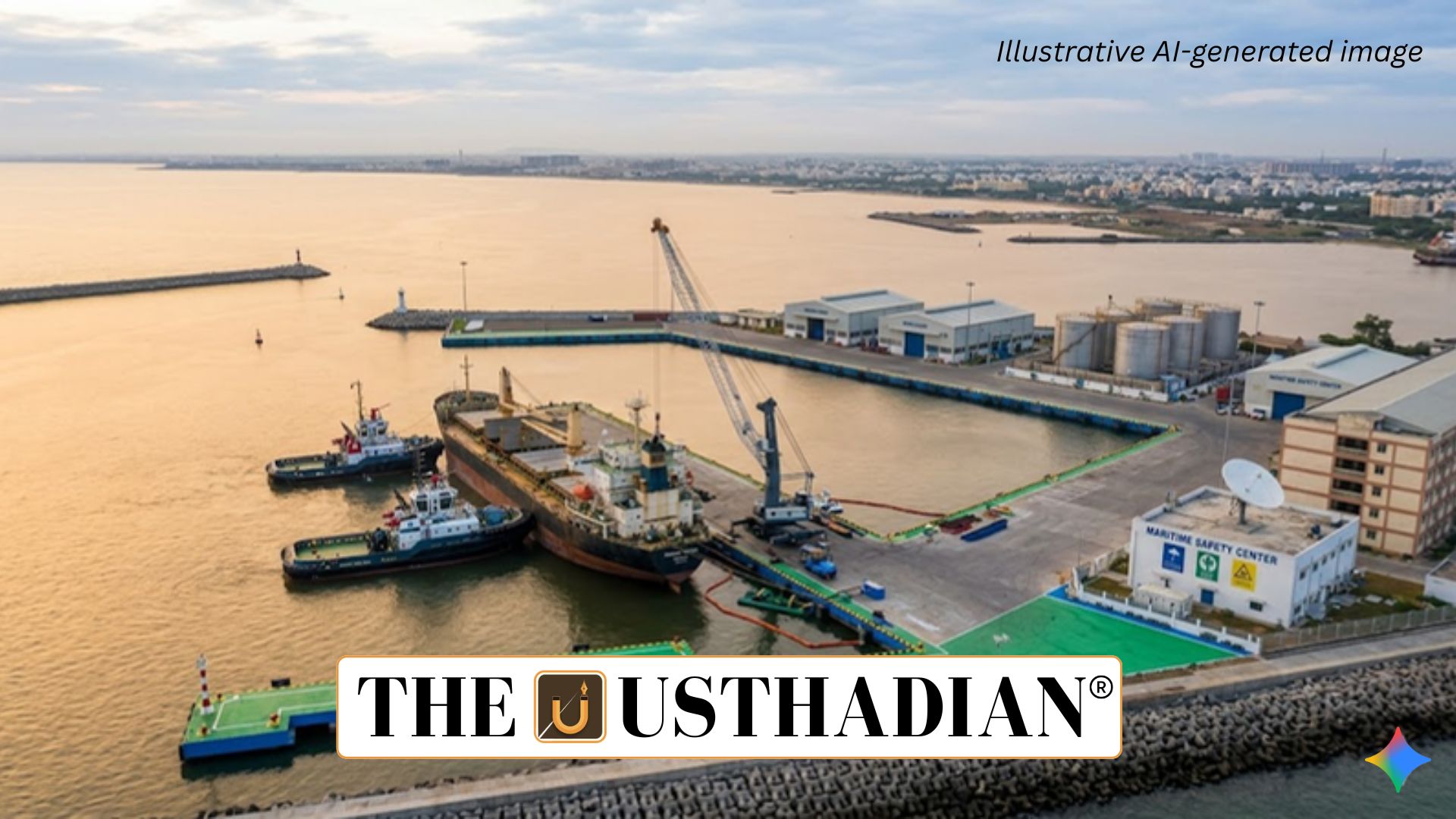
India fills a critical maritime gap
India Establishes First Port of Refuge for Maritime Safety: India has taken a major step in strengthening maritime safety by operationalizing its first Port of Refuge (PoR) system. This initiative has been implemented by Adani Ports and Special Economic Zone Ltd (APSEZ) to address long-standing gaps in handling ships during emergencies.
With a coastline of over 11,000 km, India lies along some of the world’s busiest shipping routes. Despite this, the absence of a structured emergency shelter system had remained a key concern.
Static GK fact: India has 13 major ports and over 200 non-major ports, making it a significant maritime nation.
Concept and importance of Port of Refuge
A Port of Refuge is a designated safe location where ships in distress can seek shelter. These emergencies may include fire, collision, mechanical failure, or oil spills.
The main objective is to stabilize vessels, protect human lives, and prevent environmental disasters. Globally, PoRs are standard infrastructure in maritime nations, ensuring quick and coordinated responses.
The introduction of PoR in India strengthens disaster preparedness and reduces risks associated with increasing maritime traffic.
Strategic locations for national coverage
India’s first Ports of Refuge have been identified at Dighi Port on the west coast and Gopalpur Port on the east coast. These locations provide balanced geographic coverage for emergency handling.
Dighi Port supports traffic in the Arabian Sea and routes towards the Persian Gulf, while Gopalpur Port caters to vessels in the Bay of Bengal and routes towards the Malacca Strait.
Static GK Tip: The Malacca Strait is one of the busiest maritime chokepoints connecting the Indian Ocean and Pacific Ocean.
Advanced emergency response capabilities
The Ports of Refuge are equipped with specialized services such as salvage operations, firefighting systems, pollution control, and wreck removal. These capabilities ensure efficient handling of maritime crises.
To enhance technical expertise, APSEZ has partnered with global organizations like SMIT Salvage (Boskalis) and maritime emergency response agencies. This collaboration strengthens India’s alignment with international safety standards.
Rising need amid global maritime tensions
Recent maritime incidents and geopolitical tensions have highlighted the urgency of such systems. For instance, India provided refuge to Iranian naval vessels like IRIS Lavan at Kochi due to technical issues.
Such incidents exposed the lack of a structured framework earlier. The new PoR system ensures faster, coordinated, and safer responses in similar situations.
Static GK fact: Kochi Port is one of India’s major ports located in Kerala and is strategically important for naval operations.
Way forward for maritime resilience
India must expand the Port of Refuge network to cover more vulnerable coastal regions. Strengthening coordination between ports, navy, and coast guard is essential for effective crisis management.
Investment in technology and training will further enhance response efficiency. This initiative marks a significant step toward building a resilient and secure maritime ecosystem.
Static Usthadian Current Affairs Table
India Establishes First Port of Refuge for Maritime Safety:
| Topic | Detail |
| Port of Refuge | Safe shelter for ships during emergencies |
| Implementing Agency | Adani Ports and Special Economic Zone Ltd |
| Key Locations | Dighi Port (west coast), Gopalpur Port (east coast) |
| Strategic Importance | Enhances maritime safety and disaster response |
| Services Provided | Salvage, firefighting, pollution control |
| Global Collaboration | SMIT Salvage (Boskalis) partnership |
| Key Maritime Routes | Arabian Sea and Bay of Bengal corridors |
| Recent Context | Refuge provided to IRIS Lavan at Kochi |