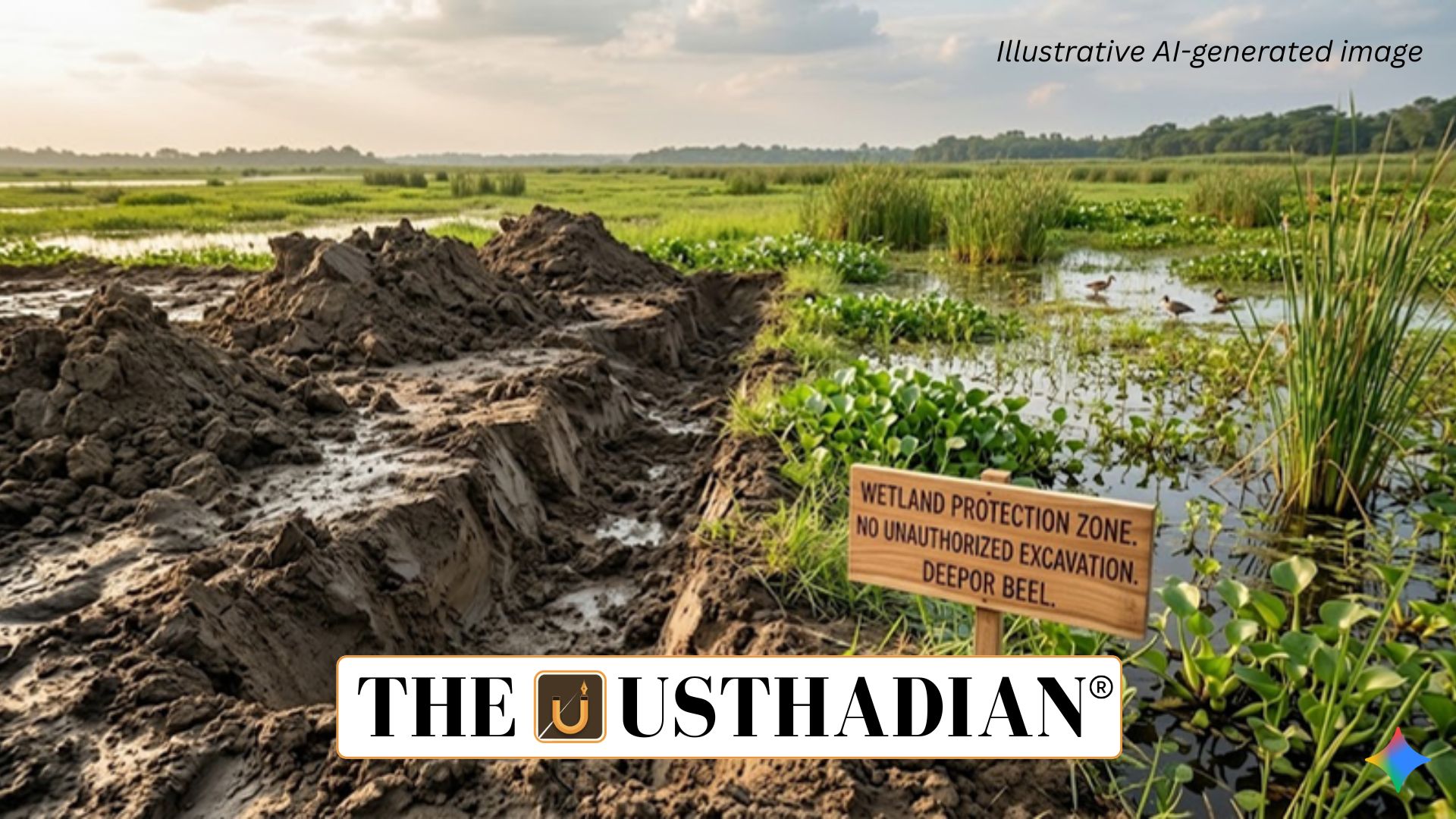
Illegal excavation near Kalshila wetland
Illegal Earth Cutting Threatens Wetland Near Deepor Beel: Reports from Satmile area in Guwahati highlight continuing illegal earth cutting at the Kalshila wetland, which is ecologically connected to the well-known Deepor Beel wetland. The excavation has reportedly taken place despite prohibitory orders issued by the district administration and environmental safeguards enforced by the Assam Forest Department.
Residents claim that soil has been removed from the wetland area for more than a month. The location lies close to institutions such as the Assam Police Radio Organisation training school and Assam Engineering College, which makes the issue more visible to local communities and authorities.
Night operations using heavy machines
Local sources have alleged that excavation mainly occurs at night, beginning around 8 PM. JCB excavators and dumpers are reportedly used to remove large quantities of soil from the wetland.
The excavated earth is transported to various sites for commercial construction activities. Residents believe that the operation is organised by a network of middlemen who continue the activity despite legal restrictions intended to protect sensitive wetland ecosystems.
Illegal extraction of soil from wetlands can cause permanent ecological damage. Removal of natural sediment layers weakens wetland stability and disrupts natural water retention capacity.
Ecological importance of Deepor Beel
Deepor Beel, located on the southwestern edge of Guwahati in Assam, is one of India’s most important freshwater wetlands. It has been recognised internationally as a Ramsar Site, highlighting its global ecological significance.
The wetland supports rich biodiversity, including migratory birds, aquatic plants, amphibians and fish species. It also acts as a natural flood control system by absorbing excess water during heavy rainfall.
Static GK fact: Deepor Beel was designated as a Ramsar Wetland Site in 2002, making it part of the global network of wetlands protected under the Ramsar Convention on Wetlands (1971).
The Kalshila wetland forms part of the ecological network surrounding Deepor Beel. Any disturbance to nearby wetlands can affect water flow, habitat connectivity and the ecological balance of the entire wetland system.
Environmental risks of illegal earth cutting
Environmental experts warn that continued soil excavation could damage aquatic ecosystems and threaten wildlife habitats. Wetlands serve as breeding grounds for many fish and amphibian species, and disturbances can reduce biodiversity.
Illegal earth removal also increases the risk of soil erosion and land degradation. During the monsoon season, such weakened landscapes may become vulnerable to flooding or landslides.
Static GK Tip: Wetlands act as natural carbon sinks, help recharge groundwater and regulate local climate conditions.
Additionally, residents fear that the activity could threaten nearby myadi patta lands, which are community lands traditionally held by indigenous families in Assam.
Demand for administrative action
Local residents have urged the Kamrup (Metro) district administration, police authorities and forest officials to investigate the illegal excavation and enforce existing environmental regulations.
They have called for immediate action to stop the digging activities and restore damaged areas. Environmental activists argue that protecting wetlands around Deepor Beel is essential for maintaining the ecological stability of Guwahati and surrounding regions.
Strict monitoring, community participation and enforcement of environmental laws will be critical in preventing further damage to this fragile wetland ecosystem.
Static Usthadian Current Affairs Table
Illegal Earth Cutting Threatens Wetland Near Deepor Beel:
| Topic | Detail |
| Wetland under threat | Kalshila wetland near Satmile area in Guwahati |
| Major protected ecosystem | Deepor Beel wetland in Assam |
| International status | Recognised as a Ramsar Site |
| Environmental issue | Illegal earth cutting using heavy machinery |
| Ecological impact | Habitat loss, soil erosion, biodiversity disturbance |
| Administrative jurisdiction | Kamrup Metro district administration |
| Environmental regulatory body | National Green Tribunal monitors ecological violations |
| Global wetland agreement | Ramsar Convention on Wetlands (1971) |
| Importance of wetlands | Support biodiversity, regulate floods, recharge groundwater |