Rare breeding milestone
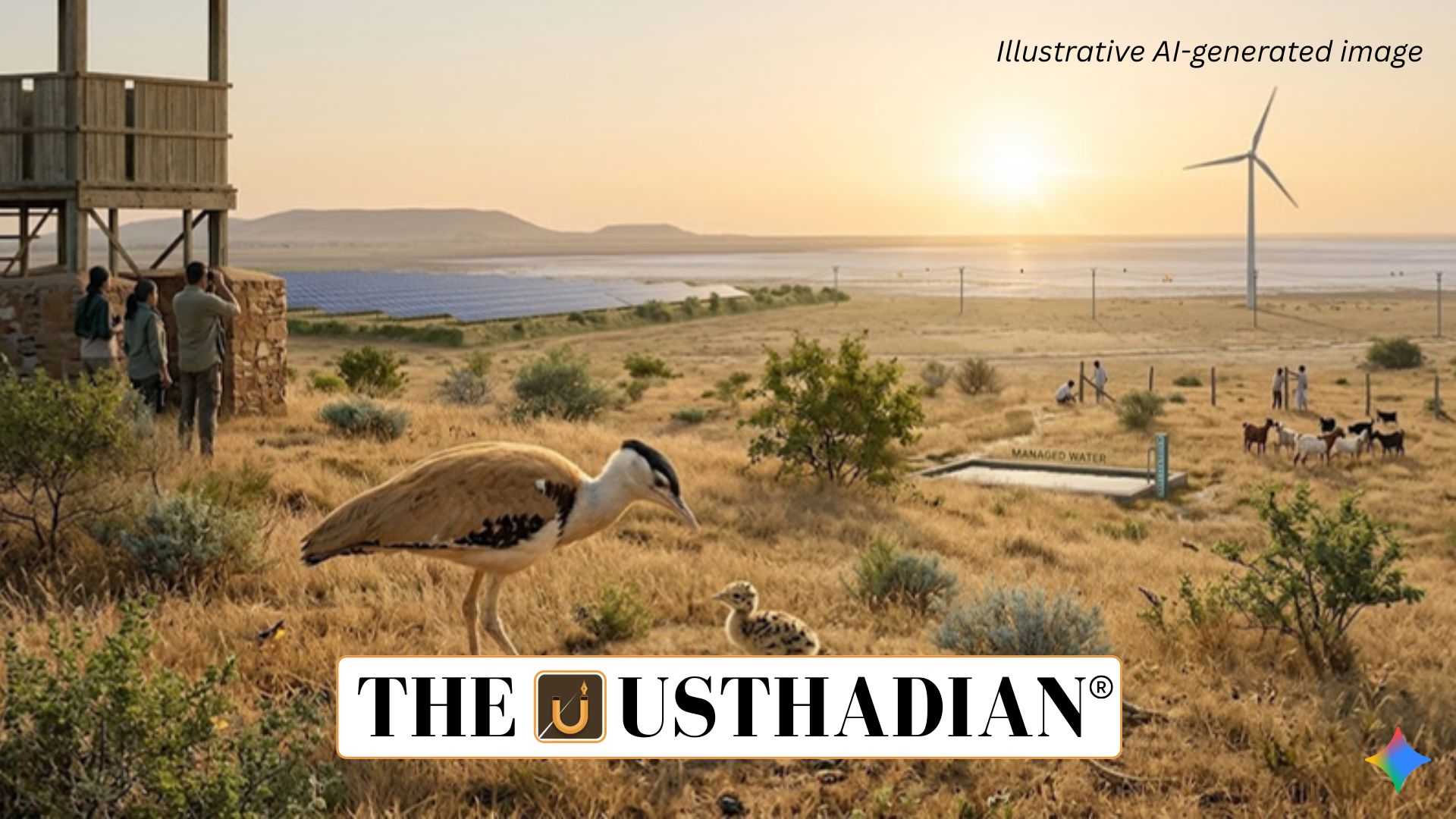
Great Indian Bustard Breeding Success in Gujarat: After nearly a decade, a Great Indian Bustard (GIB) chick has hatched in the wild in Kutch region of Gujarat. This marks the first successful breeding in the state since 2016, reviving hope for the survival of this critically endangered species.
The chick was born in natural grassland habitat, indicating that conservation interventions are beginning to show results. The event is seen as a breakthrough in India’s wildlife conservation efforts.
Static GK fact: The Great Indian Bustard is the State Bird of Rajasthan and is among the heaviest flying birds globally.
About the species
The Great Indian Bustard is native to India’s dry grasslands, primarily found in Rajasthan and Gujarat. It is listed as Critically Endangered by the International Union for Conservation of Nature (IUCN).
Its total population is estimated at fewer than 150 individuals, making it one of the rarest birds in the world. In Gujarat, the situation was severe, with only three surviving females reported in recent years.
Major threats include habitat degradation, low reproductive rate, and collision with overhead power lines.
Static GK Tip: Grasslands are one of the most neglected ecosystems in India despite supporting rich biodiversity.
Jumpstart approach innovation
The success of this breeding was achieved through an innovative method called the Jumpstart Approach. This method involves transferring a fertile, partially incubated egg to a new location to enable breeding in depleted areas.
In this case, an egg was transported over 770 km from Sam in Rajasthan to Naliya in Gujarat. The journey took around 19 hours using a controlled portable incubator.
The egg was then placed in a natural nest and incubated by a female bustard in the wild. This ensured minimal human interference while boosting breeding success.
Institutional collaboration
The initiative was coordinated by the Ministry of Environment, Forest and Climate Change (MoEFCC) along with the Wildlife Institute of India (WII). State forest departments of Rajasthan and Gujarat also played a crucial role.
This marks the first successful inter-state conservation experiment for the species. It highlights the importance of coordinated action in biodiversity conservation.
Significance of the event
The birth of the chick has revived the possibility of restoring a viable population in Gujarat. It demonstrates that scientific intervention combined with natural processes can yield results.
The success also provides a replicable model for conserving other endangered species in fragmented habitats. It boosts confidence among conservationists and policymakers.
Continuing challenges
Despite this success, the species remains highly vulnerable. The extremely low population size and absence of sufficient breeding males in Gujarat remain major concerns.
Additionally, power line collisions continue to be the leading cause of mortality. Habitat loss due to infrastructure development further threatens survival.
Long-term conservation will require habitat protection, underground power lines, and sustained monitoring efforts.
Static Usthadian Current Affairs Table
Great Indian Bustard Breeding Success in Gujarat:
| Topic | Detail |
| Species | Great Indian Bustard |
| Conservation Status | Critically Endangered (IUCN) |
| Location | Kutch grasslands, Gujarat |
| Last Breeding | 2016 in Gujarat |
| New Development | Chick born after nearly 10 years |
| Method Used | Jumpstart Approach |
| Egg Transport | 770 km from Rajasthan to Gujarat |
| Key Organizations | MoEFCC, Wildlife Institute of India |
| Major Threat | Power line collisions and habitat loss |
| Population Estimate | Fewer than 150 individuals |