Heritage-linked development initiative
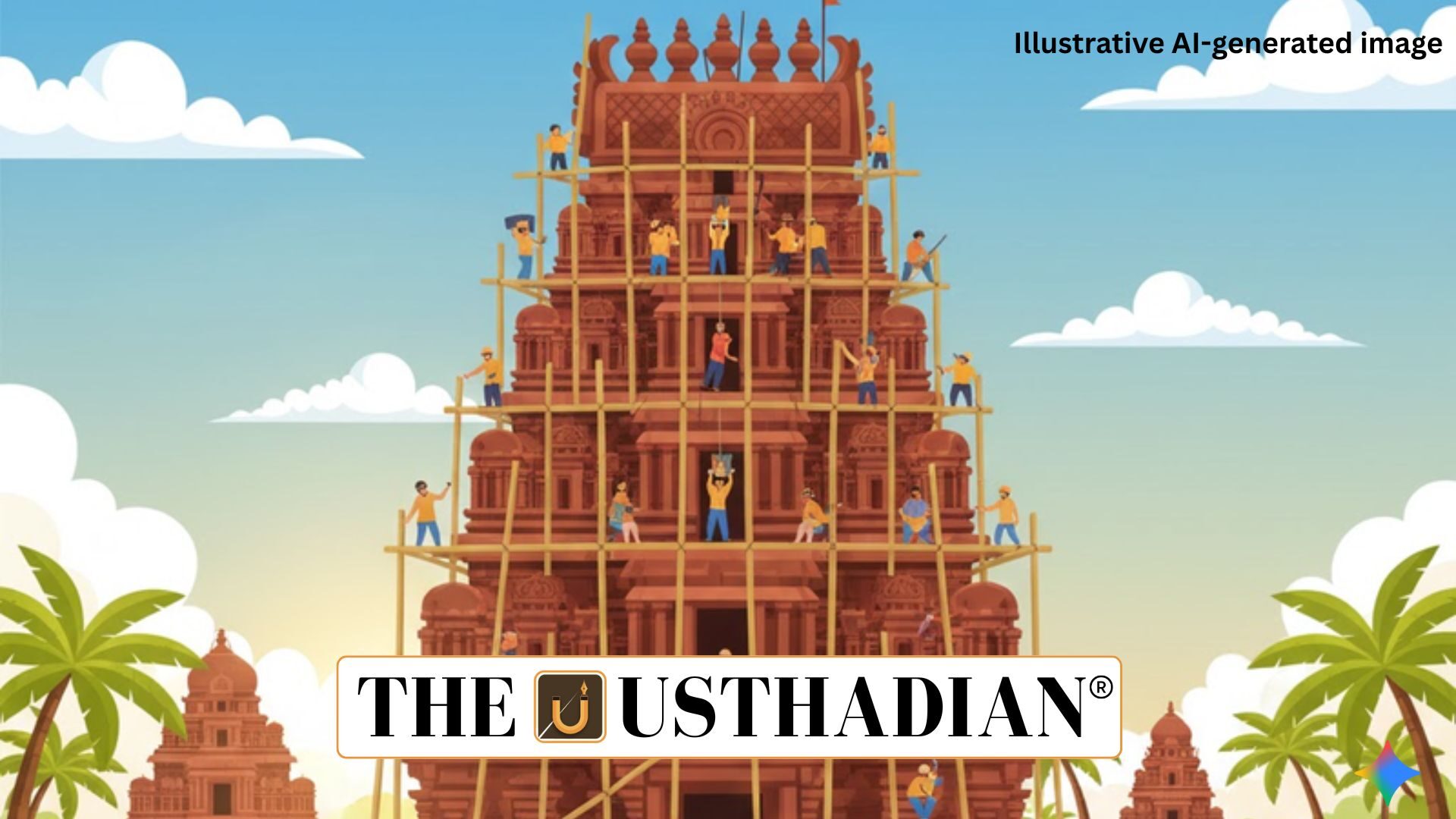
Gopuram Construction at Pazhayarai Temple: The Hindu Religious and Charitable Endowments (HR&CE) Department has initiated the construction of a seven-tier gopuram at the Somanathar Temple in Pazhayarai, located near Kumbakonam in Tamil Nadu. This project represents a blend of heritage conservation and structural engineering, aligning temple architecture with historical foundations.
The earlier plan proposed a five-tier gopuram. However, based on scientific analysis, the structure was redesigned to a seven-tier model to ensure stability and architectural balance.
Scientific planning and structural validation
The National Institute of Technology (NIT) conducted a detailed soil study and structural assessment of the existing temple base. Their report recommended a taller gopuram to match the broad foundation spread and load-bearing capacity.
This reflects the increasing use of engineering validation in heritage construction. It ensures safety while preserving traditional architectural proportions.
Revival of the mottai gopuram
Historically, the temple had an east-facing unfinished tower, locally known as the mottai gopuram. This structure remained neglected for decades and symbolised incomplete temple development.
The new construction replaces neglect with planned restoration, restoring architectural symmetry. It also revives the ritual and ceremonial significance of a complete gopuram structure.
Pazhayarai in Chola political history
Pazhayarai was a major Chola capital before the administrative centre shifted to Thanjavur. It functioned as a royal seat and political nucleus during early Chola rule.
A royal order of Uttama Chola was issued from the Pazhayarai palace, proving its governance importance. This places Pazhayarai as a primary administrative hub in medieval Tamil history.
Static GK fact: The Chola dynasty is one of the longest-ruling dynasties in South Indian history, known for temple architecture, naval power, and bronze sculpture traditions.
Religious and literary importance
The temple is one of the prominent Saivite centres in Tamil Nadu. It is praised in devotional verses by Appar, Sambandar, and Sundarar, the revered Nayanmar saints.
These hymns place the temple within the Tevaram tradition, linking it to canonical Shaivite literature. This gives the site both spiritual and scriptural authority.
Architectural uniqueness of Kara Koil
The temple is also known as Kara Koil. Its mahamandapam (main hall) is designed in the form of a chariot structure, symbolising divine movement.
Static GK Tip: Chariot-style temples reflect the concept of temples as moving cosmic vehicles in Dravidian architecture.
This architectural symbolism connects ritual space with cosmic philosophy.
Royal connections and Chola legacy
Historian K.A. Nilakanta Sastri records the presence of the Arulmolideva-Isvara Temple and royal palace at Pazhayarai. The palace served as the residence of Kundavai, sister of Rajaraja Chola, and for a period, Rajaraja himself.
This links the temple zone directly with imperial Chola lineage. The area thus represents both political authority and sacred geography.
State-level temple restoration programme
The gopuram project is part of the Tamil Nadu government’s 1,000-year-old temple restoration programme. Under this initiative, around 4,000 temples have already undergone kumbabishekam.
This reflects a structured policy of heritage revival, ritual renewal, and conservation governance. The Pazhayarai gopuram becomes part of a statewide cultural infrastructure mission.
Static Usthadian Current Affairs Table
Gopuram Construction at Pazhayarai Temple:
| Topic | Detail |
| Temple | Somanathar Temple, Pazhayarai |
| Project | Seven-tier gopuram construction |
| Authority | HR&CE Department, Tamil Nadu |
| Technical support | NIT soil and structure study |
| Historical status | Former Chola capital |
| Religious importance | Saivite temple praised by Nayanmars |
| Architectural feature | Kara Koil chariot-style mandapam |
| Royal link | Kundavai and Rajaraja Chola residence |
| Heritage policy | 1,000-year-old temple restoration scheme |
| Cultural practice | Kumbabishekam restoration ritual |