Discovery near Cauvery river
Early Chola Sculptures and Inscriptions Discovery: Recent findings near Musiri in Tamil Nadu have revealed significant remains from the Early Chola Dynasty. The artefacts were discovered on the bed of the Cauvery River, one of South India’s most sacred rivers.
These discoveries highlight the rich cultural and religious landscape of the 10th century C.E., when the Cholas were expanding their influence across southern India.
Static GK fact: The Cauvery River is often called the “Ganga of the South” due to its cultural importance.
Sculptural findings
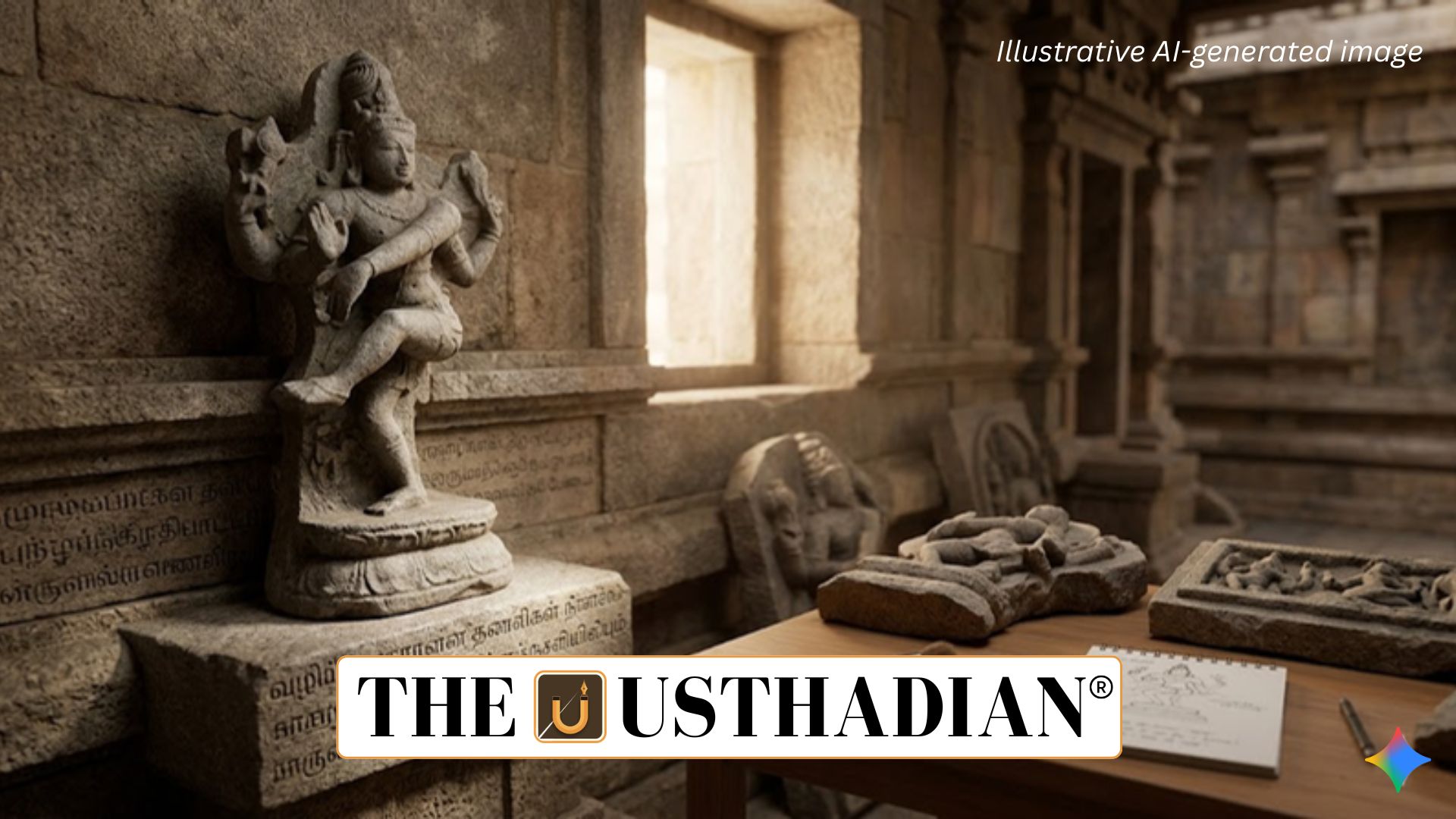
Among the key discoveries are sculptures of Dakshinamurthy and Vinadhara Shiva, both important forms of Lord Shiva. These sculptures were found around 200 metres from the river bund, indicating they may have belonged to a now-ruined temple structure.
The artistic style reflects the early phase of Chola sculpture, known for its elegance, balanced proportions, and spiritual symbolism.
Static GK Tip: Dakshinamurthy represents Shiva as a teacher of wisdom, often depicted facing south.
Tamil inscriptions and donations
A significant part of the discovery is a stone slab containing two Tamil inscriptions dated to the 10th century C.E.. These inscriptions provide insights into temple administration and socio-economic practices of the time.
One inscription records the donation of 120 kasu (ancient coins) to the sabha of Mahendramangalam. The amount was meant to maintain two perpetual lamps in a temple, reflecting the importance of continuous worship.
Another inscription mentions the donation of tax-free land to the temple, referred to as devadana, meaning a gift dedicated to the deity.
Static GK fact: The sabha was a local assembly in Chola administration responsible for managing village affairs.
Architectural remains
The excavation site also revealed various architectural fragments, including pillar remains, roof structures, and a large Shiva Linga. These findings suggest the presence of a well-developed temple complex in the region.
The layout and materials used indicate the advanced architectural skills of the Cholas, who were pioneers in temple construction.
Historical significance
These discoveries provide valuable evidence of religious practices, economic systems, and administrative structures during the Early Chola period. The inscriptions highlight organized temple management and community participation in religious activities.
They also reinforce the importance of the Cauvery basin as a centre of Chola culture and power.
Static GK Tip: The Chola Dynasty is famous for later monuments like the Brihadeeswara Temple at Thanjavur, a UNESCO World Heritage Site.
Static Usthadian Current Affairs Table
Early Chola Sculptures and Inscriptions Discovery:
| Topic | Detail |
| Location | Musiri near Cauvery River, Tamil Nadu |
| Period | 10th century C.E. |
| Key Sculptures | Dakshinamurthy and Vinadhara Shiva |
| Inscriptions | Tamil inscriptions on stone slab |
| Donation | 120 kasu for temple lamps |
| Land Grant | Devadana (tax-free land to temple) |
| Administrative Body | Sabha of Mahendramangalam |
| Architectural Finds | Pillars, roof structures, Shiva Linga |