High-Intensity Air Defence Exercise
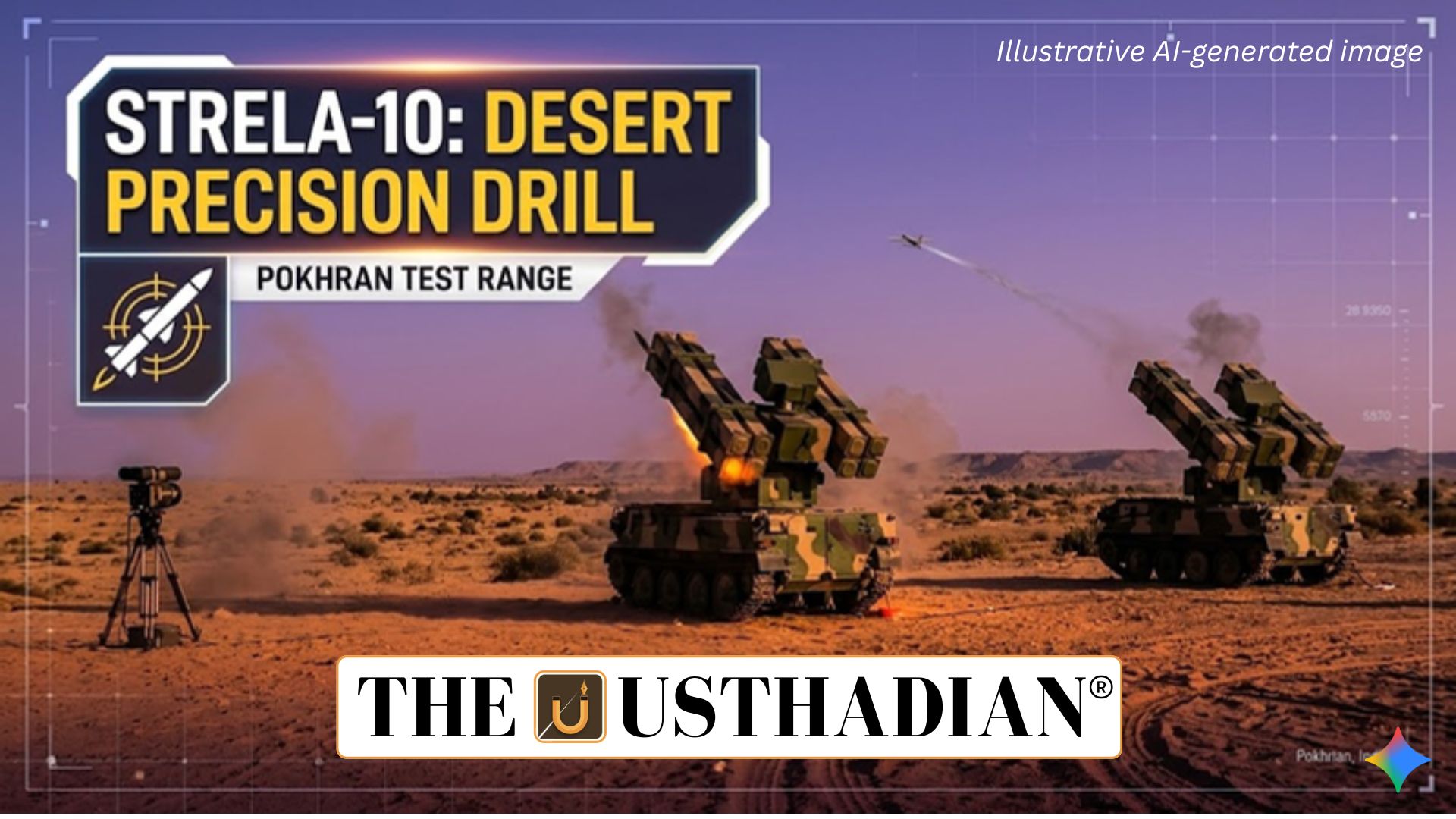
Desert Precision Displayed in Strela-10 Air Defence Drill at Pokhran: The Indian Army’s Konark Corps conducted a successful live firing of the Strela-10 Very Short Range Air Defence System (VSHORADS) at the Pokhran Field Firing Range in Rajasthan. The exercise was carried out by the Air Defence Warriors of the Blazing Skies Brigade. It demonstrated operational readiness against emerging low-altitude aerial threats.
The live drill validated combat preparedness in harsh desert terrain. Such exercises are essential in strategically sensitive western sectors.
Static GK fact: Pokhran is located in Jaisalmer district, Rajasthan, and is historically known for India’s nuclear tests in 1974 and 1998.
Direct Hits on Simulated Targets
The Strela-10 missile system, mounted on a BMP-based mobile platform, achieved direct hits on simulated enemy aerial targets. The system has an engagement range of approximately 6 to 10 kilometres. It is designed to neutralise low-flying aircraft, helicopters, and modern threats such as drones.
Unlike long-range radar-dependent systems, Strela-10 relies heavily on visual target acquisition. This makes crew coordination and battlefield awareness critical during operations.
The drill confirmed high levels of firing accuracy and fire discipline under realistic battlefield conditions.
Tactical Performance in Desert Conditions
The Pokhran desert offered extreme conditions, including high temperatures and shifting sands. Despite these challenges, the air defence unit demonstrated seamless integration of surveillance and target acquisition systems.
Accurate missile deployment under desert conditions showcased tactical proficiency. The exercise also strengthened engagement protocols and crew coordination.
Static GK Tip: The Indian Army was established in 1895, and the President of India serves as the Supreme Commander of the Armed Forces.
Strategic Significance for National Security
Very Short Range Air Defence Systems play a crucial role in layered air defence architecture. They protect vulnerable assets from sudden low-altitude attacks. With the rise of drone warfare and precision aerial strikes, VSHORADS systems are increasingly vital.
While the Strela-10 continues in service, India is simultaneously developing an indigenous VSHORADS system with an engagement range of around 6 km. This aligns with the broader push for defence indigenisation under national self-reliance initiatives.
Regular live-firing exercises ensure that air defence units remain prepared for real combat scenarios. The successful test at Pokhran reinforces the Indian Army’s commitment to safeguarding national airspace against evolving aerial threats.
Static Usthadian Current Affairs Table
Desert Precision Displayed in Strela-10 Air Defence Drill at Pokhran:
| Topic | Detail |
| Exercise Location | Pokhran Field Firing Range, Rajasthan |
| Conducting Formation | Konark Corps, Indian Army |
| System Tested | Strela-10 Very Short Range Air Defence System |
| Engagement Range | Approximately 6–10 kilometres |
| Platform Used | BMP-based mobile launcher |
| Target Type | Low-flying aircraft, helicopters, drones |
| Strategic Focus | Countering low-altitude aerial threats |
| Future Development | Indigenous VSHORADS with 6 km range |