Cassava and Its Importance in Africa
Cassava Brown Streak Disease Threatens Africa’s Staple Crop: Cassava is one of the most important staple crops in sub-Saharan Africa, providing food and income for millions of people. The crop is highly valued because it can grow in poor soils and drought-prone regions, making it a reliable food security crop for vulnerable communities.
Countries such as Nigeria, Ghana, Tanzania, Uganda, and Mozambique depend heavily on cassava production. It is commonly used to produce flour, starch, and fermented food products.
Static GK fact: Nigeria is the world’s largest producer of cassava, contributing a major share to global cassava output.
Nature of Cassava Brown Streak Disease
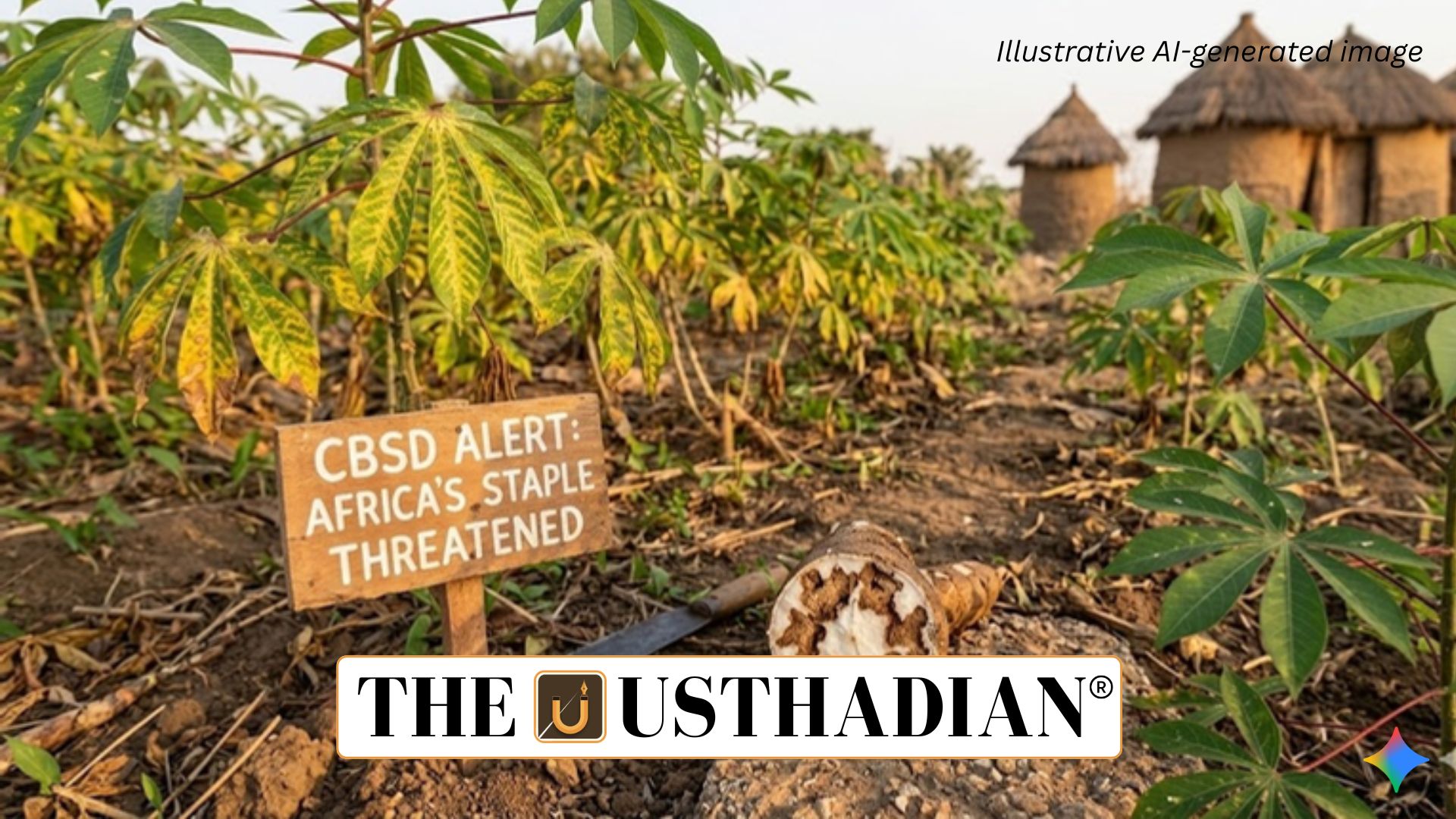
Cassava Brown Streak Disease (CBSD) is a viral plant disease that affects cassava plants, particularly the roots. The disease causes necrosis or rotting of cassava roots, making them discoloured and unsuitable for consumption.
One of the most serious problems with CBSD is that symptoms often remain invisible until harvest. Farmers frequently discover the damage only after digging up the roots, by which time the entire crop may already be lost.
This hidden nature of the disease significantly increases economic losses and food insecurity among smallholder farmers.
Spread of the Disease Across Africa
For many decades, CBSD remained largely restricted to coastal regions of Tanzania and Mozambique. However, over time the disease has spread into Uganda and several parts of East and Central Africa.
Recent research indicates that around 54.6% of Africa’s landmass, equivalent to 16.2 million square kilometres, is suitable for cassava cultivation. At the same time, approximately 33.7% of the continent, or 10.2 million square kilometres, faces the risk of CBSD spread.
Scientists warn that West African countries, especially Nigeria and Ghana, may face serious risks if preventive measures are not strengthened.
Role of Whitefly Vector
The primary carrier of CBSD is the whitefly Bemisia tabaci, a small insect that transmits the virus between cassava plants. In particular, the Sub-Saharan Africa 1 and 2 genetic groups of this insect are responsible for large-scale disease transmission.
Increasing temperatures and changing rainfall patterns have contributed to the rapid growth of whitefly populations in several regions.
Static GK Tip: Whiteflies are major agricultural pests that transmit multiple plant viruses affecting crops such as cotton, cassava, and tomatoes.
Farming Practices and Disease Transmission
Smallholder farming practices also play a major role in spreading the disease. Many farmers reuse cassava stem cuttings from previous harvests to plant the next crop.
If the original plant is infected, the disease spreads to the new crop. The absence of structured seed certification systems in many African countries increases this risk.
In contrast, countries like Thailand follow organized distribution systems that ensure certified disease-free planting material for farmers.
Breeding Resistant Varieties
Researchers are now exploring natural resistance to CBSD found in South American cassava varieties. These genetic resources are being incorporated into breeding programmes across Africa.
Countries including Democratic Republic of Congo, Tanzania, Uganda, and Mozambique are testing new cassava varieties that can resist both Cassava Brown Streak Disease and other viral threats.
Experts emphasize that clean seed systems, regional monitoring, and improved breeding programmes are crucial to protect cassava production and maintain food security across Africa.
Static Usthadian Current Affairs Table
Cassava Brown Streak Disease Threatens Africa’s Staple Crop:
| Topic | Detail |
| Disease Name | Cassava Brown Streak Disease (CBSD) |
| Type of Disease | Viral disease affecting cassava roots |
| Main Vector | Whitefly Bemisia tabaci |
| Major Affected Region | Sub-Saharan Africa |
| Key Impact | Root necrosis leading to crop loss |
| Land Suitable for Cassava | Around 54.6% of Africa’s landmass |
| Land at Risk of Disease Spread | About 33.7% of the continent |
| Resistant Varieties | Identified in South American cassava germplasm |
| Major Producer | Nigeria is the world’s largest cassava producer |
| Prevention Strategy | Clean seed systems and resistant crop varieties |