Revival after a century
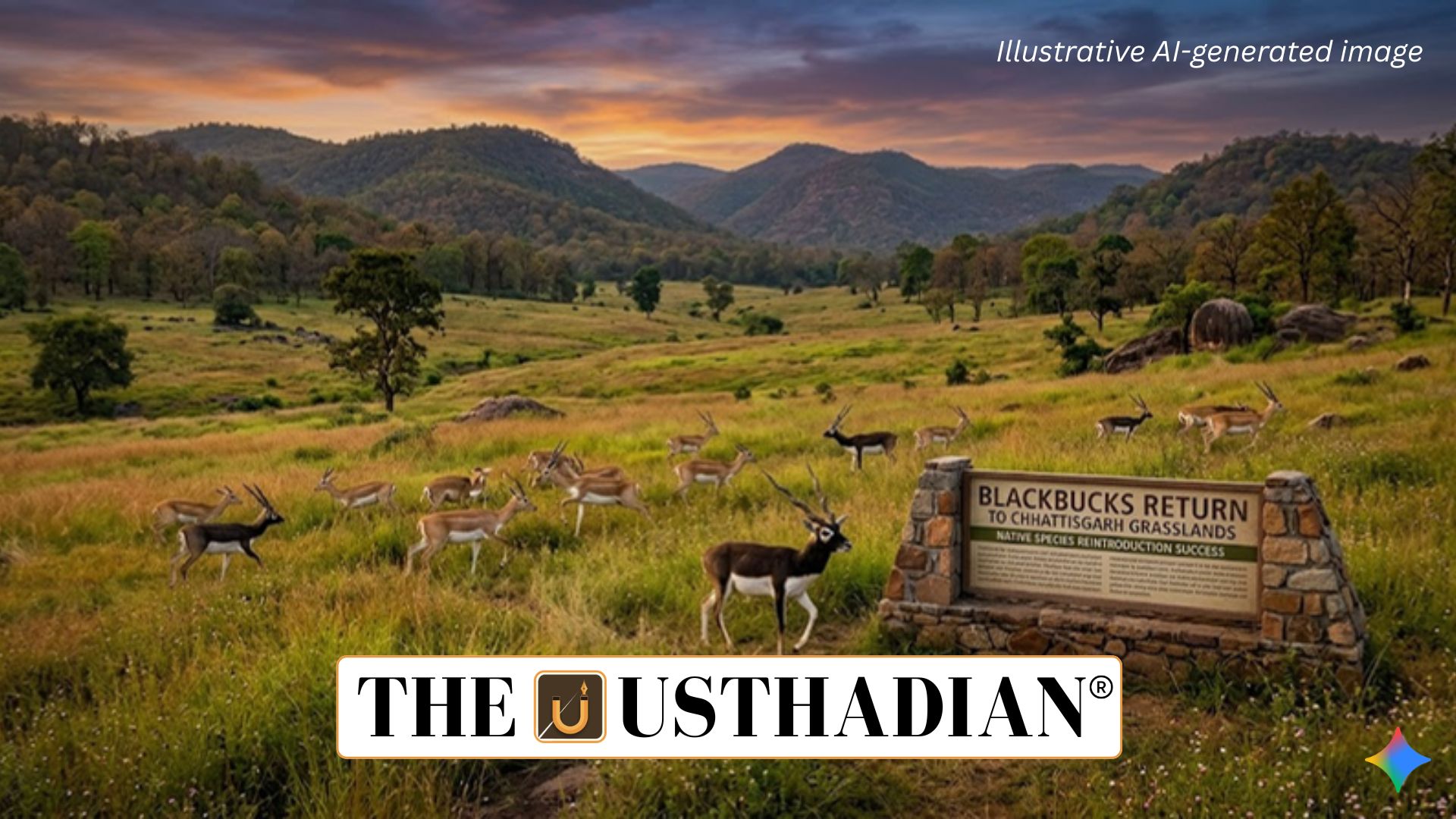
Blackbucks Return to Chhattisgarh Grasslands: After nearly a century, the blackbuck (Antilope cervicapra) has made a successful comeback in Chhattisgarh. The species was last officially recorded in 1927, after which it disappeared due to habitat loss and hunting.
The revival began in 2018, marking a turning point in wildlife restoration efforts. Today, around 130 blackbucks roam freely in the wild, with additional individuals in protected enclosures awaiting release.
Static GK fact: The blackbuck is the state animal of Punjab, Haryana, and Andhra Pradesh.
Reintroduction strategy
The first phase of reintroduction was carried out in Barnawapara Wildlife Sanctuary. A total of 77 blackbucks were initially introduced, including individuals translocated from Delhi and Kanan Pendari Zoo, Bilaspur.
Animals were first placed in acclimatization enclosures to adapt to local conditions. Despite losing some individuals during the COVID-19 period, the population steadily increased due to scientific management.
Static GK Tip: Translocation is the process of moving species from one location to another for conservation purposes.
Scientific conservation methods
The programme operates under the Wildlife Protection Act, 1972, ensuring legal and scientific safeguards. Several modern techniques were used to improve survival rates.
These include stress-free transport, continuous monitoring using PTZ IR cameras, and regular forest patrols. Such measures have minimized mortality and improved adaptation success.
Static GK fact: The Wildlife Protection Act, 1972 provides Schedule I protection to highly endangered species in India.
Expansion to new habitats
Encouraged by success, authorities plan to introduce blackbucks in Gomardha Wildlife Sanctuary. This expansion aims to strengthen the species’ long-term survival.
It will help reduce ecological pressure on Barnawapara and increase the geographical distribution of blackbucks. Diversifying habitats also enhances resilience against environmental threats.
Ecological importance
Blackbucks play a key role in maintaining grassland ecosystems. As grazers, they regulate vegetation and prevent the dominance of unpalatable grasses.
Their presence supports predator-prey dynamics and enhances biodiversity. This contributes to a balanced and healthy ecosystem.
Static GK Tip: Grasslands are among the most threatened ecosystems in India due to agricultural expansion and urbanization.
About Barnawapara Sanctuary
Barnawapara Wildlife Sanctuary is located in the Mahasamund district of Chhattisgarh. It spans about 245 sq km and consists of tropical dry deciduous forests.
The sanctuary is nourished by tributaries of the Mahanadi River, including the Balamdehi and Jonk rivers. Its diverse habitat supports multiple wildlife species.
Way forward
The success of blackbuck reintroduction highlights the importance of scientific conservation planning. Continued monitoring and habitat expansion are essential for sustainability.
Strengthening community participation and protecting grasslands will ensure long-term success. This model can be replicated for other endangered species across India.
Static Usthadian Current Affairs Table
Blackbucks Return to Chhattisgarh Grasslands:
| Topic | Detail |
| Species | Blackbuck (Antilope cervicapra) |
| Location | Chhattisgarh |
| Key Sanctuary | Barnawapara Wildlife Sanctuary |
| Reintroduction Year | 2018 |
| Current Population | Around 130 in wild |
| Legal Framework | Wildlife Protection Act, 1972 |
| Expansion Plan | Gomardha Wildlife Sanctuary |
| Ecological Role | Grassland maintenance and biodiversity support |
| Habitat Type | Grasslands and dry deciduous forests |
| Conservation Significance | Successful species restoration in India |