Technology development and innovation
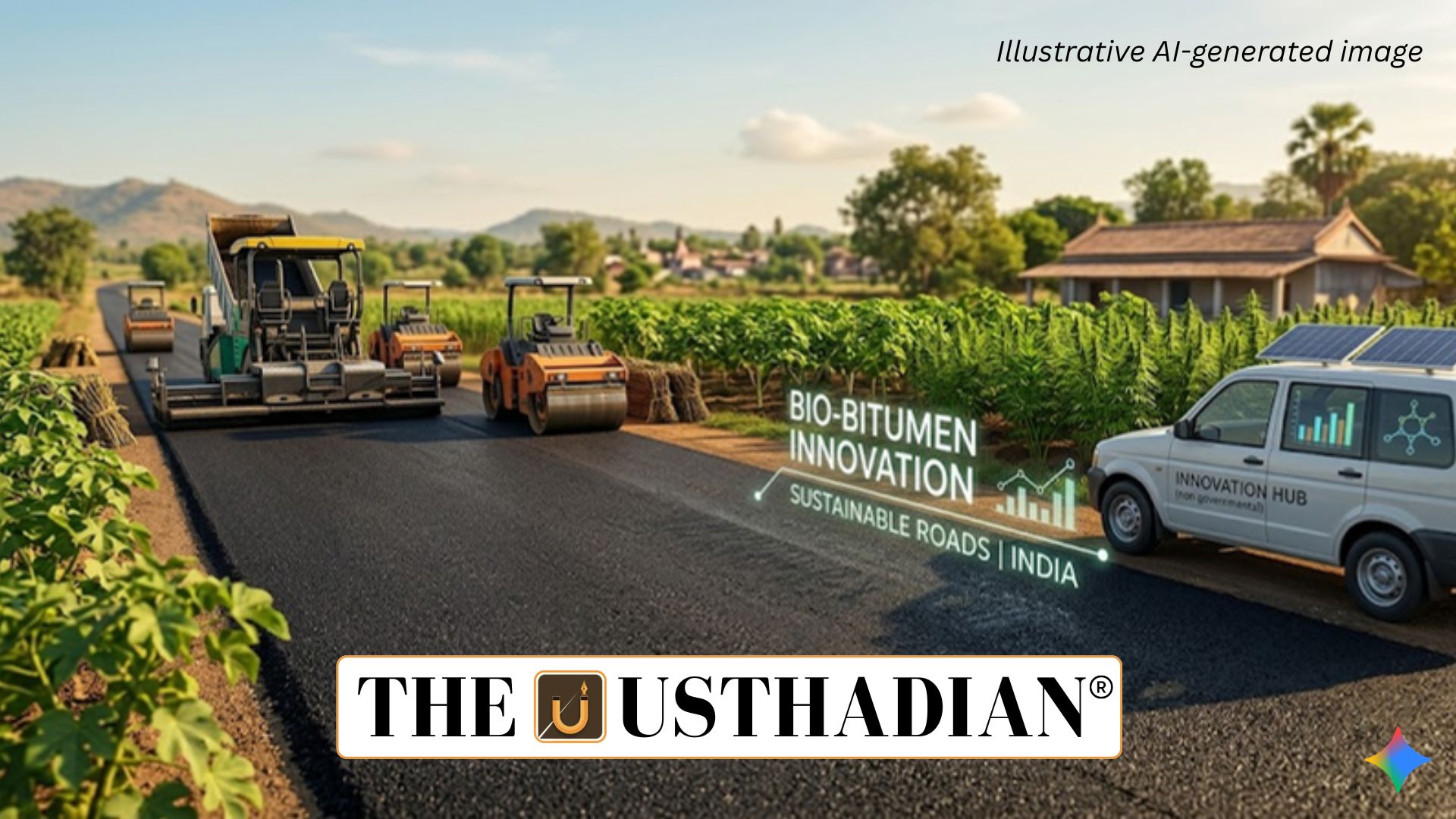
Bio Bitumen Innovation for Sustainable Roads in India: The Council of Scientific and Industrial Research (CSIR) has introduced an indigenous bio-bitumen technology to promote eco-friendly road construction. This innovation has been jointly developed by CSIR–Central Road Research Institute (CRRI) and CSIR–Indian Institute of Petroleum (IIP).
The technology uses lignocellulosic biomass, especially crop residue, through a thermochemical conversion process. It produces a renewable alternative to conventional petroleum-based bitumen with comparable durability and performance.
Static GK fact: CSIR was established in 1942 and is one of India’s largest research and development organizations.
Linking agriculture with infrastructure
This initiative creates a direct link between agriculture and infrastructure by converting farm waste into valuable construction material. It offers farmers an additional source of income by monetising agricultural residue.
The move also helps tackle stubble burning, a major cause of air pollution in northern India. The initiative aligns with national programmes such as Atmanirbhar Bharat, National Bio-Energy Mission, and India’s Net Zero emission targets.
Static GK Tip: Stubble burning is most prevalent in states like Punjab and Haryana during post-harvest seasons.
Environmental and economic benefits
Bio-bitumen significantly reduces dependence on imported petroleum products. It provides a low-carbon alternative, contributing to India’s climate goals and reducing greenhouse gas emissions.
The technology promotes a circular economy, where waste materials are converted into useful resources. It also reduces environmental degradation caused by open burning of agricultural waste.
Moreover, the material is suitable for large-scale adoption in projects under the Ministry of Road Transport and Highways, enhancing sustainable infrastructure development.
Policy significance and industrial adoption
The transfer of this technology for commercial use marks a key step in bridging laboratory research with real-world application. The initiative reflects strong collaboration between scientific institutions, policymakers, and industry stakeholders.
The event held in New Delhi highlights India’s growing focus on innovation-led infrastructure. It also demonstrates the government’s commitment to integrating sustainability into national development projects.
Static GK fact: India has the second-largest road network in the world, making sustainable road materials highly significant.
Future prospects
The adoption of bio-bitumen can revolutionize India’s road construction sector by making it greener and more self-reliant. Scaling up production and ensuring cost-effectiveness will be crucial for long-term success.
With continued policy support and industry participation, this technology can position India as a leader in sustainable infrastructure solutions globally.
Static Usthadian Current Affairs Table
Bio Bitumen Innovation for Sustainable Roads in India:
| Topic | Detail |
| Technology | Bio-bitumen from lignocellulosic biomass |
| Developed By | CSIR-CRRI and CSIR-IIP |
| Process Used | Thermochemical conversion |
| Key Benefit | Reduces dependence on petroleum |
| Environmental Impact | Low carbon and reduces stubble burning |
| Policy Alignment | Atmanirbhar Bharat and Net Zero targets |
| Sector Impact | Road construction and infrastructure |
| Economic Advantage | Additional income for farmers |
| Government Body | Ministry of Road Transport and Highways |
| Strategic Importance | Promotes circular economy |