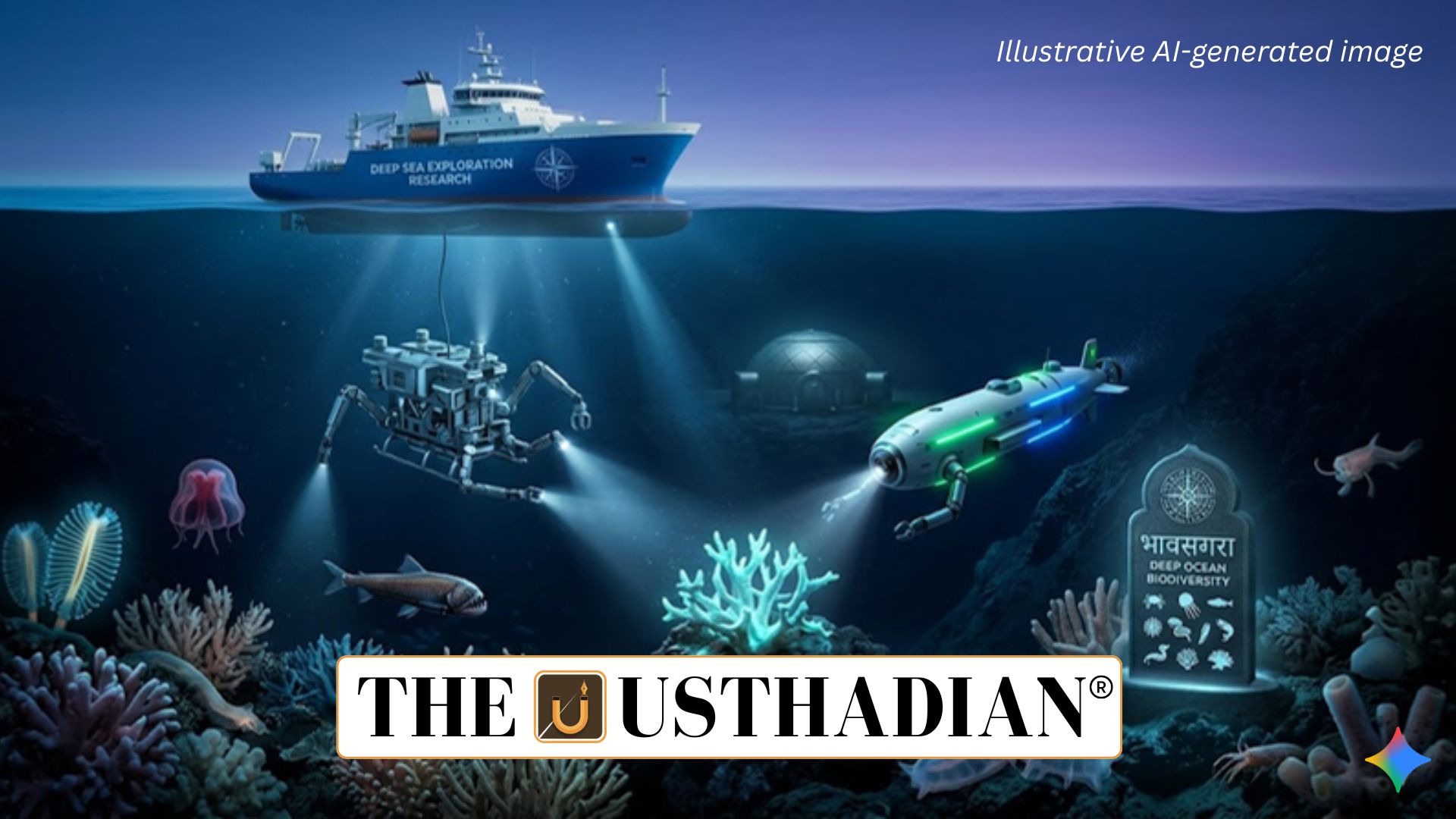
About Bhavasagara
Bhavasagara and India’s Deep Sea Biodiversity Push: The Bhavasagara Referral Centre has been designated as a National Repository for Deep-Sea Fauna by the Ministry of Environment, Forest and Climate Change (MoEFCC). This recognition is granted under the provisions of the Biological Diversity Act, 2002, strengthening India’s legal framework for biodiversity conservation.
The repository is located at the Centre for Marine Living Resources and Ecology (CMLRE) in Kochi, Kerala. The CMLRE functions under the Ministry of Earth Sciences, focusing on marine ecosystem research.
Static GK fact: Kochi is often called the “Queen of the Arabian Sea” due to its strategic coastal location.
Objective of the Repository
The primary aim of Bhavasagara is to act as a national facility for preserving and studying deep-sea biodiversity. It will document India’s rich marine life and ensure systematic conservation.
The repository will also support scientific research by maintaining standardized biological records. This helps in long-term monitoring of ocean ecosystems.
Static GK Tip: The Biological Diversity Act, 2002 was enacted to conserve biodiversity and ensure sustainable use of biological resources.
Key Responsibilities
Bhavasagara will function as a secure custodian of biological samples and DNA sequences. This ensures that genetic material is preserved for future scientific analysis.
It will also act as the official holder of type specimens for newly discovered deep-sea species. This is essential for taxonomic classification and global recognition.
Another major role is capacity building in deep-sea taxonomy, helping India develop expertise aligned with the UN Decade of Ocean Science (2021–2030).
Static GK fact: Taxonomy is the science of classification of organisms based on shared characteristics.
Significance for India
The establishment of Bhavasagara strengthens India’s commitment to the blue economy, which focuses on sustainable use of ocean resources. It enhances India’s ability to explore and conserve marine wealth.
It also contributes to marine biodiversity conservation by creating a centralized system for documentation and research. This improves policy-making and environmental protection.
Globally, such repositories enhance collaboration in ocean science and biodiversity studies.
Static GK Tip: India has a coastline of approximately 7,516 km, supporting diverse marine ecosystems.
Status of Deep Sea Fauna in India
According to the Zoological Survey of India, as of 2021, India hosts 4,371 species of deep-sea fauna. This includes 1,032 species under Protista and 3,339 species under Animalia.
This diversity highlights the need for structured conservation and research facilities like Bhavasagara. Proper documentation ensures that new species are identified and protected.
Static GK fact: The Zoological Survey of India (ZSI) was established in 1916 and is headquartered in Kolkata.
Way Forward
India must strengthen research infrastructure and promote marine scientific innovation. Collaboration between institutions and global agencies is essential.
Investment in training and technology will help India lead in deep-sea exploration and biodiversity conservation. Bhavasagara is a crucial step toward this goal.
Static Usthadian Current Affairs Table
Bhavasagara and India’s Deep Sea Biodiversity Push:
| Topic | Detail |
| Repository Name | Bhavasagara Referral Centre |
| Designation | National Repository for Deep-Sea Fauna |
| Governing Ministry | MoEFCC |
| Legal Basis | Biological Diversity Act, 2002 |
| Location | CMLRE, Kochi, Kerala |
| Parent Ministry of CMLRE | Ministry of Earth Sciences |
| Key Roles | Sample preservation, taxonomy, DNA storage |
| Species Count | 4,371 deep-sea species in India |
| Global Link | UN Decade of Ocean Science (2021–2030) |
| Strategic Importance | Blue economy and biodiversity conservation |