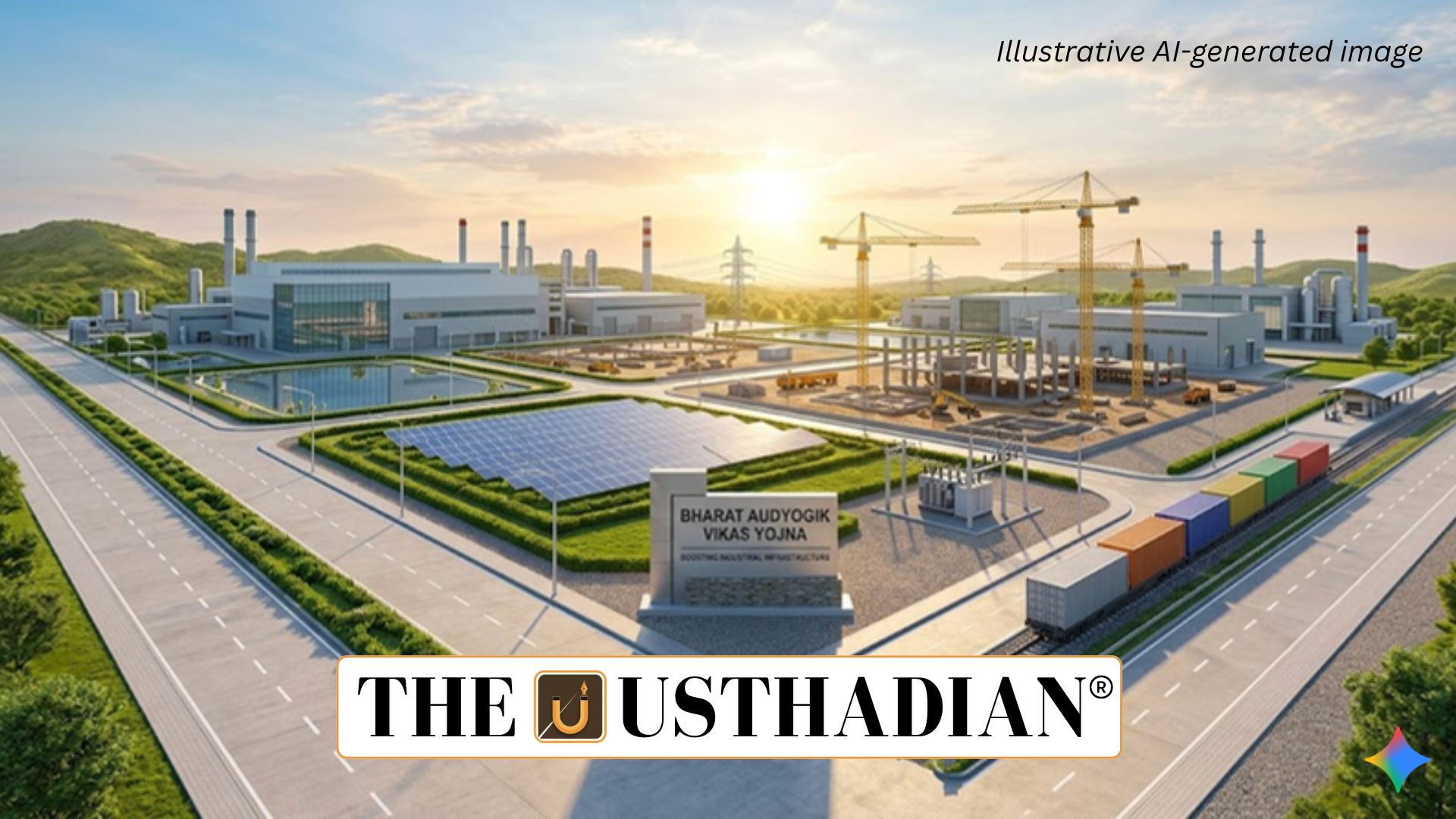
Launch of BHAVYA scheme
Bharat Audyogik Vikas Yojna Boosting Industrial Infrastructure: The Union Cabinet approved the Bharat Audyogik Vikas Yojna (BHAVYA) on 19 March 2026 to accelerate industrial development. The scheme focuses on building world-class plug-and-play industrial infrastructure.
An allocation of ₹33,660 crore has been sanctioned to develop 100 industrial parks across the country. This initiative aims to improve ease of doing business and attract global investments.
Static GK fact: India follows a mixed economic model combining public and private sector participation.
Concept of plug and play industrial parks
Plug-and-play industrial parks provide ready-to-use facilities including land, utilities, and approvals. This allows industries to start operations immediately without procedural delays.
These parks include internal roads, drainage systems, ICT networks, and common treatment facilities. Such infrastructure reduces setup time and operational costs.
Static GK Tip: Industrial parks are key drivers of regional economic development and employment generation.
Key features of the scheme
The scheme targets industrial parks ranging from 100 to 1000 acres, with a relaxed limit of 25 acres for North-East and hilly regions. The duration of implementation is 6 years (FY 2026–27 to 2031–32).
Financial assistance of up to ₹1 crore per acre is provided for infrastructure development. Support also extends to external infrastructure, covering up to 25% of project cost.
Value-added facilities include ready-built factory sheds, warehousing, and testing laboratories. Social infrastructure such as worker housing and amenities is also emphasized.
Beneficiaries and stakeholders
The primary beneficiaries include manufacturing units, MSMEs, startups, and global investors. These parks provide a ready ecosystem for industries to scale operations efficiently.
Secondary beneficiaries include workers, logistics providers, and local communities, ensuring inclusive economic growth.
Static GK fact: MSMEs contribute nearly 30% to India’s GDP and are crucial for employment generation.
Role of implementing agencies
The scheme will be implemented by the National Industrial Corridor Development Corporation (NICDC) under the Department for Promotion of Industry and Internal Trade (DPIIT).
It involves collaboration between central government, state governments, and private sector players. This multi-stakeholder approach ensures efficient execution.
Current status and future outlook
India already has 306 plug-and-play industrial parks, with 20 additional parks and smart cities under development as of December 2025. The Union Budget 2025–26 allocated ₹2,500 crore for such infrastructure.
BHAVYA is expected to strengthen India’s position as a global manufacturing hub. It will enhance industrial competitiveness and support long-term economic growth.
Static GK Tip: Industrial corridors like Delhi-Mumbai Industrial Corridor are major infrastructure initiatives in India.
Static Usthadian Current Affairs Table
Bharat Audyogik Vikas Yojna Boosting Industrial Infrastructure:
| Topic | Detail |
| Scheme Name | Bharat Audyogik Vikas Yojna |
| Approval Date | 19 March 2026 |
| Total Allocation | ₹33,660 crore |
| Objective | Develop 100 plug-and-play industrial parks |
| Park Size | 100 to 1000 acres (25 acres for NE regions) |
| Financial Support | Up to ₹1 crore per acre |
| Implementation Agency | National Industrial Corridor Development Corporation |
| Key Beneficiaries | MSMEs, startups, manufacturing units |
| Duration | FY 2026–27 to 2031–32 |
| Existing Parks | 306 operational plug-and-play industrial parks |