Outbreak and Immediate Response
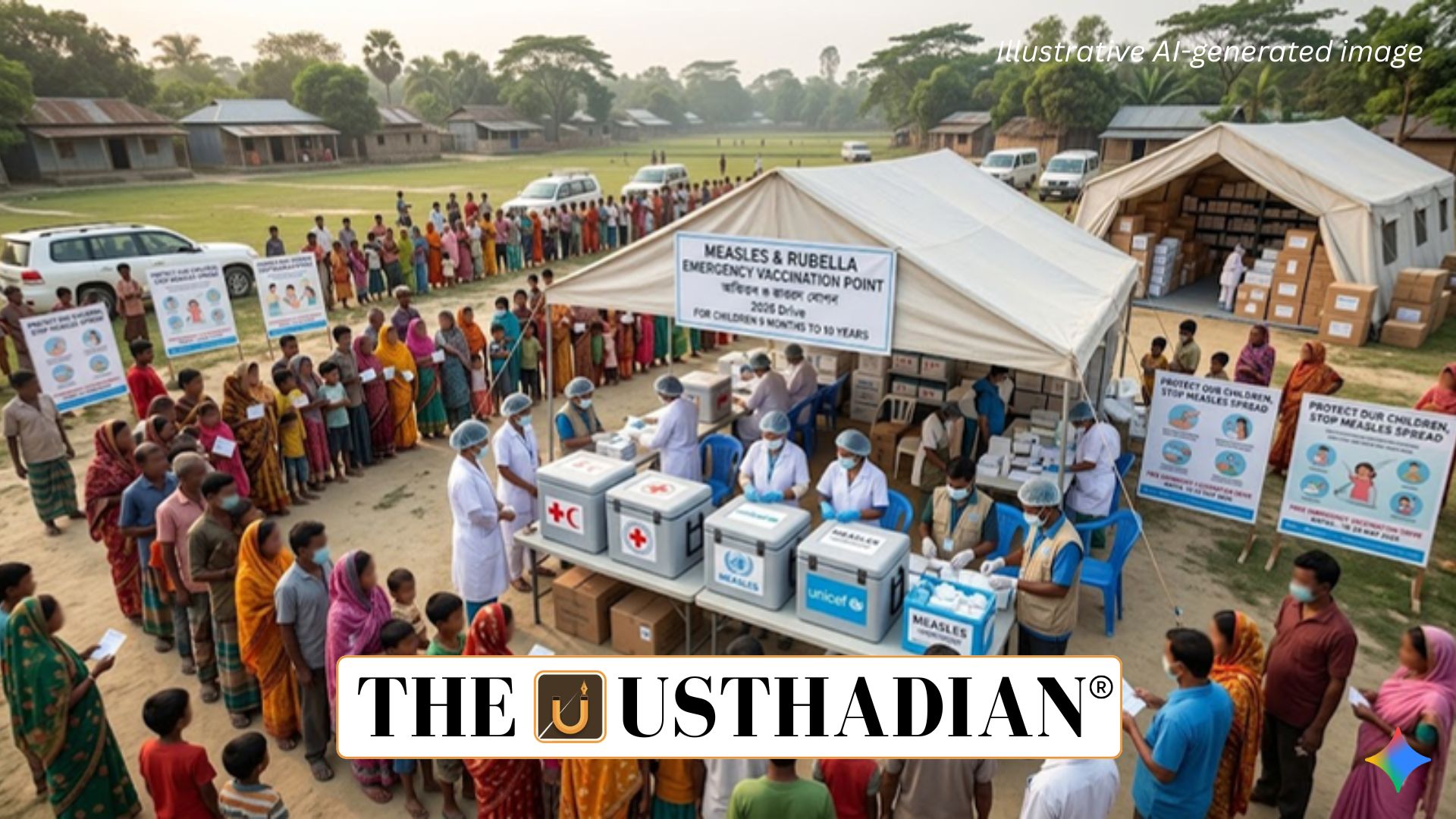
Bangladesh Emergency Measles Vaccination Drive: Bangladesh has launched an emergency measles vaccination drive targeting over one million children. The move comes amid a sharp rise in measles cases, raising serious public health concerns.
The campaign focuses on rapid immunisation to prevent further spread and reduce complications among vulnerable populations. Authorities are prioritising high-risk regions with low vaccination coverage.
Static GK fact: Bangladesh’s capital is Dhaka, one of the most densely populated cities in the world, increasing disease transmission risks.
Understanding Measles Disease
Measles is a highly contagious viral disease caused by a paramyxovirus. It primarily affects children but can infect anyone lacking immunity.
The virus initially infects the respiratory tract and then spreads throughout the body. Severe cases can lead to pneumonia, encephalitis, and death.
Static GK Tip: Measles is one of the leading causes of vaccine-preventable deaths among children globally.
Transmission and Spread
The disease spreads through airborne droplets released during coughing or sneezing. It can also spread via contact with infected nasal or throat secretions.
The virus remains active in the air or on surfaces for up to two hours, making it extremely transmissible in crowded environments.
High population density and low immunisation coverage accelerate the spread of the disease.
Symptoms and Risk Groups
Initial symptoms include high fever, runny nose, cough, and red watery eyes. Small white spots, known as Koplik spots, appear inside the cheeks.
A skin rash develops later, starting from the face and spreading downward across the body.
Unvaccinated children and pregnant women are at higher risk of severe complications. Malnourished individuals are also more vulnerable.
Static GK fact: The incubation period of measles is typically 10–14 days after exposure.
Prevention and Vaccination
There is no specific antiviral treatment for measles. Management mainly involves supportive care, hydration, and treatment of complications.
Prevention is achieved through the Measles-Rubella (MR) vaccine, which provides long-term immunity. Vaccination campaigns are the most effective tool to control outbreaks.
Mass immunisation helps achieve herd immunity, reducing transmission at the community level.
Importance for Public Health
The vaccination drive highlights the importance of immunisation programmes in controlling infectious diseases. Rapid response helps prevent outbreaks from escalating into epidemics.
Strengthening healthcare infrastructure and ensuring vaccine accessibility remain key priorities. Public awareness campaigns also play a vital role in improving vaccine uptake.
Static Usthadian Current Affairs Table
Bangladesh Emergency Measles Vaccination Drive:
| Topic | Detail |
| Country | Bangladesh |
| Issue | Measles outbreak |
| Target Group | Over one million children |
| Cause | Paramyxovirus |
| Transmission | Airborne droplets and surface contact |
| Incubation Period | 10–14 days |
| Key Vaccine | Measles-Rubella vaccine |
| Major Risk Groups | Children, pregnant women |
| Prevention Strategy | Mass immunisation |
| Public Health Goal | Outbreak control and reduced mortality |