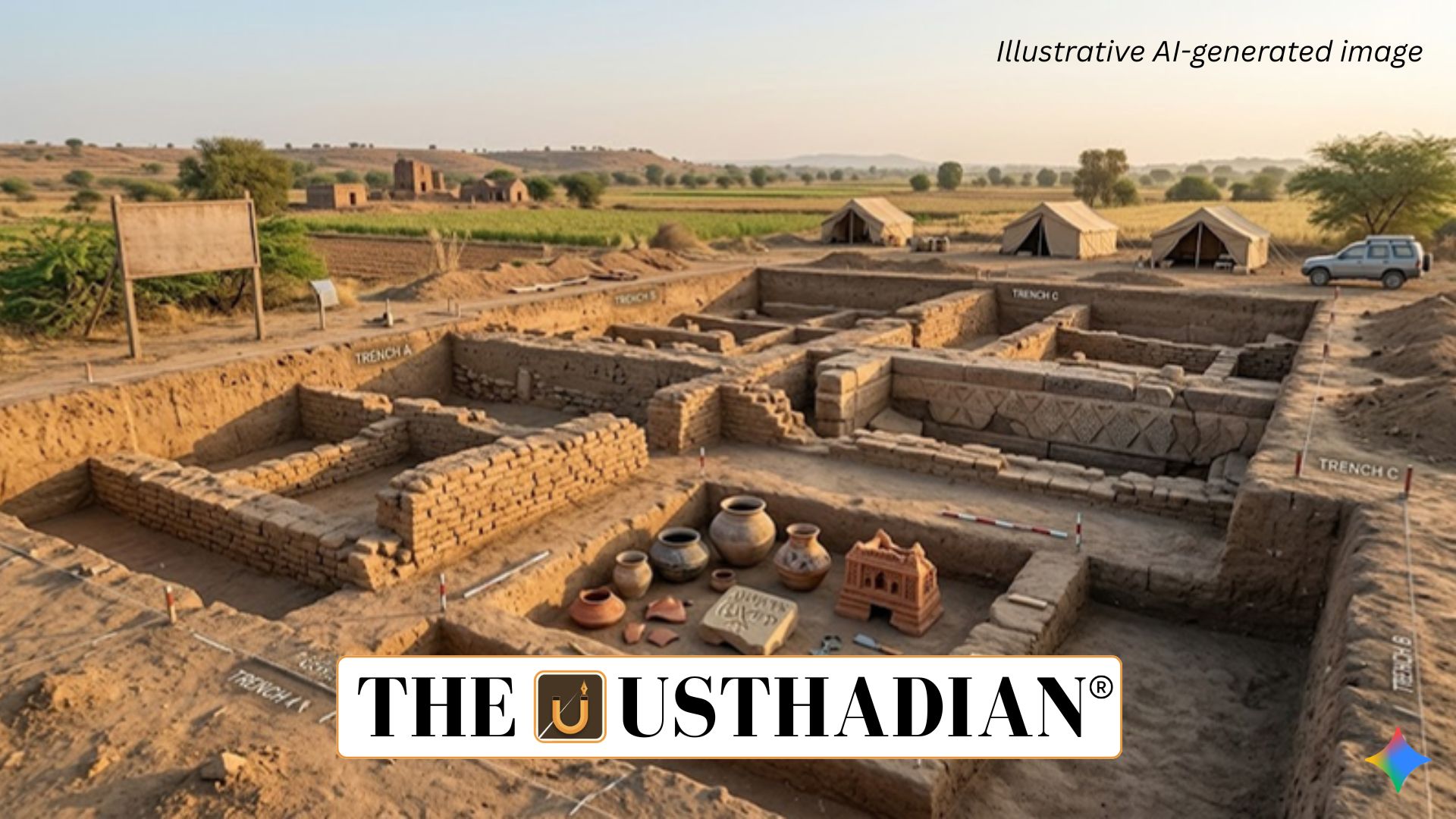
Excavation initiative in Bihar
Balirajgarh Excavation Strengthens Ancient Videha Insights: The Archaeological Survey of India (ASI) has initiated fresh excavation at Balirajgarh in Madhubani district, Bihar. The objective is to uncover deeper historical evidence and reconstruct ancient settlement patterns.
This renewed effort is expected to enhance understanding of early governance and cultural life in eastern India. It also reflects India’s growing focus on systematic archaeological research.
Static GK fact: The ASI was established in 1861 by Alexander Cunningham, known as the Father of Indian Archaeology.
Historical and mythological importance
Balirajgarh holds strong links to Indian mythology, being associated with King Bali, a legendary ruler. Local traditions regard the site as his capital.
Historically, it is identified as an important centre of the Videha Kingdom, which played a key role in early civilisation in the Gangetic plains. The region was known for political organisation and cultural development.
Static GK Tip: The Videha Kingdom is often linked with King Janaka, father of Sita in the Ramayana.
Cultural layers and findings
Excavations conducted between 1962 and 2014 revealed multiple cultural layers, indicating continuous habitation. Artefacts from the Northern Black Polished Ware (NBPW) phase highlight early urbanisation.
Subsequent layers include the Sunga, Kushan, Gupta, and Pala periods, showing long-term cultural evolution. These findings make Balirajgarh a key site for studying ancient Indian chronology.
The diversity of artefacts suggests advancements in pottery, trade, and administration across centuries.
Legal protection and preservation
Balirajgarh was declared a site of national importance in 1938 under the Ancient Monuments Preservation Act, 1904. This legal status ensures protection and regulated excavation.
The ASI continues to monitor and preserve the site under provisions of the Ancient Monuments and Archaeological Sites and Remains Act, 1958. Conservation efforts aim to safeguard its historical integrity.
Static GK fact: The 1958 Act governs preservation of monuments and regulates archaeological excavations across India.
Role of ASI in heritage conservation
The Archaeological Survey of India operates under the Ministry of Culture and is responsible for excavation, conservation, and research of archaeological sites.
It plays a vital role in documenting India’s tangible heritage and preventing illegal trafficking of antiquities. The Balirajgarh excavation reflects ASI’s continued commitment to uncovering India’s past.
The findings from this site may contribute significantly to academic research and competitive exam preparation.
Static Usthadian Current Affairs Table
Balirajgarh Excavation Strengthens Ancient Videha Insights:
| Topic | Detail |
| Location | Balirajgarh in Madhubani district, Bihar |
| Excavating Agency | Archaeological Survey of India |
| Historical Link | Associated with Videha Kingdom |
| Mythological Link | Capital of King Bali (tradition) |
| Cultural Layers | NBPW, Sunga, Kushan, Gupta, Pala |
| Excavation Periods | 1962 to 2014 and recent phase |
| Legal Status | Declared protected in 1938 |
| Governing Law | Ancient Monuments Preservation Act 1904 |
| ASI Establishment | Founded in 1861 by Alexander Cunningham |
| Importance | Insights into ancient administration and culture |