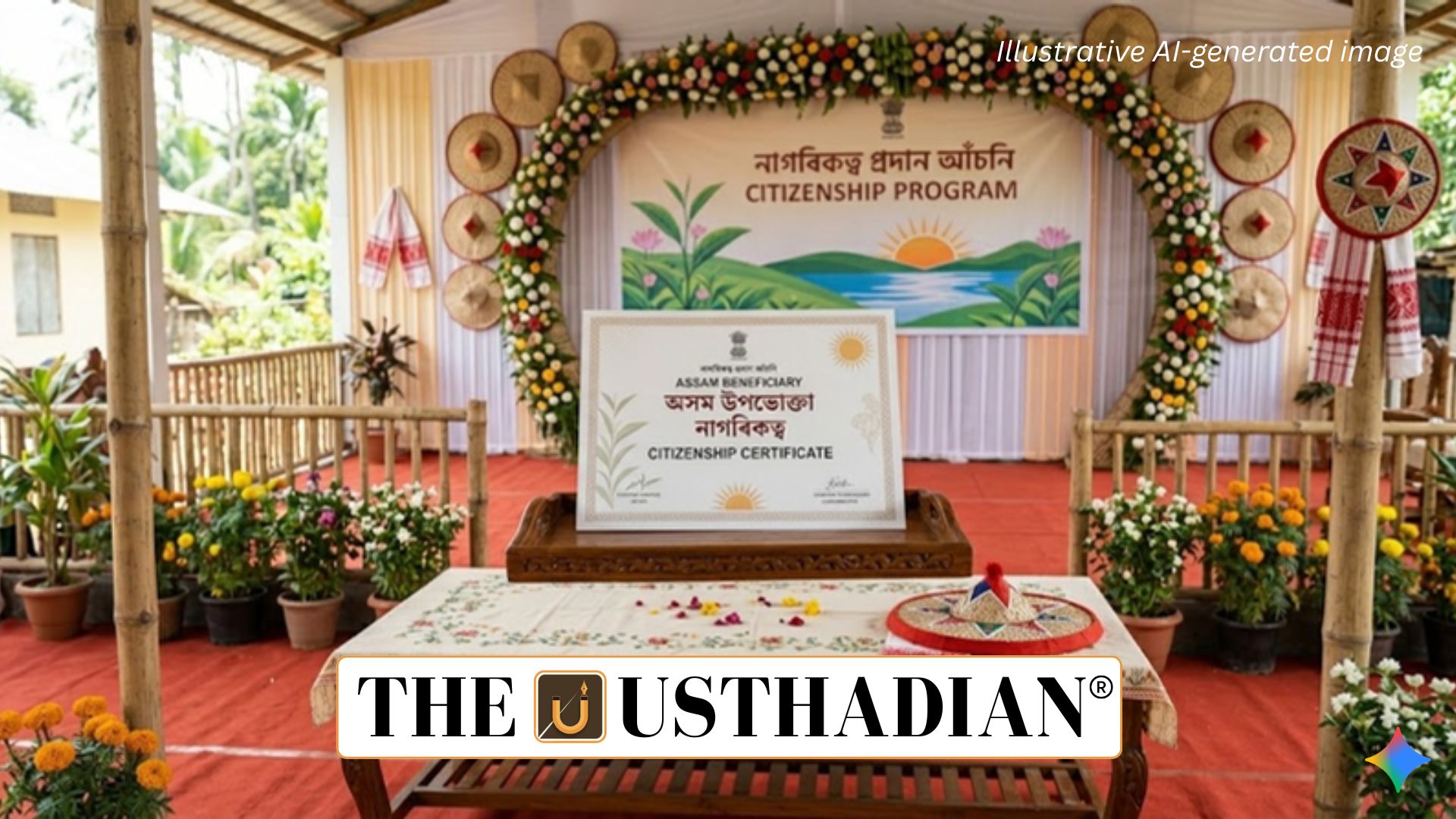
First Citizenship Certificate Under CAA
Assam Woman Becomes First CAA Beneficiary in Assam: A 60-year-old woman, Dipali Das, from Hawaithang village in Dholai block of Cachar district, Assam, became the first person in the state to receive Indian citizenship under the Citizenship Amendment Act (CAA). She was officially granted citizenship on 6 March 2026, marking a significant step in the practical implementation of the CAA in Assam.
Her citizenship recognition ended decades of legal uncertainty regarding her status in India. The case has drawn attention because Assam has historically faced complex citizenship disputes linked to migration and identity verification.
Static GK fact: Assam is located in Northeast India and shares an international border with Bangladesh and Bhutan, making it sensitive to migration-related issues.
Migration History and Citizenship Dispute
According to official records, Dipali Das and her husband entered India from Bangladesh on 7 February 1988. They settled in Cachar district, where they gradually built their lives and raised their family.
However, the absence of proper documentation later created doubts about her nationality. In 2013, authorities began an investigation into her citizenship status.
A police chargesheet stated that she had entered India after March 1971, which under earlier citizenship laws meant she could be treated as a suspected foreign national. This triggered a prolonged legal battle regarding her legal status in India.
Static GK Tip: March 24, 1971 is an important cutoff date in Assam’s citizenship verification process, linked to the creation of Bangladesh after the Bangladesh Liberation War.
Detention and Supreme Court Intervention
In 2019, Dipali Das was officially declared a foreigner and sent to a detention centre in Silchar, Assam. She remained in the detention facility for nearly two years while her case continued.
During the COVID-19 pandemic, the Supreme Court of India issued a directive in April 2020 ordering the release of foreigners who had spent more than two years in detention centres. The decision aimed to reduce overcrowding in detention facilities.
Following this order, Dipali Das was released on bail. However, her citizenship issue remained unresolved even after her release.
Static GK fact: Silchar, located in Cachar district, is one of the major cities of southern Assam and serves as the administrative centre of the Barak Valley region.
Legal Assistance and Citizenship Approval
After her release, Dipali Das sought assistance from social worker Kamal Chakraborty, who connected her with advocate Dharmananda Deb. The lawyer prepared a formal application under the Citizenship Amendment Act (CAA).
Interestingly, the earlier police chargesheet confirming her origin in Bangladesh became a crucial document supporting her claim under the CAA framework. This evidence helped authorities verify her eligibility under the Act.
Eventually, the authorities approved her application and issued a citizenship certificate, officially recognising her as an Indian citizen under the provisions of the CAA.
Static GK fact: The Citizenship Amendment Act (CAA) was passed by the Indian Parliament in December 2019 to provide a path to citizenship for persecuted minorities from Pakistan, Bangladesh, and Afghanistan who entered India before 31 December 2014.
Relief for the Family
Dipali Das and her husband have six children—one son and five daughters. Most of their children have built stable lives in India.
Their eldest son runs a small business in Dholai, while four daughters are employed in Bengaluru. The youngest daughter continues to live in Cachar district after her marriage.
Receiving the citizenship certificate has brought significant relief to the family. It ensures that future legal complications regarding citizenship and identity documentation are avoided, especially for children born in India.
Static GK Tip: Under Indian law, citizenship issues in Assam are closely linked with the National Register of Citizens (NRC), a register intended to identify genuine Indian citizens.
Static Usthadian Current Affairs Table
Assam Woman Becomes First CAA Beneficiary in Assam:
| Topic | Detail |
| Event | First citizenship certificate issued in Assam under the Citizenship Amendment Act |
| Beneficiary | Dipali Das, 60-year-old resident of Cachar district |
| Location | Hawaithang village, Dholai block, Cachar district, Assam |
| Migration background | Entered India from Bangladesh in 1988 |
| Legal issue | Declared foreigner and detained in Silchar detention centre |
| Supreme Court intervention | 2020 directive releasing detainees held over two years |
| Citizenship law | Citizenship Amendment Act passed in December 2019 |
| Eligible communities | Hindus, Sikhs, Buddhists, Jains, Parsis and Christians from Pakistan, Bangladesh and Afghanistan |
| Cutoff date under CAA | Migrants who entered India before 31 December 2014 |
| Significance | First recorded implementation of CAA citizenship process in Assam |