Upgrade in India’s air combat strength
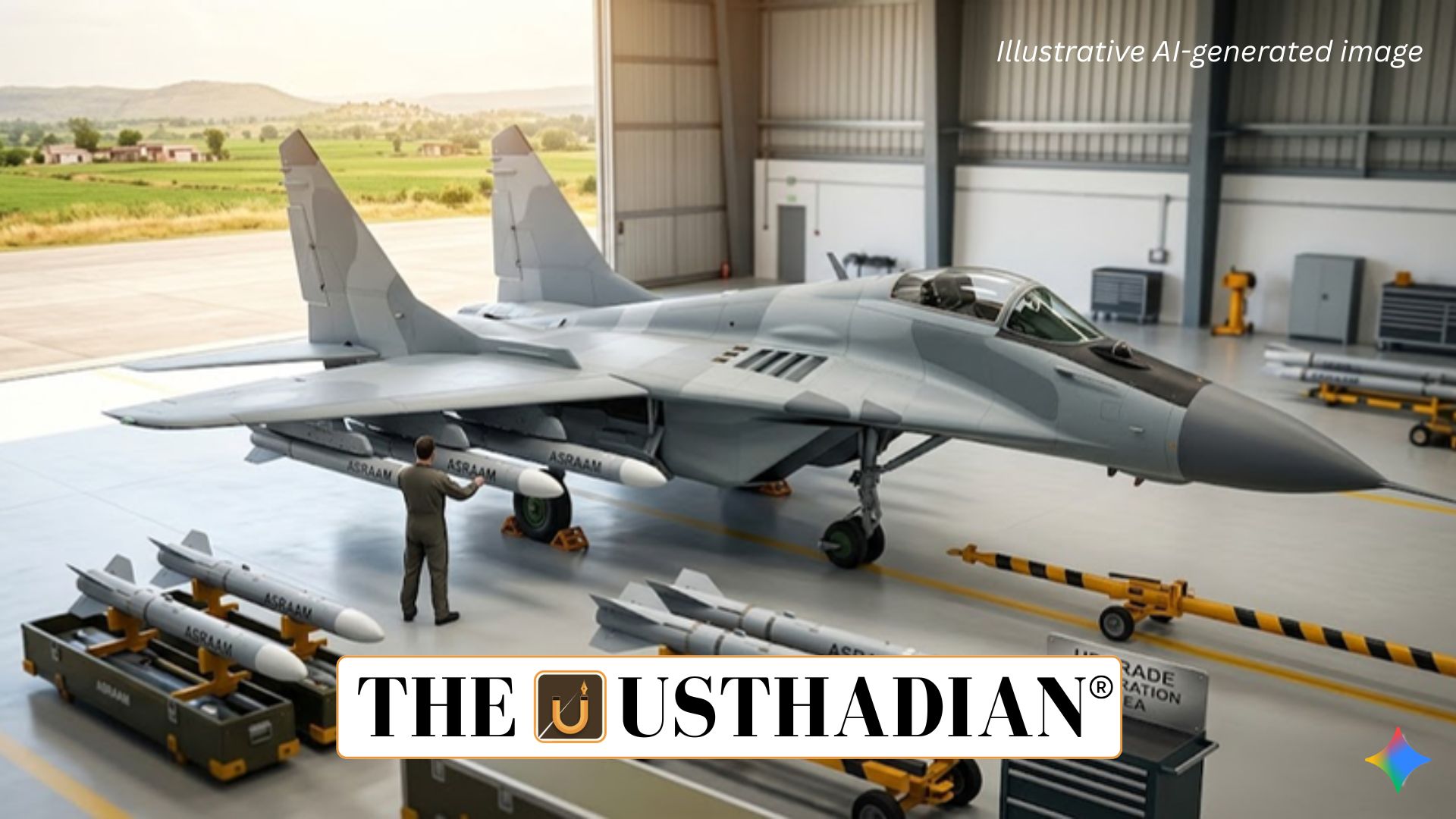
ASRAAM Induction Boosts MiG-29 Combat Capability: The Indian Air Force (IAF) is enhancing its aerial combat capability by integrating the ASRAAM missile into MiG-29UPG fighter jets. This move strengthens India’s preparedness in modern air warfare scenarios. It reflects a broader strategy of upgrading legacy aircraft with advanced weapon systems.
The integration improves close-range dogfight capability and ensures faster response during aerial engagements. It also enhances the operational life of existing fighter aircraft.
Static GK fact: The MiG-29 is a twin-engine fighter aircraft originally developed by the Soviet Union in the 1970s.
Overview of ASRAAM missile system
The Advanced Short Range Air-to-Air Missile (ASRAAM) is developed by MBDA, a leading European defence company. It is designed for within-visual-range combat, where speed and precision are critical.
ASRAAM is known for its high agility and ability to engage targets at extreme angles. It provides a significant advantage in fast-paced aerial dogfights.
Static GK Tip: MBDA is a multinational European defence group with headquarters in the United Kingdom.
Technical features and performance
The missile is approximately 2.9 metres long and weighs around 88 kilograms. It carries a high-explosive warhead and uses an advanced infrared homing seeker for target tracking.
ASRAAM operates on a fire-and-forget principle, allowing pilots to disengage immediately after launch. It can reach speeds above Mach 3 and has an effective range exceeding 25 kilometres.
Its aerodynamic structure ensures high manoeuvrability, enabling it to track agile enemy aircraft efficiently.
Advanced combat capabilities
A major feature of ASRAAM is its Lock-On After Launch (LOAL) capability. This allows the missile to be launched before locking onto the target, increasing combat flexibility.
The missile can withstand high G-forces, making it effective against evasive targets. Its heat-seeking guidance system ensures accuracy even in complex battlefield environments.
These features make ASRAAM a critical asset in modern air combat operations.
Strategic significance for Indian Air Force
The induction of ASRAAM replaces older missile systems and enhances the first-strike capability of the IAF. It improves combat efficiency and reduces reaction time during engagements.
The missile is already integrated with platforms like LCA Tejas and Jaguar aircraft, indicating a move towards standardisation of advanced weapon systems. This ensures better logistics and operational synergy.
Static GK fact: The Indian Air Force was established on 8 October 1932 and is one of the world’s largest air forces.
Static Usthadian Current Affairs Table
ASRAAM Induction Boosts MiG-29 Combat Capability:
| Topic | Detail |
| Missile Name | ASRAAM (Advanced Short Range Air-to-Air Missile) |
| Developer | MBDA (European defence company) |
| Platform Integrated | MiG-29UPG fighter jets |
| Missile Type | Short-range air-to-air missile |
| Speed | Exceeds Mach 3 |
| Range | More than 25 kilometres |
| Key Feature | Fire-and-forget with infrared homing |
| Special Capability | Lock-On After Launch (LOAL) |