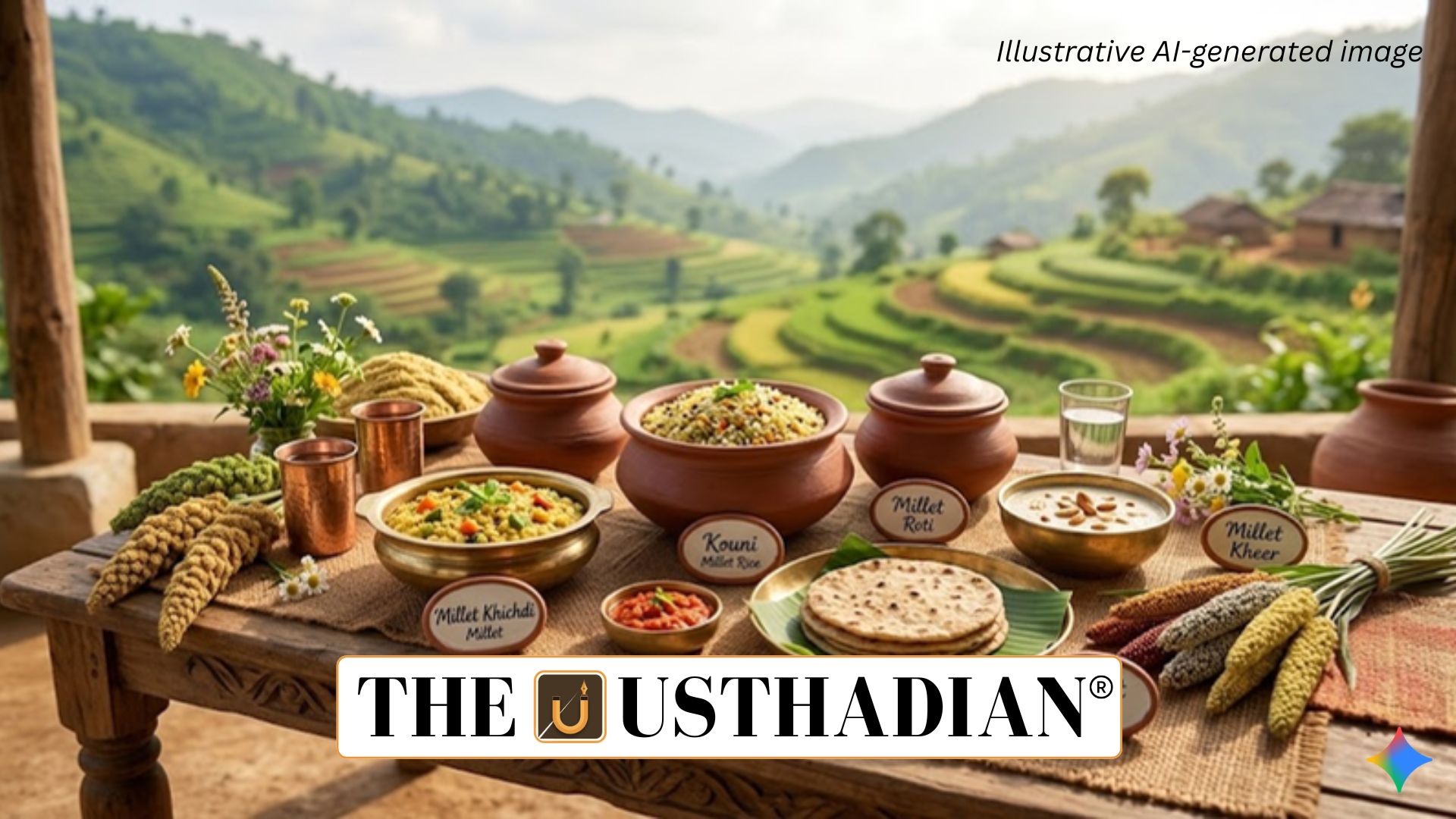
Launch of a Tribal Millet Menu
Araku Kouni Tribal Millet Menu Initiative: Andhra Pradesh Chief Minister N. Chandrababu Naidu launched Araku Kouni, the state’s first tribal millet-based food menu, during the Collectors’ Conference at the State Secretariat in March 2026. The initiative aims to integrate traditional tribal diets into the mainstream food culture of the state.
The menu highlights authentic recipes prepared by tribal communities from the Alluri Sitarama Raju (ASR) district. It also promotes healthy eating by encouraging the consumption of locally grown millets. The programme is expected to improve visibility for tribal food traditions and strengthen local agricultural systems.
Static GK fact: Millets were declared the International Year of Millets in 2023 by the United Nations, following a proposal from India to promote climate-resilient and nutritious grains.
Concept Behind Araku Kouni
Araku Kouni is a curated menu featuring traditional recipes that have been passed down through generations of indigenous communities in the Araku Valley region. The dishes are prepared using locally cultivated millets such as ragi, foxtail millet, and little millet.
The initiative focuses on preserving tribal culinary knowledge while supporting sustainable farming practices. By introducing these dishes in tourism centres and restaurants, the government aims to expand the market for tribal agricultural products.
Static GK Tip: Millets are classified as coarse cereals and include crops such as sorghum (jowar), pearl millet (bajra), and finger millet (ragi).
Traditional Tribal Dishes in the Menu
The Araku Kouni menu includes several traditional dishes prepared using millet and locally sourced ingredients. These dishes represent the food traditions of tribal communities living in forest and hill regions.
Some important dishes included in the menu are:
- Korra Payasam – a sweet preparation made using foxtail millet
- Ragi Chapati – nutritious flatbread prepared from finger millet flour
- Samala Pulihora – tamarind rice prepared using little millet
- Kantla Ambali – a traditional fermented millet beverage
- Corn Vada – savoury fritters made with corn and spices
- Toor Dal Curry – a protein-rich lentil dish served alongside millet foods
These recipes highlight the nutritional richness and culinary diversity of tribal diets in the Eastern Ghats region.
Role of ASR District Administration
The project was spearheaded by the Alluri Sitarama Raju district administration, which worked with multiple institutions to document traditional recipes and convert them into a standardized menu.
Key supporting organizations included tribal Anganwadi workers, the Indian Culinary Institute, and the Andhra Pradesh Department of Tourism. Their collaboration helped collect traditional food knowledge from local communities and present it in a structured format suitable for tourism promotion.
Static GK fact: Alluri Sitarama Raju district, created in 2022, is named after the tribal freedom fighter Alluri Sitarama Raju, who led the Rampa Rebellion (1922–1924) against British rule.
Promoting Tribal Economy and Food Tourism
The state government views Araku Kouni as a tool to promote tribal welfare and economic empowerment. Encouraging millet consumption can increase demand for crops cultivated by tribal farmers.
The initiative also supports food tourism in regions such as Araku Valley, which is already known for its coffee plantations and scenic landscapes. By highlighting indigenous food traditions, the programme aims to strengthen rural livelihoods and preserve cultural heritage.
Static GK Tip: Araku Valley, located in the Eastern Ghats of Andhra Pradesh, is one of India’s prominent tribal tourism destinations and is famous for its organic coffee cultivation.
Static Usthadian Current Affairs Table
Araku Kouni Tribal Millet Menu Initiative:
| Topic | Detail |
| Initiative | Araku Kouni tribal millet-based menu |
| Launched by | N. Chandrababu Naidu |
| State | Andhra Pradesh |
| Launch year | 2026 |
| Key region involved | Alluri Sitarama Raju district |
| Main objective | Promote tribal cuisine and millet consumption |
| Key dishes | Korra Payasam, Ragi Chapati, Samala Pulihora |
| Supporting institutions | Indian Culinary Institute, AP Tourism Department |
| Economic focus | Tribal farmer support and food tourism |
| Cultural significance | Preservation of indigenous culinary heritage |