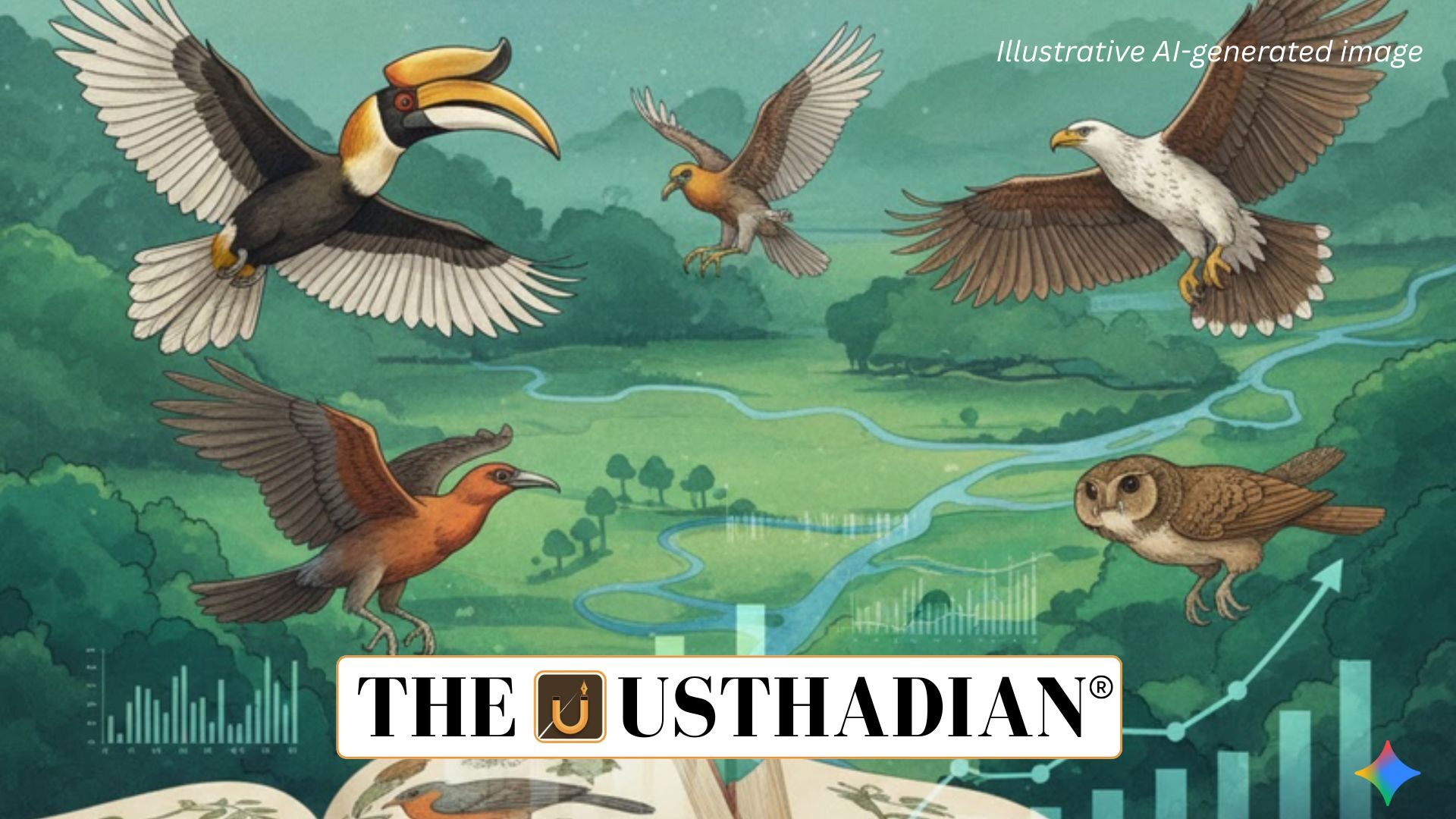
Goa’s Milestone in Biodiversity Documentation
After Kerala Goa Charts India’s Second Comprehensive Bird Atlas: Goa has emerged as the second Indian state after Kerala to publish a comprehensive bird atlas. The Bird Atlas of Goa was officially released on February 7, 2026, marking a major step in structured biodiversity documentation. This initiative places Goa firmly on India’s conservation map.
The atlas reflects the state’s shift towards data-driven ecological monitoring. It combines scientific rigor with community participation. This approach strengthens long-term conservation planning.
Understanding a Bird Atlas
A bird atlas is a grid-based scientific record that maps bird species distribution and abundance. Surveys are conducted systematically across landscapes. The resulting data offers a clear picture of avian diversity.
Such atlases help detect population trends over time. They are crucial for assessing habitat quality and ecological stress. Policymakers rely on these insights for informed decision-making.
Static GK fact: Bird atlases are globally used conservation tools, first popularised in Europe during the mid-20th century.
Role of the Bird Festival of Goa
The atlas was launched during the 9th Bird Festival of Goa, held at Valpoi. The festival carried the theme “Majestic Mhadei”, spotlighting the Mhadei River basin. This region is known for its rich forest and riverine biodiversity.
Bird festivals function as platforms for awareness and citizen engagement. They also encourage public participation in scientific activities. Goa’s festival has steadily evolved into a conservation-focused event.
Citizen Science and Data Collection
The Bird Atlas of Goa is a product of citizen science collaboration. Trained volunteers worked alongside experts during field surveys. This inclusive model expanded the scale and accuracy of data collection.
Citizen science enhances environmental literacy. It also builds public ownership of conservation outcomes. Such participation is increasingly vital in biodiversity monitoring.
Static GK Tip: India is home to over 1,300 bird species, making it one of the world’s top avian diversity regions.
Promoting Local Language and Awareness
A companion publication titled “Birds of Goa: Konkani Nomenclature – Olakh Suknayanchi” was also released. It documents bird names in Konkani, the state’s local language. This step makes scientific knowledge more accessible.
Local language usage bridges the gap between research and communities. It strengthens grassroots conservation awareness. Cultural familiarity often increases participation.
Institutional Support and Wildlife Rescue
An MoU between the Goa Forest Department and ResQ Charitable Trust was signed during the event. The agreement focuses on improving wildlife rescue and rehabilitation coordination. This strengthens Goa’s response to wildlife emergencies.
Volunteers, conservationists, and forest frontline staff were publicly recognised. Such recognition reinforces collective responsibility in biodiversity protection.
National Significance of the Goa Atlas
The Bird Atlas of Goa sets a replicable model for other states. State-level atlases provide baseline data critical under climate change conditions. Birds are sensitive indicators of ecological health.
This initiative strengthens India’s conservation infrastructure. It also highlights how science, policy, and communities can align for sustainable outcomes.
Static GK fact: Kerala became India’s first state to publish a comprehensive bird atlas through large-scale volunteer surveys.
Static Usthadian Current Affairs Table
After Kerala Goa Charts India’s Second Comprehensive Bird Atlas:
| Topic | Detail |
| Bird Atlas of Goa | Second state-level bird atlas in India |
| Release Date | February 7, 2026 |
| Launch Event | 9th Bird Festival of Goa |
| Festival Theme | Majestic Mhadei |
| Location | Valpoi, Goa |
| First State with Bird Atlas | Kerala |
| Survey Method | Grid-based scientific bird surveys |
| Community Role | Citizen science participation |
| Language Initiative | Konkani bird nomenclature publication |
| Conservation Support | MoU for wildlife rescue and rehabilitation |