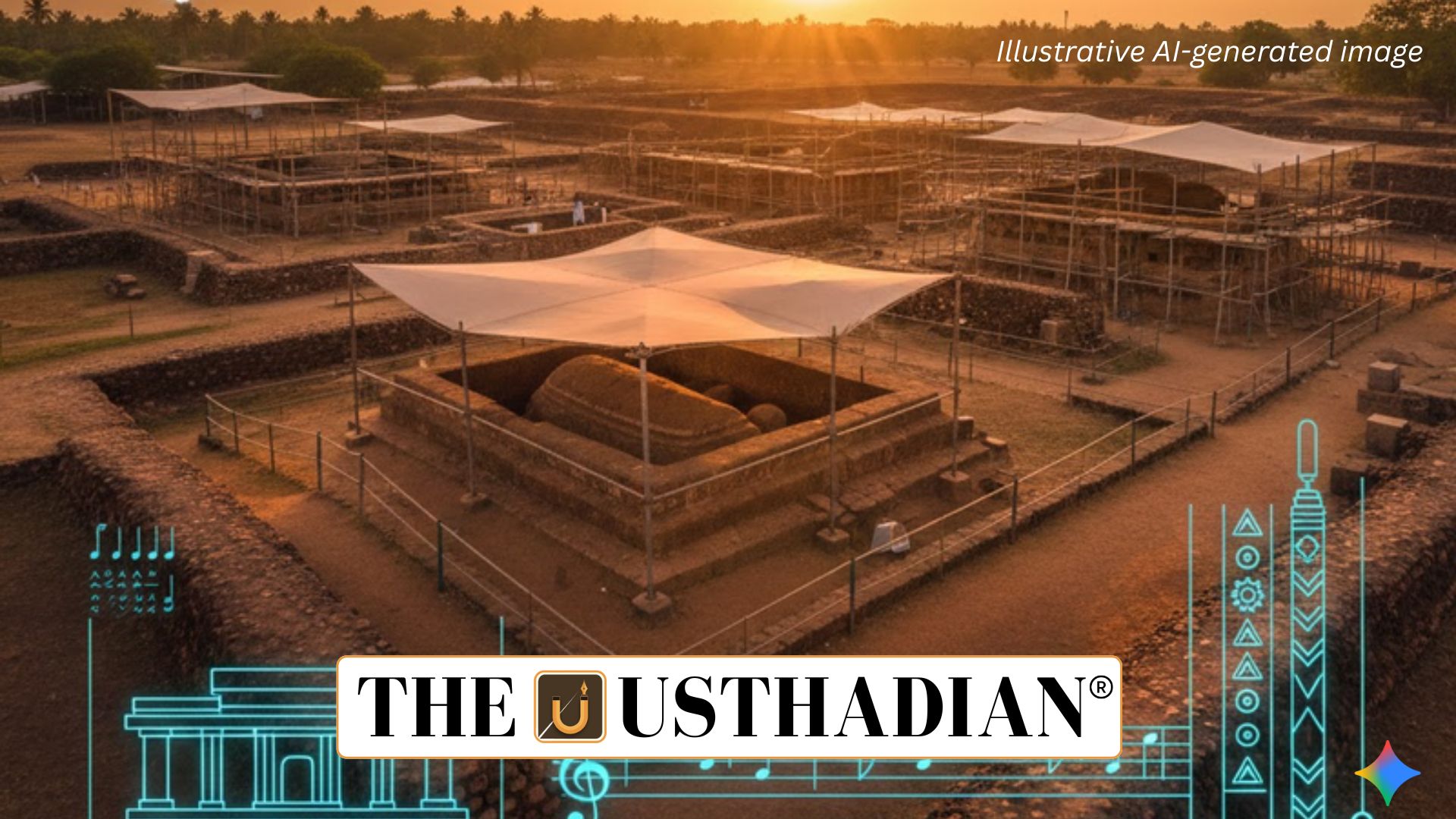
Cultural heritage push in Budget 2026
Adichanallur Cultural Revival under Budget 2026: The Union Budget 2026, presented by Finance Minister Nirmala Sitharaman, announced the development of 15 major archaeological sites into vibrant cultural destinations. This initiative aims to promote heritage tourism, historical awareness, and regional economic development. The selected sites include historically significant locations such as Lothal, Dholavira, Rakhigarhi, Sarnath, Hastinapur, Leh Palace, and Adichanallur.
This move aligns with India’s broader vision of preserving ancient civilisation remains while enhancing visitor engagement through modern infrastructure. The initiative will transform these sites into experiential learning centres, combining archaeology with tourism.
Static GK fact: The Union Budget is presented annually under Article 112 of the Indian Constitution as the Annual Financial Statement.
Importance of Indus Valley and Buddhist sites
Several sites selected under this initiative belong to the Indus Valley Civilisation (IVC), one of the world’s oldest urban civilisations. Important IVC sites include Rakhigarhi in Haryana and Dholavira and Lothal in Gujarat, which reveal advanced urban planning and trade systems dating back to 2600–1900 BCE.
Similarly, Buddhist heritage sites such as Sarnath and Hastinapur in Uttar Pradesh have been included. Sarnath is historically significant because it is the place where Gautama Buddha delivered his first sermon, known as the Dhammacakkappavattana Sutta.
Static GK Tip: Dholavira, located in Gujarat’s Rann of Kutch, is a UNESCO World Heritage Site recognized in 2021.
Adichanallur and ancient Tamil civilisation
Adichanallur, located in the Thoothukudi district of Tamil Nadu, is one of India’s oldest and most significant archaeological sites. It is situated along the banks of the Thamirabharani River, a historically important river supporting early human settlements in southern India.
Excavations at Adichanallur provide valuable insights into the Iron Age culture and ancient Tamil civilisation, dating back over 2,500 years. Archaeologists have discovered evidence of advanced metallurgy, burial practices, and social organisation, confirming the region’s early cultural development.
Static GK fact: The Thamirabharani River originates from the Western Ghats and flows entirely within Tamil Nadu.
Unique burial practices and archaeological discoveries
Adichanallur is especially famous for its urn burial system, where large clay pots were used to bury the dead. These urns often contained iron tools, ornaments, pottery, and human skeletal remains, indicating advanced cultural and ritual practices.
These urn burials were first scientifically documented in the late 19th century by British archaeologist Alexander Rea, who conducted systematic excavations. His work helped establish Adichanallur as a major archaeological landmark in India.
Static GK Tip: The Archaeological Survey of India was established in 1861 by Alexander Cunningham.
Modern conservation and tourism development
Adichanallur has gained recognition for innovative preservation methods. It became the first archaeological site in India where the Archaeological Survey of India installed walk-through ramps, allowing visitors to observe excavated areas without damaging them.
Under Budget 2026, Adichanallur will be further developed into a cultural tourism hub, enhancing its accessibility and educational value. This initiative will strengthen awareness of Tamil Nadu’s ancient heritage and promote global recognition of early South Indian civilisation.
Static Usthadian Current Affairs Table
Adichanallur Cultural Revival under Budget 2026:
| Topic | Detail |
| Budget Announcement | Budget 2026 announced development of 15 archaeological heritage sites |
| Key Minister | Finance Minister Nirmala Sitharaman presented the proposal |
| Major Civilisation Sites | Includes Indus Valley sites like Rakhigarhi, Lothal, and Dholavira |
| Tamil Nadu Site | Adichanallur located in Thoothukudi district, Tamil Nadu |
| River Location | Situated on the banks of Thamirabharani River |
| Historical Period | Provides evidence of Iron Age and ancient Tamil civilisation |
| Burial Practice | Famous for urn burials containing tools, ornaments, and pottery |
| Archaeological Discovery | Urns first documented by archaeologist Alexander Rea |
| Preservation Innovation | First ASI site with walk-through ramps |
| Tourism Objective | To promote heritage tourism and cultural awareness |